Data source: USDA FoodData Central, SR Legacy, FDC 168914 (Rice noodles, cooked).
Fun facts
- Bun is made from regular rice. Traditionally, the rice is soaked until it ferments slightly, ground into batter, then pressed through a mold into boiling water to form noodles.
- The numbers here are for cooked rice noodles, close to the fresh bun sold at markets: about 108 kcal and 24g of carbs per 100g. The noodles hold a lot of water, so calories are only about a third of dry rice.
- Bun has almost no fat (0.2g) and little protein (1.8g). The protein in a bun meal comes from the grilled pork, meatballs, fish or crab.
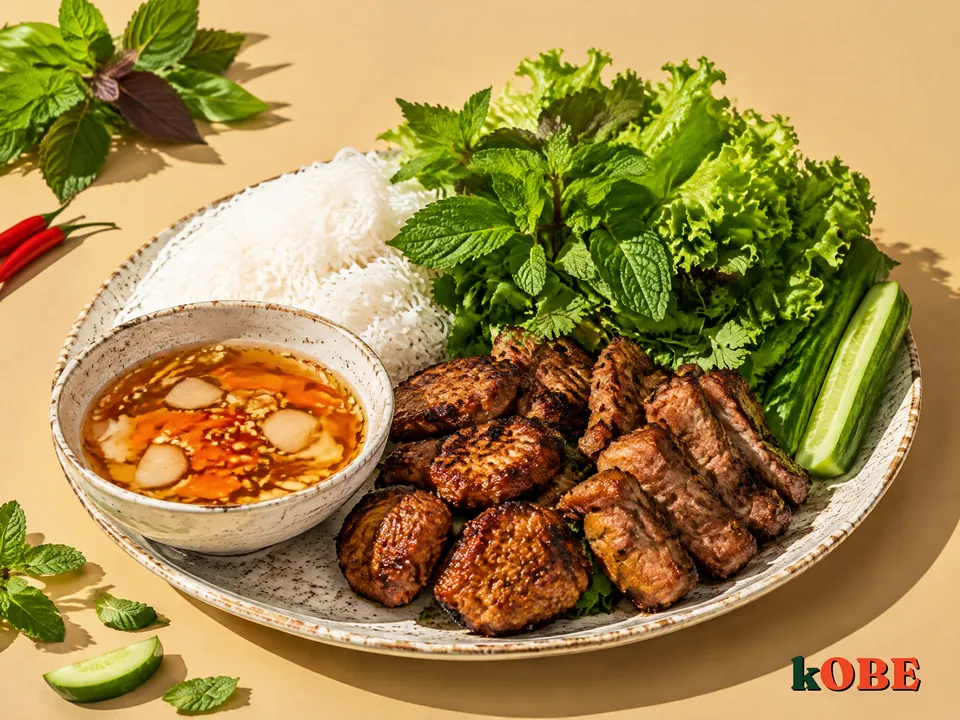
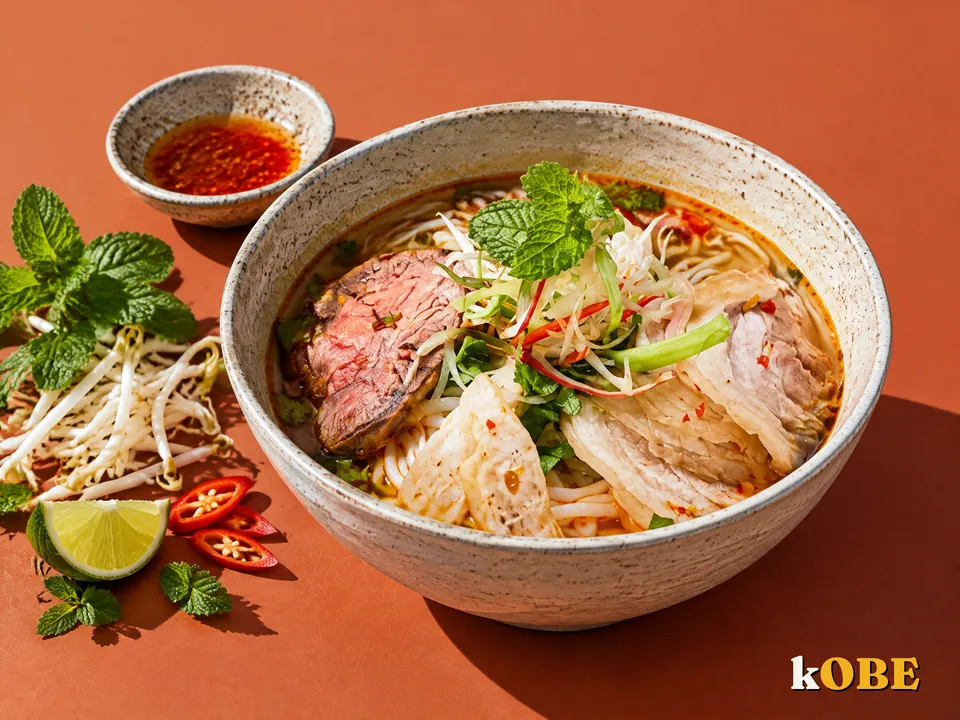
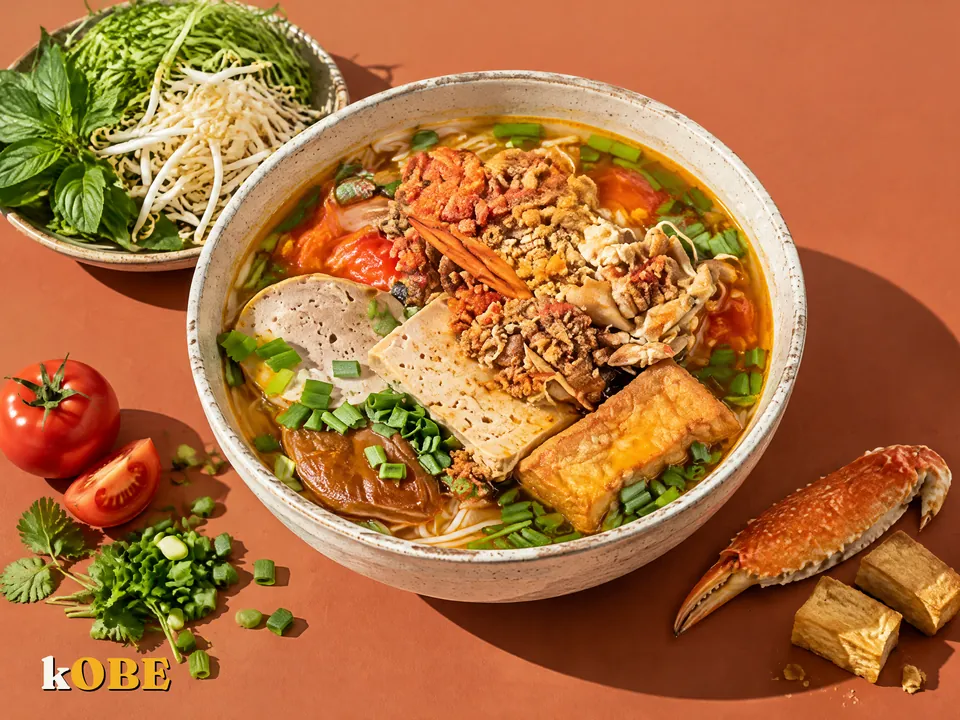
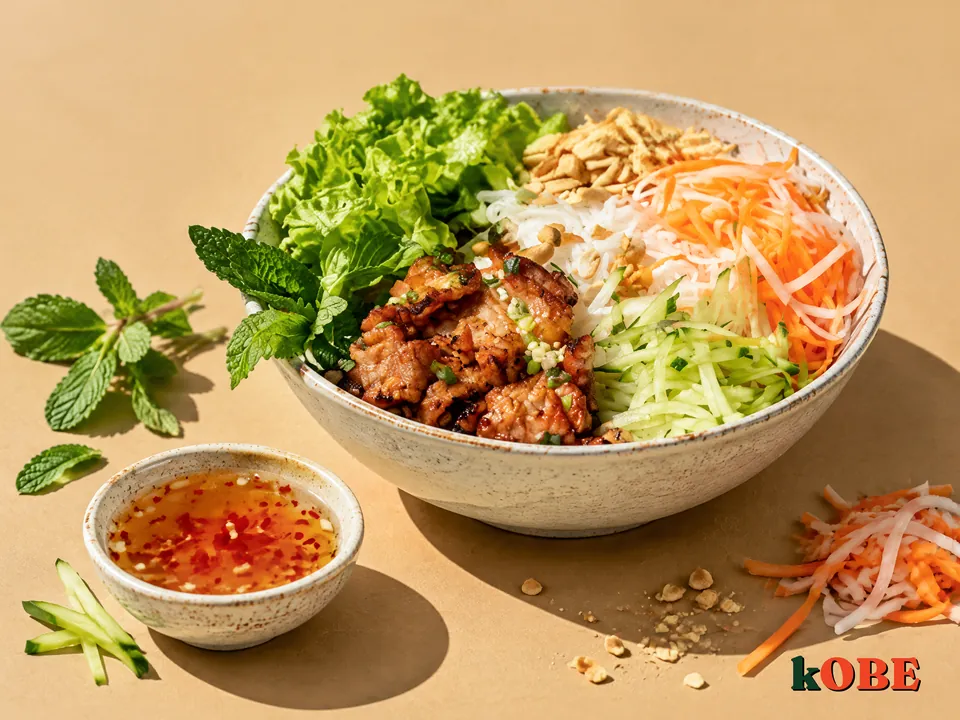
- The North alone has bun cha, bun thang, bun rieu and bun oc. Head south and you find bun mam, bun thit nuong and Hue style bun bo.
Choosing and storing
Good bun is a natural ivory white, soft with a gentle chew, and smells lightly of rice. Avoid noodles that are unnaturally bright white, overly rubbery or have an odd sour smell. Fresh bun spoils quickly, so buy just enough and eat it the same day. Leftovers go in a sealed container in the fridge, to be used soon.
Cooking it well
Fresh bun firms up in the fridge; a few seconds in boiling water softens it again. Dried vermicelli should be boiled as the pack says, then rinsed in cold water so the strands do not stick. A balanced bowl of bun has plenty of fresh herbs and vegetables and a fair share of protein, so the noodles do not take over the whole bowl. We compare starch across noodle soups in how many carbs in pho noodles.