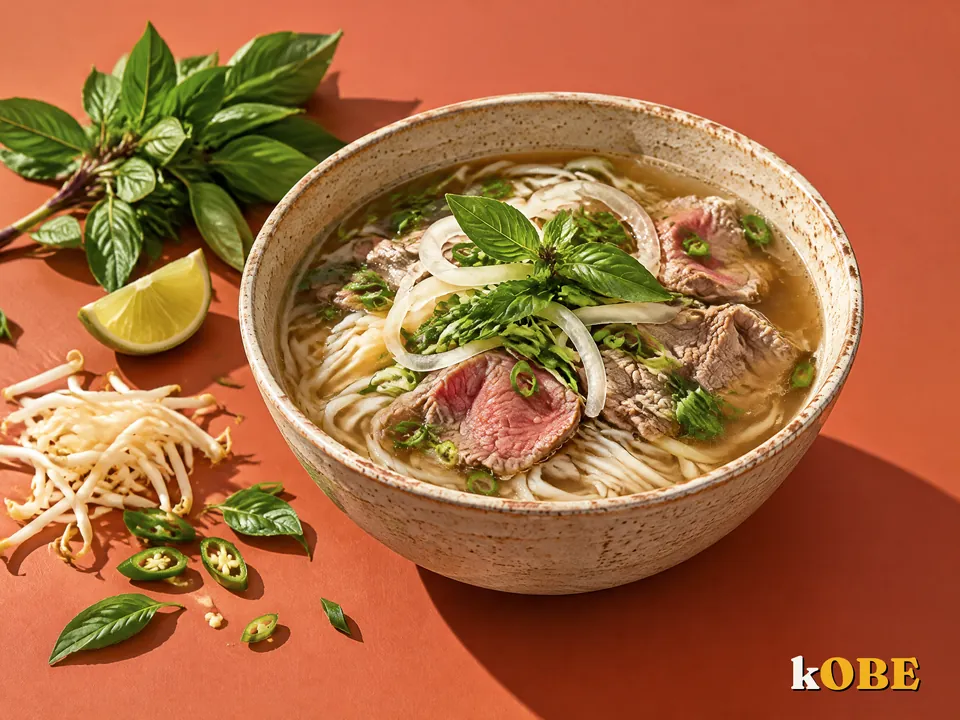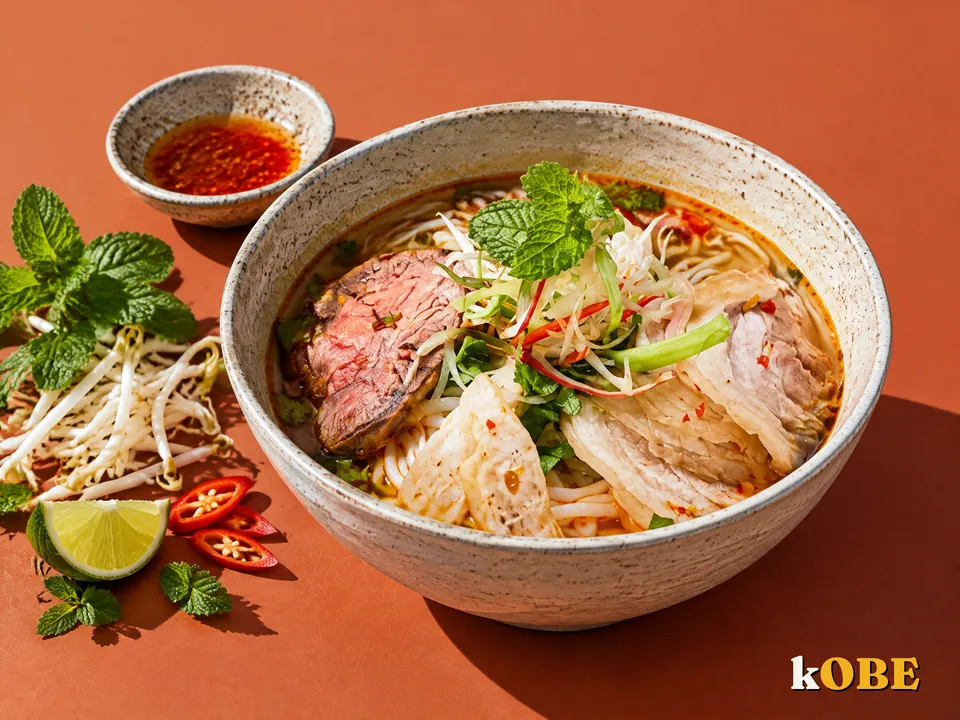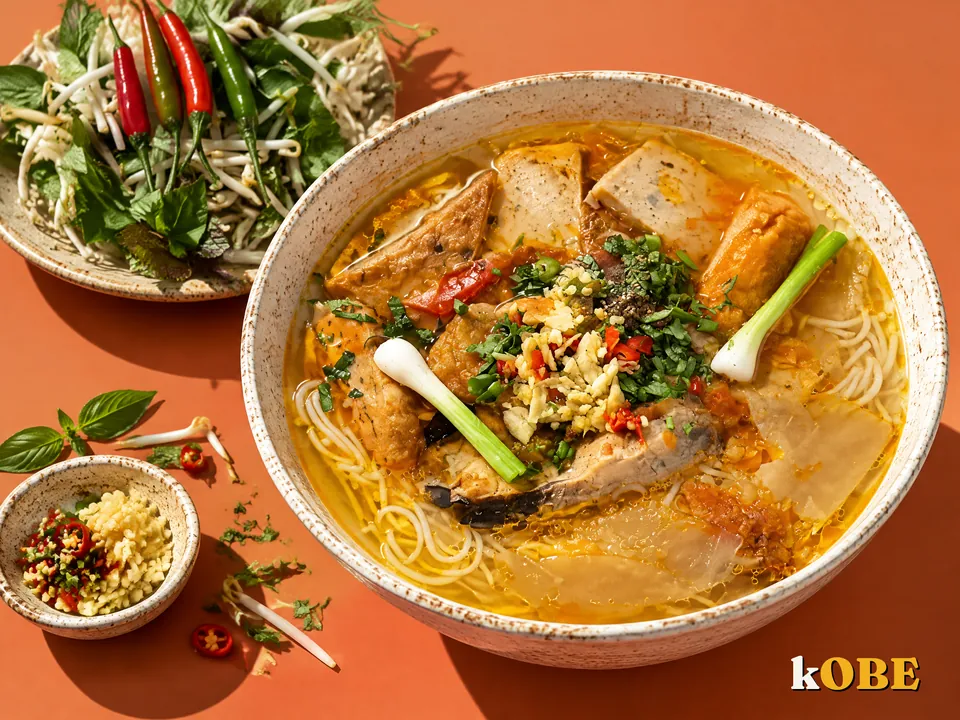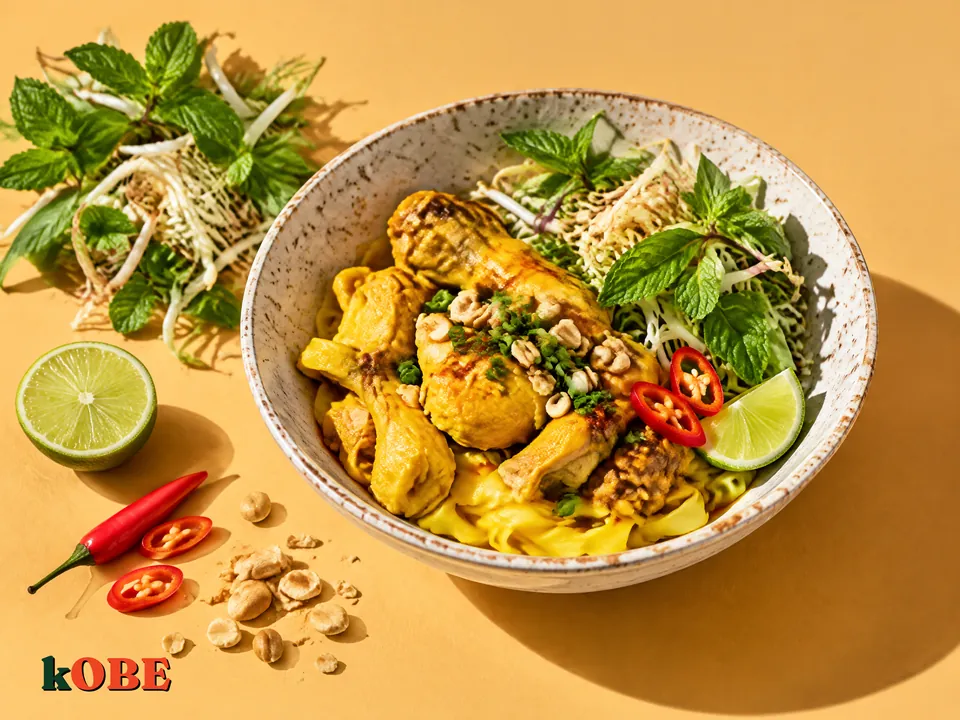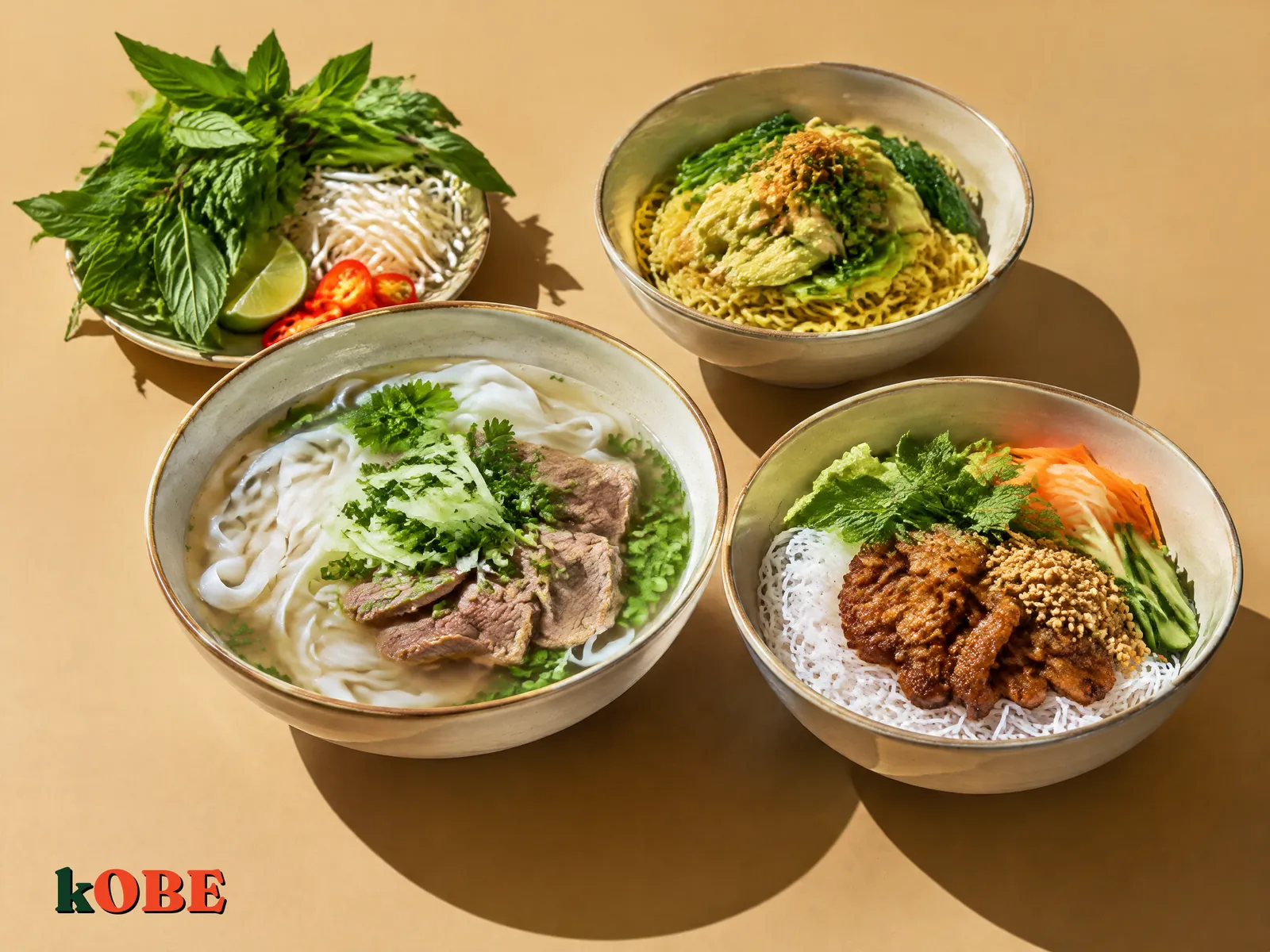
Monday morning, at your usual spot: "One phở tái (rare beef phở), extra scallions, please." Ten minutes later the bowl arrives steaming, the broth clear, the rice noodles soft and white.
Lots of people think phở or bún (round rice vermicelli) is "lighter" than a plate of rice. Plenty of broth, thin noodles, and you don't feel heavy afterward.
But if you gathered up all the noodles in that bowl and set them next to a bowl of rice, you might be surprised.
In this article
What is each noodle made of?
Before we count, let's see where each familiar noodle comes from:
- Bún: plain rice flour, pressed through a mold into round strands and then boiled. Traditional bún is made from batter left to ferment for a few days, giving it a slight tang and a chewier strand.
- Bánh phở, hủ tiếu, bánh canh gạo (flat phở noodles, clear rice noodles, thick rice noodles): rice batter spread thin, steamed, then cut into strands.
- Mì: wheat flour and water, sometimes with egg. Chewy yellow egg noodles usually get a little lye water (an alkaline solution) too.
- Miến (glass noodles): starch from canna root or mung beans. Clear, chewy strands that are almost pure starch.
- Instant noodles: noodles that have been flash-fried to dry them out, so they carry quite a bit of extra oil.
To keep bún and phở noodles from falling apart, makers usually choose rice high in amylose, the kind of starch that keeps rice grains separate and noodles firm. Soft, sticky rice like glutinous rice can't make bún.
So how many bowls of rice is one bowl of phở?
According to the Vietnamese Food Composition Table, per 100g:
| 100g | Calories, about | Carbs, about |
|---|---|---|
| Fresh bún | 110 kcal | 26g |
| Fresh phở noodles | 140 kcal | 32g |
| White rice | 130 kcal | 28g |
At first glance, bún is even a bit "lighter" than rice, because the strands hold a lot of water. Phở noodles are about the same as rice, even slightly higher.
What really decides it is how many noodles are in the bowl. A shop bowl of phở usually has about 150 to 250g of noodles, depending on the shop and the size. That's roughly 50 to 80g of carbs.
A medium bowl of rice (about 150g) has around 42g of carbs. So one bowl of phở can equal one and a half to two bowls of rice, from the noodles alone.
This isn't about fearing phở. It's just about knowing how much you're eating, like checking the price before you order.
Pasta digests slower than bread: the secret of the tightly packed strand
Here's a fun fact.
Pasta and bread are made from the same wheat flour. But pasta usually has a noticeably lower glycemic index (GI) than bread.
The reason is structure. Bread is fluffy and full of air pockets, so enzymes slip in easily. Pasta strands are tightly packed, with the starch wrapped in a protein network. Enzymes have to "nibble" from the outside in, so the starch is released more slowly.
Cook pasta al dente, still a little firm at the core, and it's slower still. Overcook it until the strands swell and soften, and it digests faster.
Rice noodles like bún and phở follow a similar rule: firm, springy strands usually digest more slowly than soft, mushy ones.
Five tips for ordering a gentler noodle soup breakfast
- Ask for "fewer noodles, more meat". Most shops are happy to do it, and you still feel full thanks to the protein.
- Ask for extra greens. Bean sprouts, fresh herbs, shaved water spinach, banana blossom. Eat a few bites of greens first.
- Add an egg or meat if the bowl is light on protein. One poached egg is enough to change the whole bowl.
- Taste before adding hoisin or chili sauce. Hoisin has quite a lot of sugar.
- No need to drain the broth. Leaving half the broth behind cuts out a good amount of salt.
A bowl of phở with plenty of greens, enough meat and a moderate amount of noodles is still a great breakfast. No need to switch dishes, just adjust the proportions.
Inside the kOBE kitchen
Our 1,480 home recipes include phở bò (beef phở), phở gà (chicken phở), bún bò Huế (spicy Huế beef noodle soup), bún chả cá (fish cake noodle soup) and mì Quảng (turmeric noodles from Quảng Nam). The broths are sweetened with monk fruit sweetener instead of rock sugar or white sugar.
Every recipe lists calories, protein, fat and sugar per 100g. So you can adjust the amount of noodles and meat to fit your meal.
kOBE Signature Monk Fruit Blend swaps for sugar 1:1. If an old recipe says one spoon of rock sugar, you use one spoon. See kOBE Signature Monk Fruit Blend.
Frequently asked questions
Does bún have fewer calories than rice?
Is miến "lighter" than bún?
Are instant noodles different from fresh noodles?
Keep reading
Sources
- National Institute of Nutrition (Vietnam). Vietnamese Food Composition Table (bún, phở noodles, cooked rice).
- Atkinson F.S., Foster-Powell K., Brand-Miller J.C. (2008). International tables of glycemic index and glycemic load values: 2008. Diabetes Care 31(12):2281 to 2283.
- WHO. Salt reduction (fact sheet): recommends less than 5g of salt a day for adults.
- USDA FoodData Central, SR Legacy: Rice noodles, cooked; Pasta, cooked, enriched.
- Further reading: Science of Rice (2023), chapter 2; Understanding Nutrition 16th ed., chapter 4.