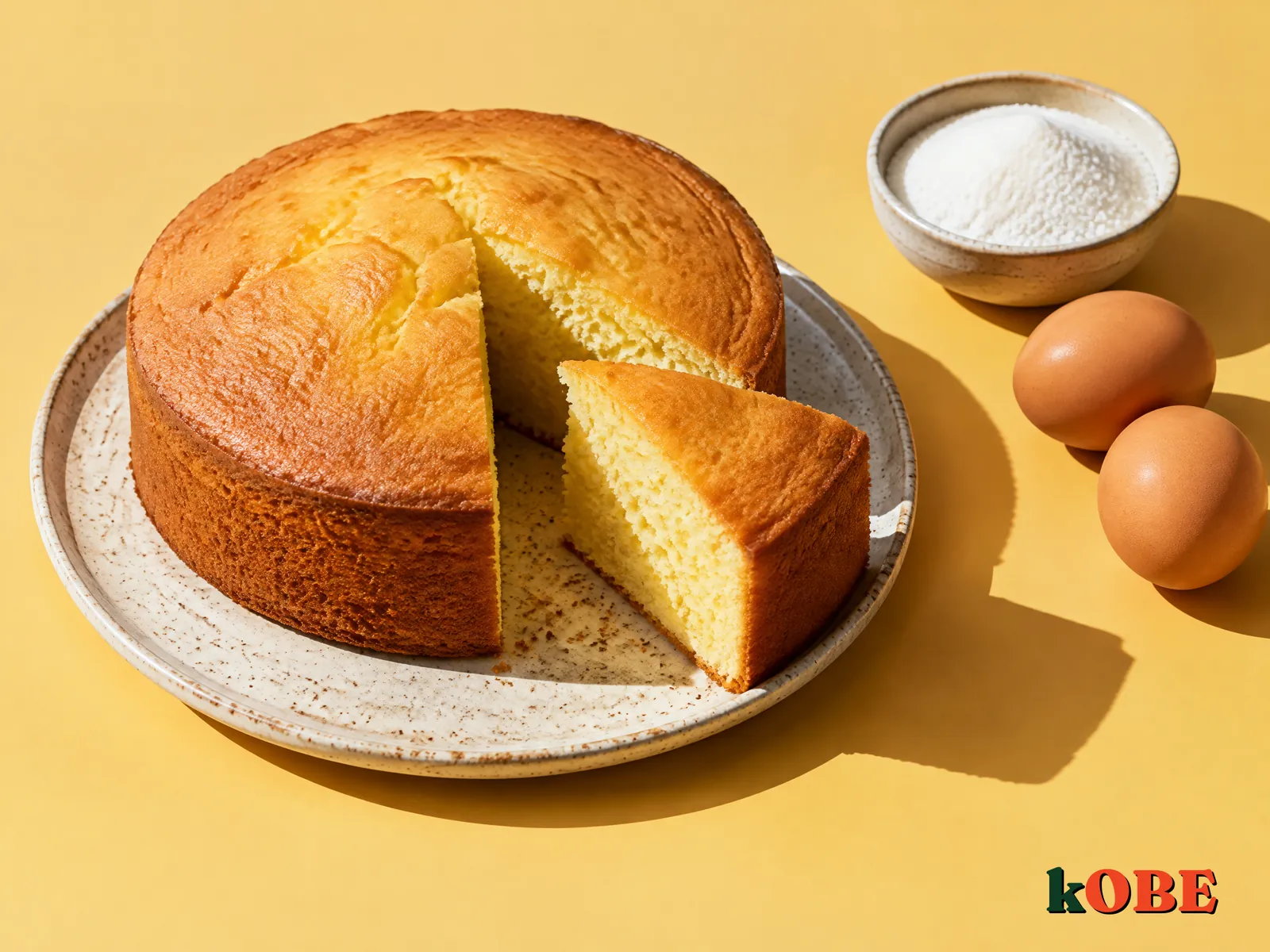
You open a sponge cake recipe. Line three says: "100g sugar". You plan to swap in a sugar substitute. Then you pause: how much? Will it rise? Will it turn out dry?
That's a very good question to ask. Because in a cake, sugar does far more than you'd think. It's not just there for sweetness.
Once you understand what sugar does in baking, you'll know how to replace it so your bake still smells wonderful and stays soft.
In this article
Sugar is the "multitasker" of the bakery
In a baked cake, sugar handles at least five jobs:
- Sweetness. The most obvious one.
- Moisture. Sugar attracts and holds water, so cakes stay soft longer and don't dry out fast.
- Tenderness. Sugar slips in between flour and eggs, making the cake's structure less chewy.
- Browning. That golden-brown top happens because sugar joins the color-making reactions during baking.
- Stable egg foam. When you whip egg whites, sugar helps the foam turn fine and hold its peaks.
So when you replace sugar, the question isn't only "is it sweet enough?". It's also "who's doing the other four jobs?".
Swap ratios: every sweetener has its own rules
Sugar substitutes vary wildly in sweetness. Some are close to sugar, others are hundreds of times sweeter.
| Sweetener type | How to replace white sugar | Baking notes |
|---|---|---|
| Ready-made 1:1 blends | use the same amount the recipe says | easy for beginners |
| Pure allulose | about 70% as sweet as sugar, so you need a bit more | browns fast, tops can darken easily |
| Pure stevia or monk fruit extract | just a few tiny pinches, per the package directions | no "bulk", bakes tend to sink and dry out |
| Honey | not a sugar substitute | still sugar, and adds liquid to the batter |
The key is in row three. Pure extracts are fiercely sweet, but you only use a tiny amount. A recipe that loses 100g of sugar loses 100g of "bulk". The cake will be less moist, less tender and harder to rise.
That's why ready-made blends include bulking ingredients. So a jar of sweetener measures like white sugar, and takes back the "bulk" job in the cake.
Why do sugar free bakes often look paler?
The golden-brown color on top comes from two reactions: sugar caramelizing, and sugar meeting protein from eggs, milk and flour (the Maillard reaction).
Many sugar substitutes don't take part in these reactions as strongly as white sugar. So the cake comes out paler, even when it's fully baked inside.
Allulose is the opposite. It browns very quickly, even faster than sugar. If you use a lot of allulose, keep an eye on the oven and turn the heat down a little if the top darkens too early.
Tips for a nicely colored sugar free bake:
- Brush egg yolk over the top before baking.
- Bake a few extra minutes on the top rack when the cake is nearly done.
- Test with a toothpick, don't go by color alone.
5 tips for your first sugar free batch
- Start with an easy recipe. Banana bread, muffins and cookies forgive mistakes better than sponge cake or macarons.
- Make a half batch first. Try it once, taste it, then make the full amount.
- Weigh in grams. Measuring by spoon goes off easily because every sweetener has a different density.
- Let the bake cool completely before judging the sweetness. Warm cake often tastes different from cool cake.
- Lean on natural sweetness. Ripe banana, pumpkin, sweet potato, vanilla and cinnamon make bakes taste sweeter so you need less sweetener.
A tip for sponge cake lovers: when whipping egg whites, add the sweetener gradually, a little at a time, just like with white sugar. A few drops of lime juice also help the foam stand taller.
Inside the kOBE kitchen
kOBE Signature Monk Fruit Blend is made to replace sugar 1:1. However much sugar the recipe calls for, you use the same amount, no maths needed.
Inside is a "team" of five ingredients. Erythritol forms the sweet base and adds bulk. Allulose helps bakes brown and gives a taste close to cane sugar. Monk fruit and a small amount of stevia bring the sweetness. Inulin is a fiber that doesn't add sweetness.
We'll tell you up front: bakes made with this blend turn a paler gold than those made with cane sugar. Brush on a little egg yolk and the top looks lovely right away.
It's also what we use to sweeten the recipes in our collection of 1,480 home recipes, from cookies to sponge cakes.
Frequently asked questions
Do bakes made with a sugar substitute keep as long as regular ones?
Can I use half real sugar and half sugar substitute?
Can I use a sugar substitute in bread?
Keep reading
Sources
- Marcus J.B. (2013). Culinary Nutrition: The Science and Practice of Healthy Cooking. Academic Press. Section on replacing sugar in baking.
- U.S. FDA (2020). The Declaration of Allulose and Calories from Allulose on Nutrition and Supplement Facts Labels: Guidance for Industry.
- Harvard T.H. Chan School of Public Health, The Nutrition Source: Added Sugar.
- Further reading: Understanding Nutrition 16th ed., chapter 4.