Morning: a glass of cà phê sữa đá, Vietnamese iced coffee with condensed milk. Lunch: an office rice plate with a little bowl of slightly sweet fish sauce. Three in the afternoon: the whole team orders milk tea.
You haven't eaten a single cake. You haven't opened a can of soda. And yet, add it all up, and that day's sugar may already be past the recommended limit for the whole day.
A bit of a jolt, right? So let's sort it out together: how much sugar a day is enough, and which "sugar" we're even talking about.
In this article
The WHO numbers: 50g, and even better, 25g
The World Health Organization (WHO) has a fairly clear recommendation on sugar, published in 2015:
- The line to hold: free sugars under 10% of your total daily energy.
- Even better: under 5%.
For someone eating around 2,000 calories a day, that works out like this:
| Level | Grams of sugar | In teaspoons |
|---|---|---|
| Under 10% of energy | about 50g | about 12 teaspoons |
| Under 5% of energy | about 25g | about 6 teaspoons |
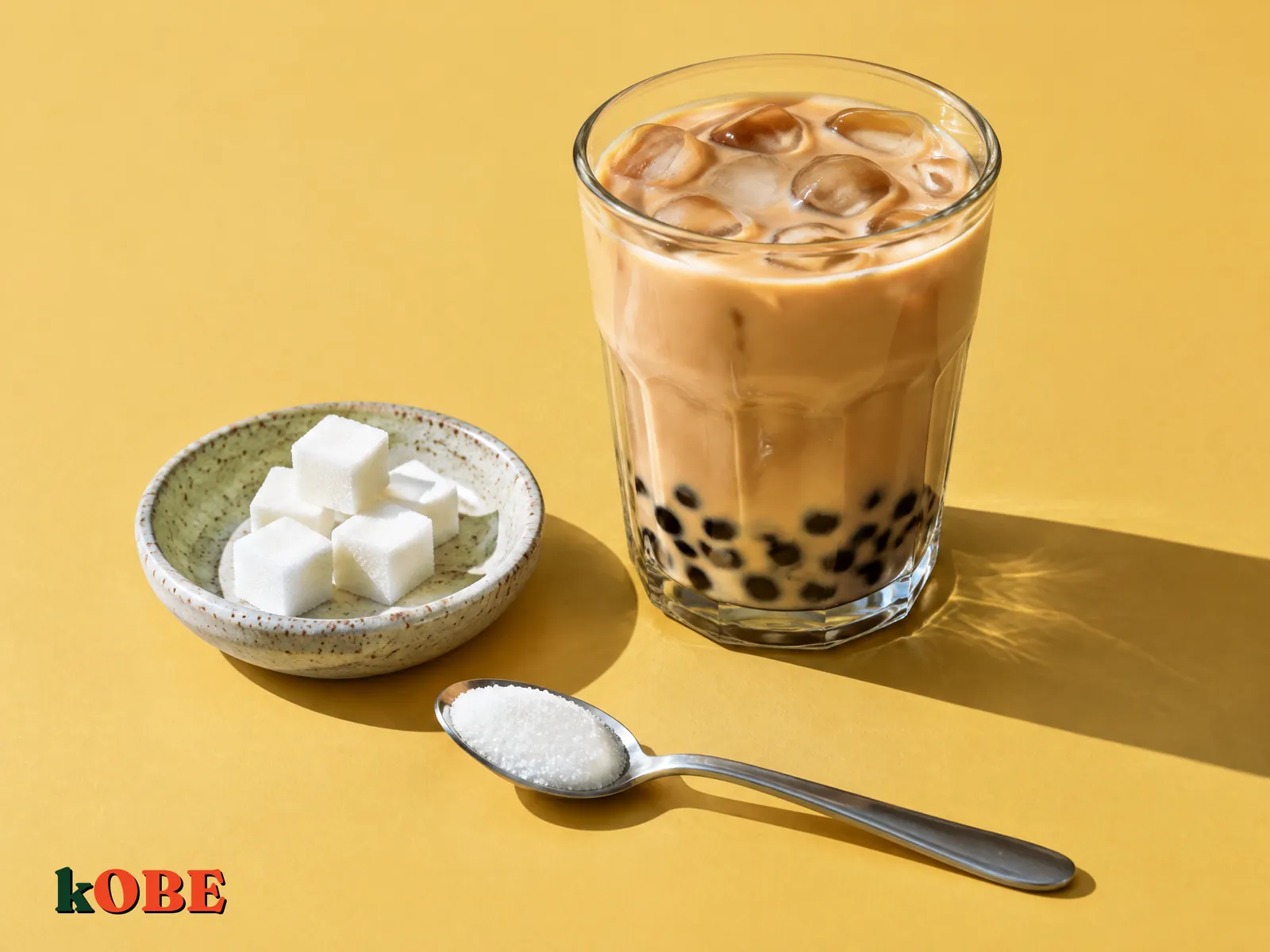
A level teaspoon of granulated sugar weighs about 4g. So 25g of sugar is just 6 small teaspoons, spread across a whole day.
If you eat fewer than 2,000 calories, as many women and less active people do, your number is a little smaller still.
Which sugars are "free sugars"?
This is where a lot of people get tripped up. The WHO doesn't count everything sweet. It only counts free sugars.
Free sugars include:
- Sugar added to food and drinks: white sugar, rock sugar, palm sugar, condensed milk, syrups, malt syrup. Whether the cook adds it or a factory does.
- Honey and all kinds of syrup. They sound natural, but they still count.
- Sugar in fruit juice. Even orange juice squeezed at home with nothing added.
Two things do not count:
- Sugar sitting naturally inside whole fruit. A banana, a segment of pomelo, a slice of watermelon.
- Milk sugar (lactose) in plain, unsweetened fresh milk.
Why the difference? In a banana, the sugar is locked inside cell walls and travels with fiber. You have to chew, and your gut has to work, to get it out. Squeeze fruit into juice and the sugar is "set free", reaching your body much faster. Plus, one glass of orange juice takes 3 or 4 oranges, and you rarely sit down and eat 4 oranges in one go.
Let's add up an ordinary day
These numbers are rough estimates. Every café makes drinks a little differently.
| Item | Free sugars, approx. |
|---|---|
| 1 glass cà phê sữa đá (2 tablespoons condensed milk) | 20g |
| 1 medium milk tea, 100% sugar | 30 to 45g |
| 1 can of soda, 330ml | 35g |
| 1 pot sweetened yogurt, 100g | 8 to 12g |
| 1 bowl of chè (Vietnamese sweet soup) | 20 to 30g |
Condensed milk is more than half sugar. So the morning coffee alone comes close to the 25g mark.
Add the coffee and the milk tea together and you've reached, or passed, 50g. And that's before counting dipping sauces, braised dishes and noodle broths, places where sugar is very good at hiding.
Why do people worry about added sugar?
Let's be fair here: sugar is not poison. Your body runs on glucose every single day.
What health bodies worry about is too much added sugar, day in, day out. A few reasons are fairly well established:
- Sugar adds calories without filling you up to match. A cup of milk tea can equal a light meal in calories, yet you're still hungry afterward.
- The bacteria in your mouth love sugar. Sipping and nibbling sweet things all day gives them plenty to work with.
- Sweet drinks are a big source of sugar that's easy to overlook. They go down fast, and they don't feel like "eating".
The evidence for the 5% level is still moderate. The WHO calls it a conditional recommendation. So think of 25g as a nice goal to aim for, and 50g as the line worth holding.
Reading labels: "sugars" doesn't always mean added sugar
On a nutrition panel, the "Sugars" line usually lumps together sugars that are naturally present and sugars that were added.
For example, a carton of unsweetened fresh milk still lists about 4 to 5g of sugars per 100ml. That's milk sugar, not free sugar.
A few quick ways to tell them apart:
- Check the ingredients list. If you see sugar, condensed milk, syrup, malt syrup, honey or concentrated juice, sugar has been added.
- Compare with the unsweetened version of the same product. The difference between the two is close to the added sugar.
- Convert to teaspoons. Divide the grams by 4. You get a number that's easy to picture.
Inside the kOBE kitchen
Every recipe in kOBE's collection of 1,480 home recipes lists calories, protein, fat and sugar per 100g. You can use that number to add up your own day, just like we did above.
The sweet recipes in the collection are sweetened with kOBE Signature Monk Fruit Blend. It's a five-ingredient blend: erythritol, allulose, monk fruit, stevia and inulin. It swaps for sugar 1:1, so however much sugar an old recipe calls for, you use the same amount.
But our favorite trick doesn't need any product at all: make things a little less sweet each week. Your taste buds will quietly adjust.
Frequently asked questions
Do children follow the same limit?
Does eating lots of fruit count as eating lots of sugar?
What if I had two milk teas today?
Keep reading
Sources
- WHO (2015). Guideline: Sugars intake for adults and children. Geneva: World Health Organization.
- USDA FoodData Central: sweetened condensed milk, carbonated soft drinks.
- Harvard T.H. Chan School of Public Health, The Nutrition Source: Added Sugar and Sugary Drinks.
- National Institute of Nutrition (Vietnam) (2016). Recommended Dietary Allowances for Vietnamese People.
- Further reading: Understanding Nutrition 16th ed., chapter 4.