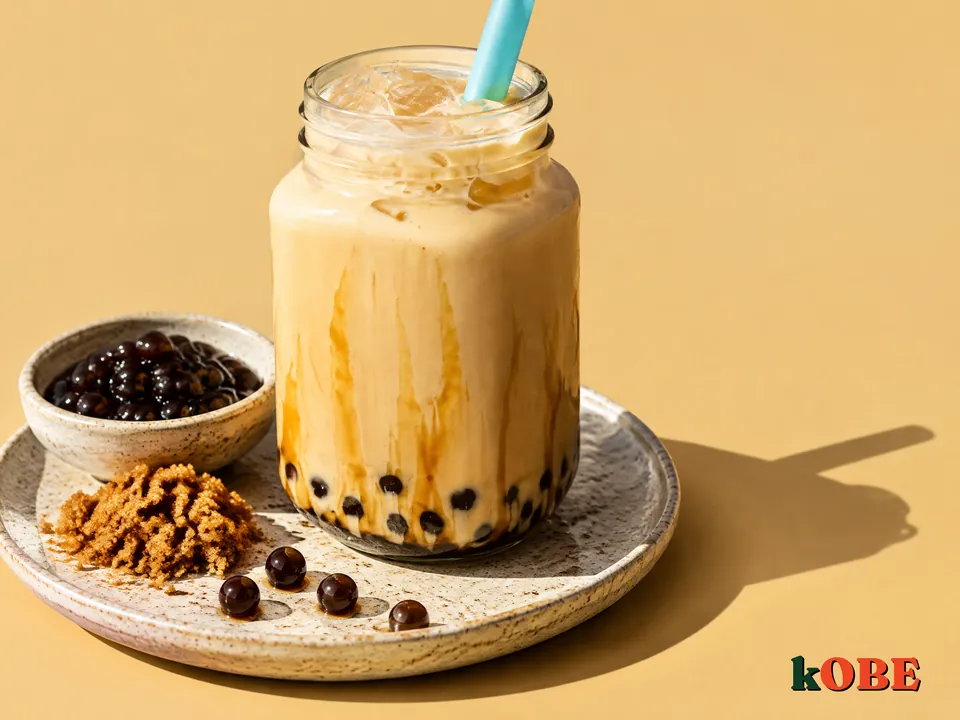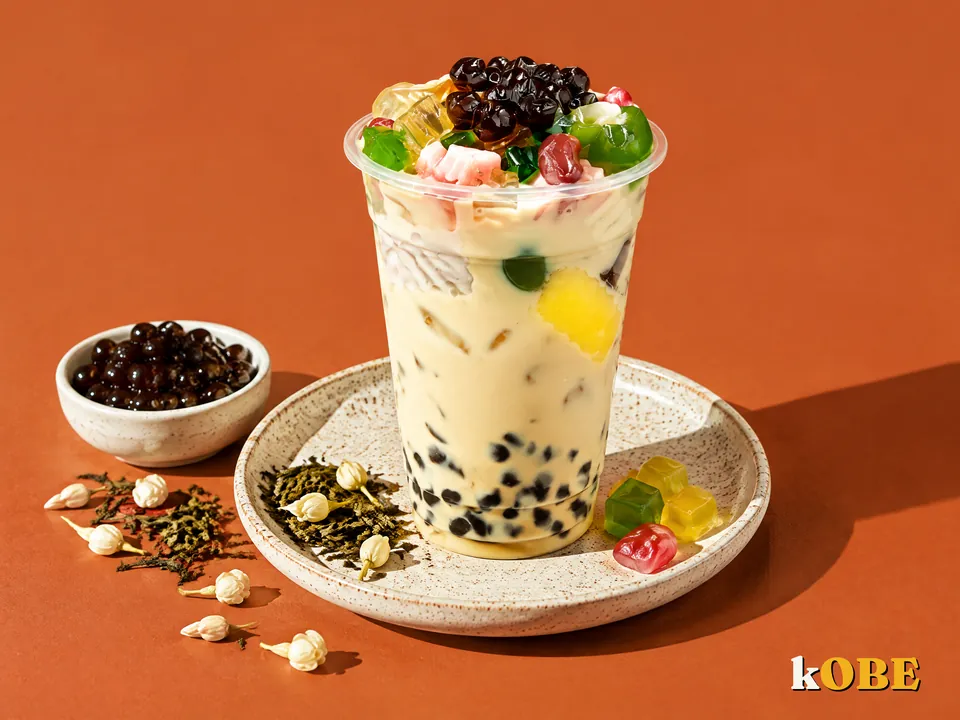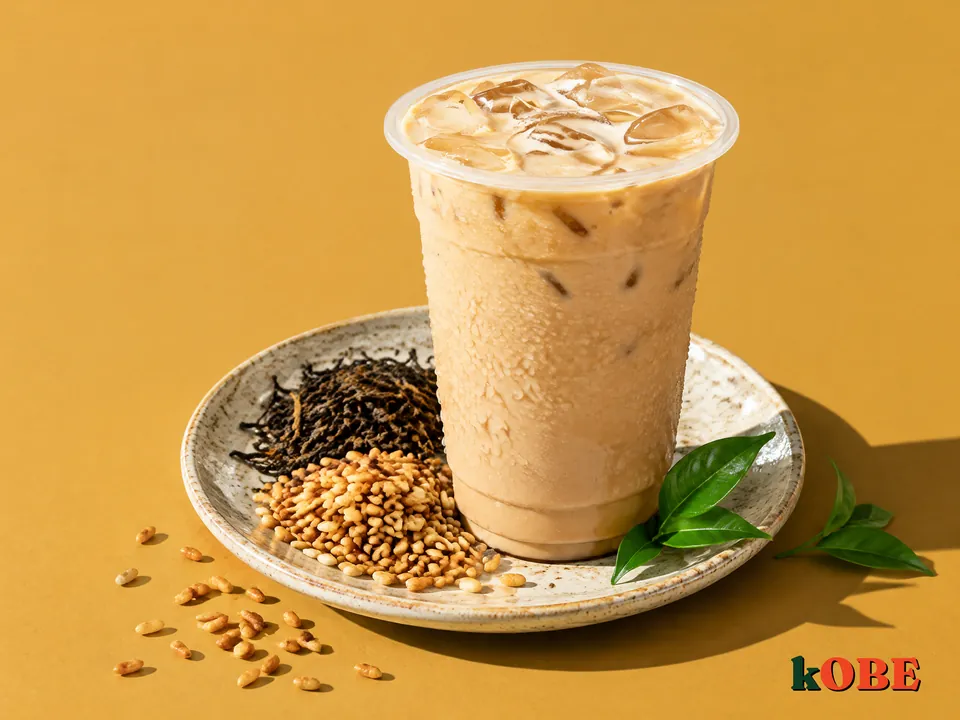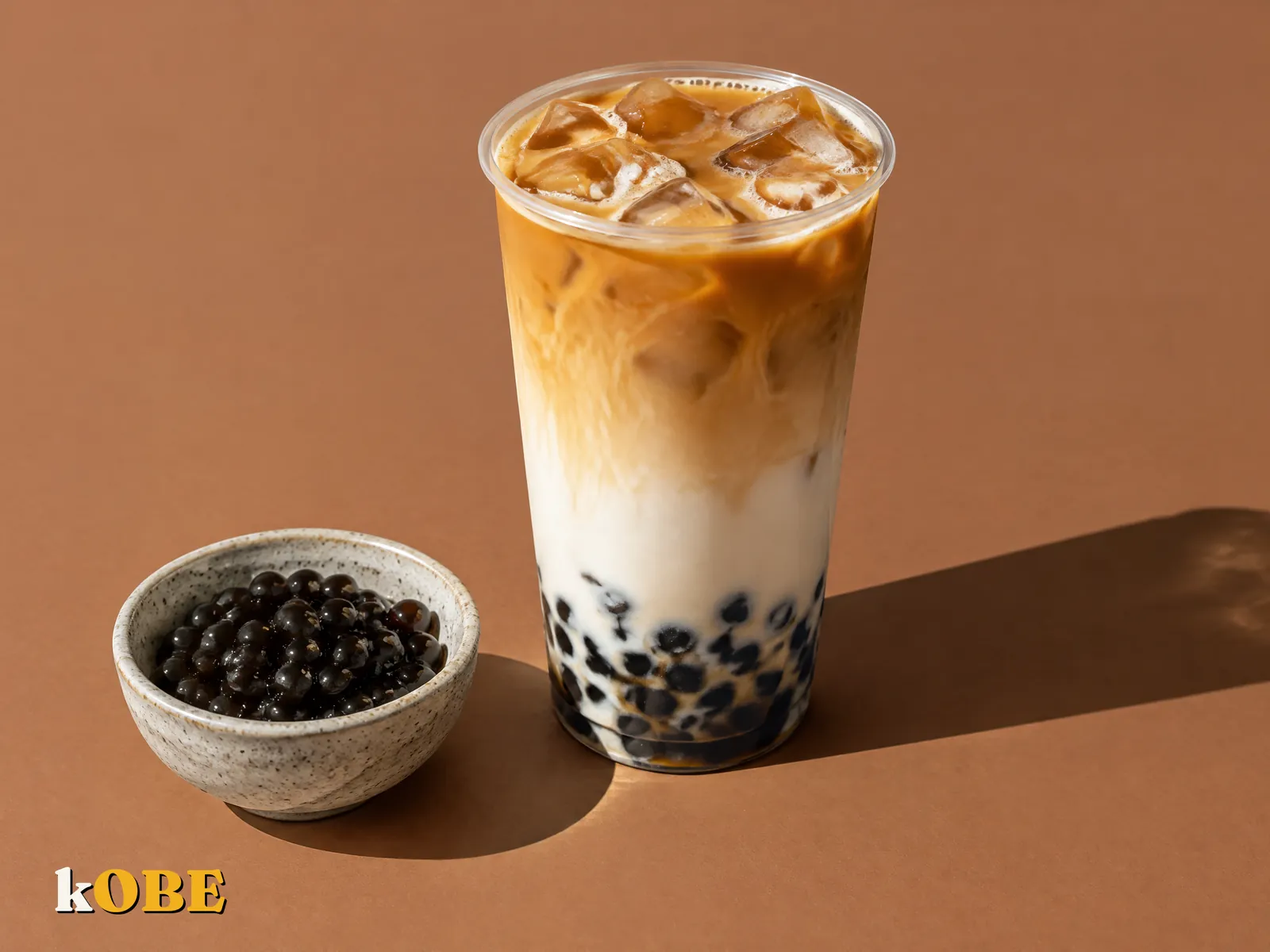
"One pearl milk tea, please. Size large, 100% sugar, 100% ice."
You could probably say that order in your sleep. But have a guess: how many teaspoons of sugar are in that cup?
If you guessed 3 or 4, you're guessing low. Sometimes it's double that. Let's take a cup of milk tea apart layer by layer, so next time you order, you know exactly what you're choosing.
In this article
The total: close to a whole day's recommendation
Every shop has its own recipe, so there's no single number. But for a medium cup, about 500ml, at 100% sugar, the sugar usually lands around 30 to 45g. A large cup with sweet toppings goes even higher.
To picture it:
- 30 to 45g of sugar is about 8 to 11 teaspoons of granulated sugar.
- The World Health Organization (WHO) recommends keeping free sugars under 50g a day, and ideally under 25g.
So one milk tea can use up, or go past, the sugar you'd aim for in a whole day. And that's before the morning coffee with condensed milk.
In calories, a cup like that can run from about 300 to over 500, depending on the milk, toppings and size. That's a light meal's worth, yet you still feel hungry afterward.
Layer 1: the syrup, the part you choose by percentage
Most of the sugar in the cup comes from the sugar syrup the shop pumps in. Usually a syrup cooked from white sugar, or a fructose syrup.
When you pick "70%", "50%" or "30%", the shop only cuts back this syrup. So this is the strongest dial you have.
But here's something few people notice: 0% sugar doesn't mean 0g of sugar. Because of the layers below.
Layer 2: milk and non-dairy creamer
The "milk" in milk tea comes in several forms:
- Condensed milk: more than half sugar. Just 2 tablespoons is about 20g of sugar.
- Non-dairy creamer: many types are made from dried glucose syrup and vegetable oil. It adds creaminess and a little sugar along with it.
- Fresh milk: contains natural milk sugar (lactose), which doesn't count as added sugar.
So a 0% sugar milk tea made with condensed milk is still sweet. If you really want less sugar, you have to ask which milk the shop uses.
Layer 3: pearls and toppings
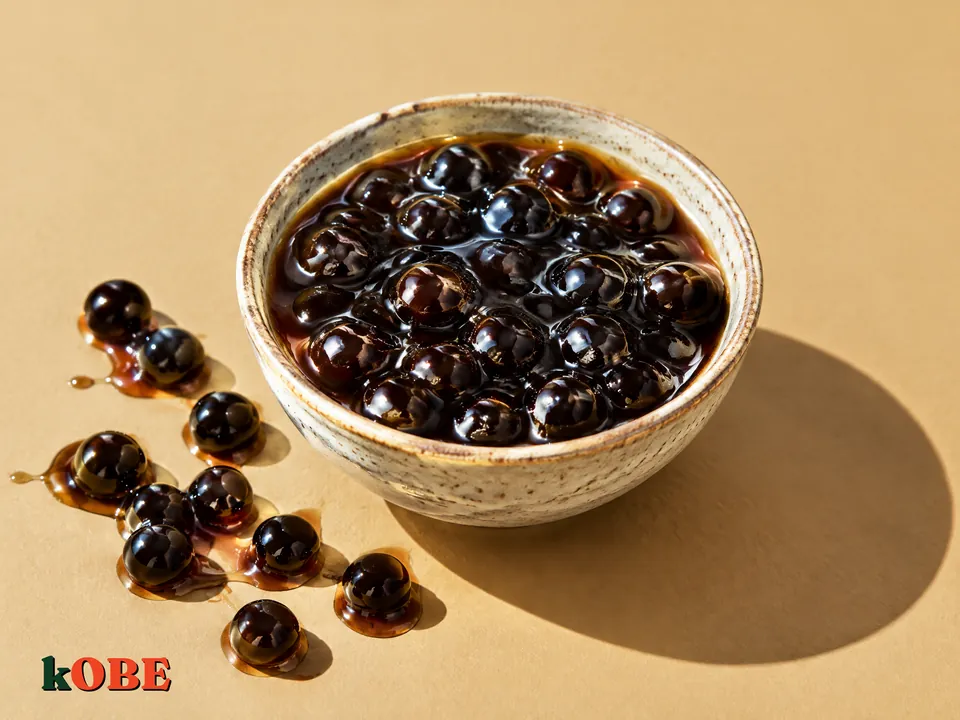
Tapioca pearls are made from tapioca starch, which comes from cassava. On their own, the pearls are mostly starch, not sugar yet.
But after boiling, many shops soak the pearls in brown sugar syrup to keep them chewy and fragrant. The pearls soak up the syrup, so every scoop carries both starch and sugar.
Depending on how generous the scoop is, the pearls can add around 100 to 150 calories. All told, the toppings can "weigh" as much as the drink itself.
A few other toppings:
| Topping | What's inside |
|---|---|
| Brown sugar pearls | tapioca starch + sugar syrup |
| Fruit jelly, coconut jelly | usually soaked in syrup |
| Egg pudding | sugar, milk, eggs |
| Cheese foam (salted cream) | rich, often with added sugar |
| Aloe vera | fewer calories, but often soaked in sugar |
Order smart and still have fun
Milk tea is a joy, no need to give it up. Just order a bit more cleverly:
- Drop the sugar one step at a time. 70% this week, 50% in a few weeks, then 30%. Your tongue adapts very quickly.
- Go one size smaller. This cuts sugar, milk and toppings all at once.
- Pick just one topping. Or swap brown sugar pearls for plain white pearls not soaked in syrup, if the shop has them.
- Ask about the milk. Fresh milk usually means less added sugar than condensed milk or creamer.
- Try fruit tea without milk, or plain tea. Oolong, jasmine and roasted rice tea taste surprisingly fragrant when sugar isn't covering them up.
Here's a fun one: many people drop to 30% for a few weeks, then go back and try 100%. They usually find it harshly sweet and hard to finish. That's the sign their taste buds have moved on.
Inside the kOBE kitchen
kOBE's collection of 1,480 home recipes has a whole milk tea corner: brown sugar pearl milk tea, jasmine oolong, Japanese roasted rice, Thai red tea. These sweet recipes use kOBE Signature Monk Fruit Blend, and each one lists calories, protein, fat and sugar per 100g.
For a lighter "milk" layer, you can use kOBE Oat Milk, Monk Fruit: 36 calories and 9g carbs per 100ml. We'll say it plainly: this milk still has natural sugars from the oats, it just has no cane sugar added. The unsweetened version, kOBE Oat Milk, has 34 calories and 4.5g carbs per 100ml, with no added refined sugar.
Frequently asked questions
Does 0% sugar milk tea have calories?
Do white pearls have less sugar than black pearls?
How many cups a week is reasonable?
Keep reading
Sources
- WHO (2015). Guideline: Sugars intake for adults and children.
- USDA FoodData Central: sweetened condensed milk, non-dairy creamer (powdered), tapioca pearls (dry).
- Harvard T.H. Chan School of Public Health, The Nutrition Source: Sugary Drinks.
- Further reading: Understanding Nutrition 16th ed., chapter 4.