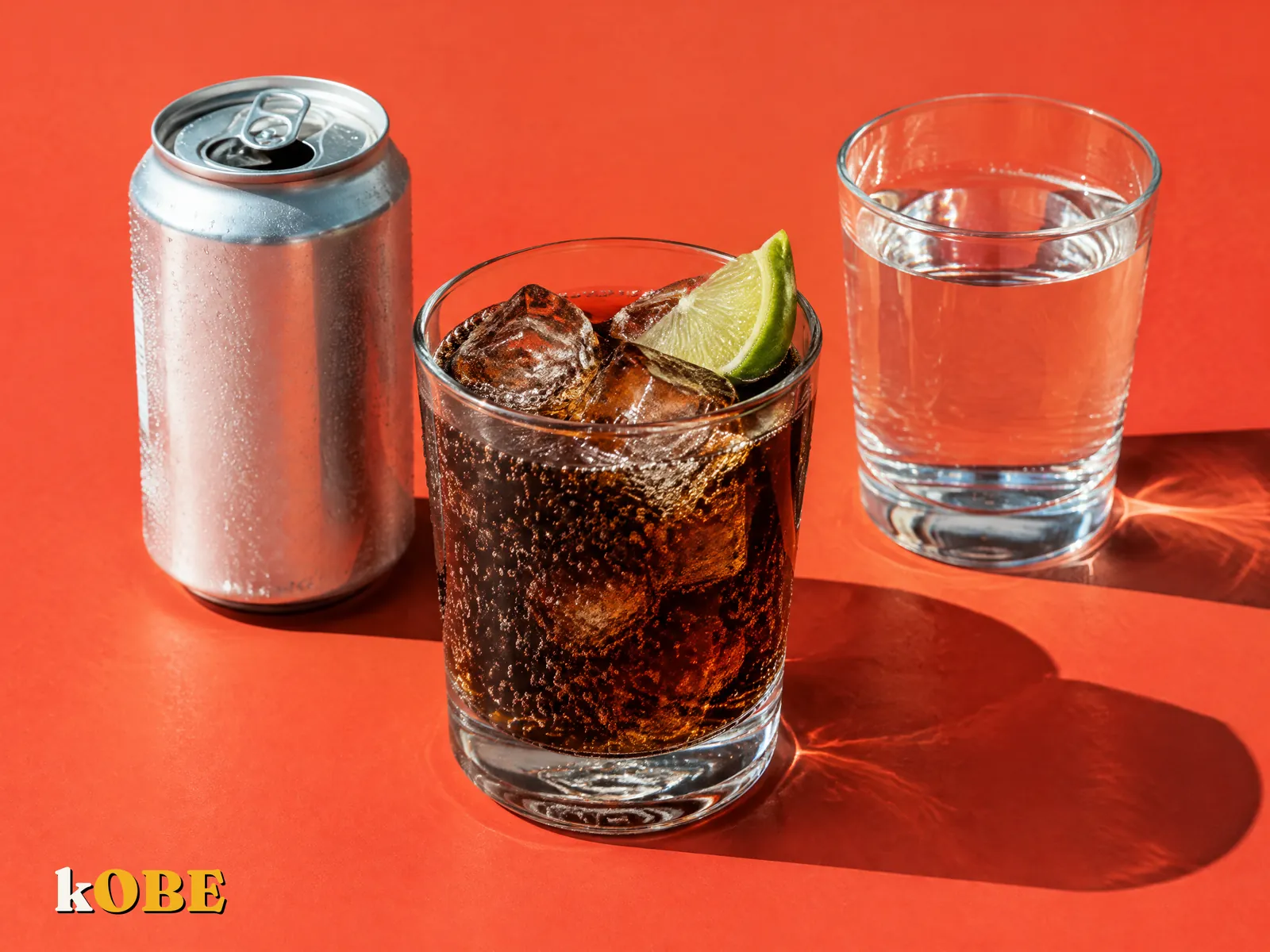
In the drinks fridge at the corner shop, the regular can and the "zero" can sit side by side. Same color, almost the same taste, just one small word different on the label.
One can has about 35g of sugar. The other has almost no calories at all.
Sounds like an obvious choice. But online, you'll find every kind of opinion: fans, critics, and people who say it just makes you crave sweets more. Let's calmly look at what science knows, and what it doesn't know yet.
In this article
What makes a zero can sweet?
Zero-calorie sodas swap sugar for non-sugar sweeteners. The names you'll often see on the label:
- Aspartame
- Acesulfame potassium (acesulfame K)
- Sucralose
- Steviol glycosides, extracted from stevia
These are hundreds of times sweeter than sugar. So only a tiny amount is needed, so tiny it contributes almost no calories. Many cans use two at once for a rounder sweetness, much like blending several spices in one pot of broth.
Is "0 calories" really zero?
Pretty much. A zero can usually has 0 to a few calories. The number is small enough to be rounded down to 0 on the label.
Compared with a regular can:
| 330ml can | Sugar | Calories, approx. |
|---|---|---|
| Regular soda | about 35g, nearly 9 teaspoons | 140 kcal |
| "Zero" soda | 0g | 0 to a few kcal |
A small detail on the label: cans with aspartame usually carry the line "contains phenylalanine". It's there for a small number of people with a rare inherited condition who need to avoid it. For most people, it's just information.
What is science sure of?
A few things are fairly clear:
- Approved sweeteners have all been through safety assessments by bodies such as the Joint FAO/WHO Expert Committee on Food Additives (JECFA) and the European Food Safety Authority (EFSA). Each one has an acceptable daily intake (ADI), usually far higher than what someone drinking a few cans would take in.
- Switching from a regular can to a zero can cuts about 35g of sugar per can, straight away. That's simple arithmetic, no debate needed.
- They don't raise blood sugar the way sugar does. Because the body gets almost no energy from them.
What is still being debated?
This is the part we want to be really clear about, to be fair.
In 2023, the World Health Organization (WHO) published a guideline on non-sugar sweeteners. The WHO concluded that the current evidence doesn't show long-term benefits from using these sweeteners for weight control. It advised people to reduce the overall sweetness of their diet, starting early in life.
Two points about this guideline often get misunderstood:
- It doesn't say these sweeteners are harmful. It says using them may not bring the long-term benefits people hope for.
- It's a conditional recommendation, based on evidence the WHO itself rates as not strong.
Another open question: does zero-calorie sweetness keep us used to sweet tastes, and so still craving sweets? Studies haven't agreed yet. Some people find that it does, others don't.
In short: a zero can really does cut sugar. But it doesn't teach your tongue to enjoy things less sweet.
So how should you drink it?
We think a sensible way to see a zero can is as a stepping stone, not the destination.
- If you drink regular soda every day: switching to zero is a clear step toward less sugar.
- If you're already used to zero: try alternating with water, unsweetened tea, or homemade lime soda with just a little sweetness.
- Long term: the goal is to let your taste buds get used to less sweet drinks, whatever they're sweetened with.
Something few people think about: cola-style sodas usually contain caffeine, about 30 to 40mg per can. Less than a cup of coffee, but enough to make sleep harder if you drink it in the evening.
Inside the kOBE kitchen
kOBE's collection of 1,480 home recipes has a whole drinks corner: kumquat tea, blueberry soda, passion fruit and pink guava tea, coconut water with kumquat. Drinks that need sweetness are sweetened with kOBE Signature Monk Fruit Blend, and each recipe lists calories and sugar per 100g.
A trick we use a lot: make the first glass exactly as the recipe says. After that, make it a little less sweet each time. The tang of kumquat and passion fruit and the fragrance of the tea will come through more clearly.
Frequently asked questions
Do zero-calorie sodas raise blood sugar?
Should kids drink zero sodas?
How is plain soda water different from zero soda?
Keep reading
Sources
- WHO (2023). Use of non-sugar sweeteners: WHO guideline. Geneva: World Health Organization.
- EFSA (2013). Scientific Opinion on the re-evaluation of aspartame (E 951) as a food additive. EFSA Journal 11(12):3496. Along with EFSA's assessments of other sweeteners.
- JECFA (FAO/WHO Joint Expert Committee on Food Additives). ADI evaluations for aspartame, acesulfame K, sucralose and steviol glycosides.
- USDA FoodData Central: cola-type carbonated soft drinks, regular and sugar free.
- Further reading: Understanding Nutrition 16th ed., chapter 4 (section on alternative sweeteners).