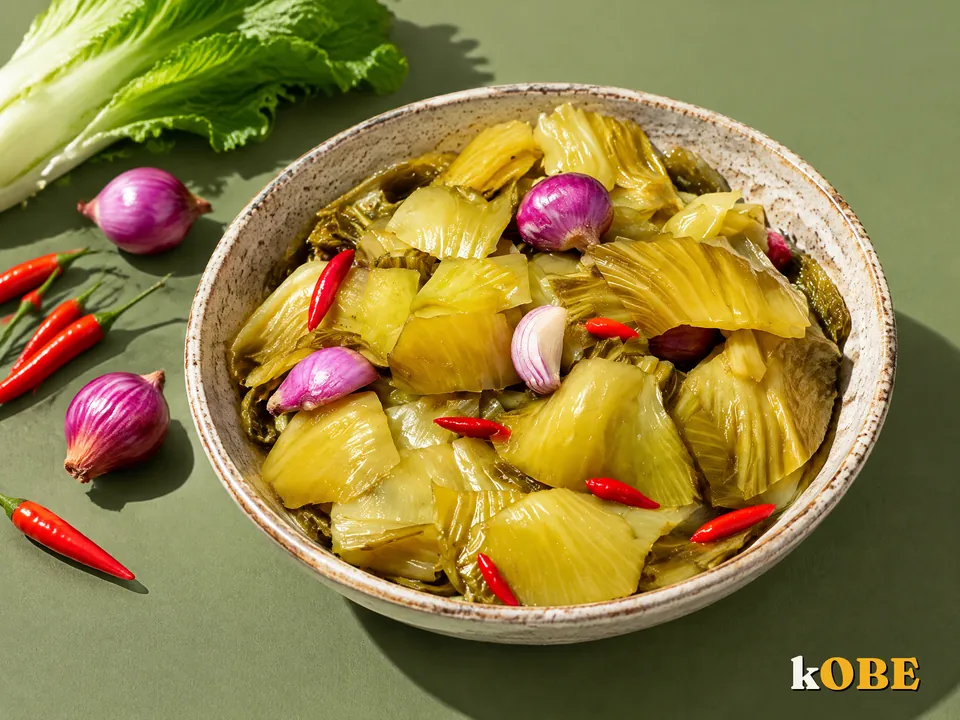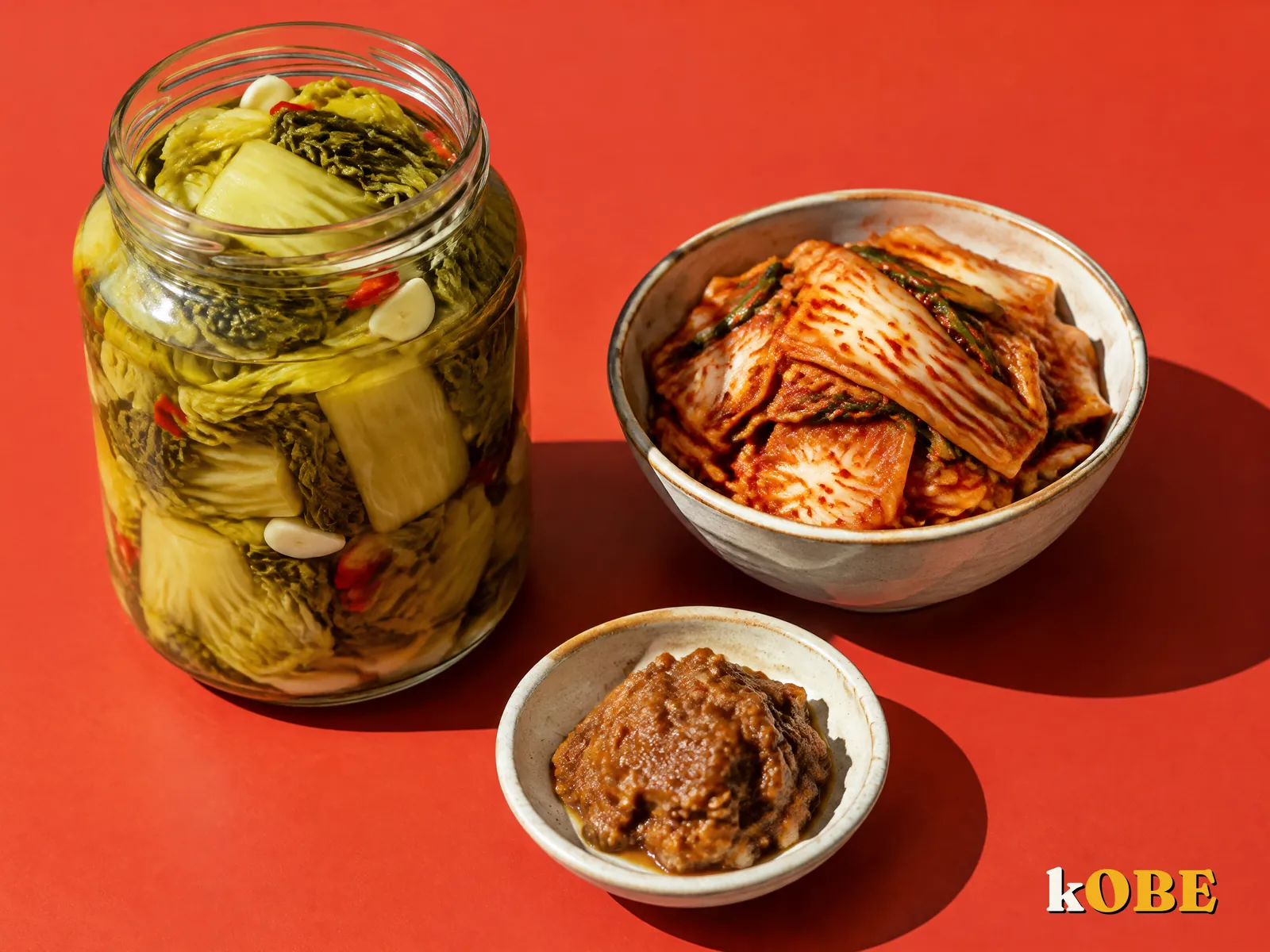
In a corner of Grandma's kitchen there was always a crock of dưa cải (pickled mustard greens). Mustard greens wilted in the sun, packed down tight, covered with salt water. Two or three days later, the greens turned from green to golden yellow, and the brine smelled gently sour and pungent.
Grandma had no microscope. But she was running a tiny microbiology lab, with billions of "workers" busy inside that crock.
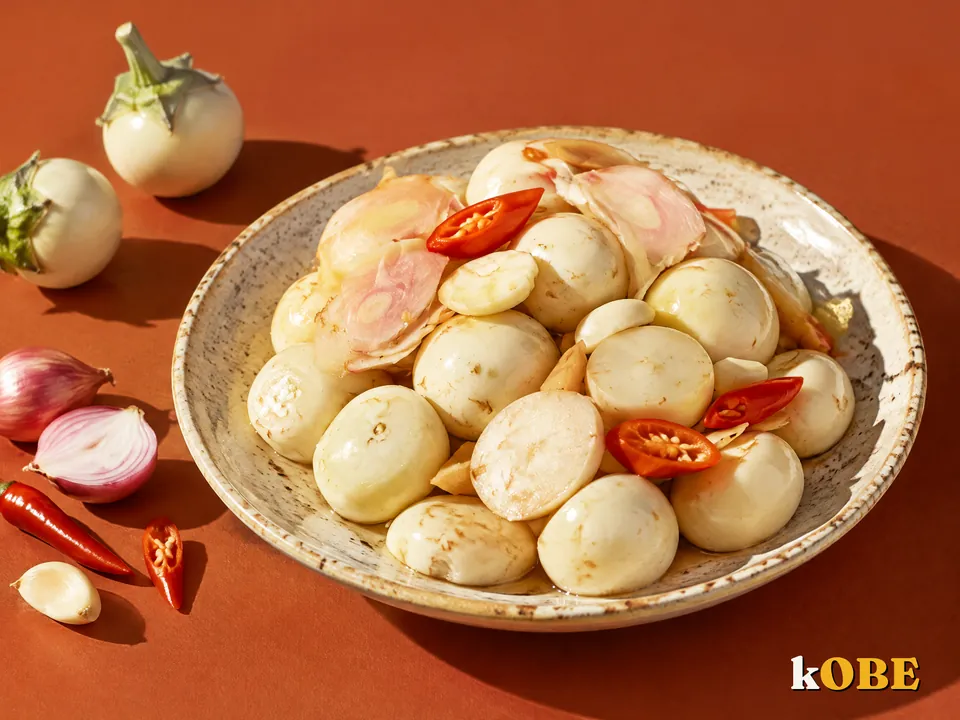
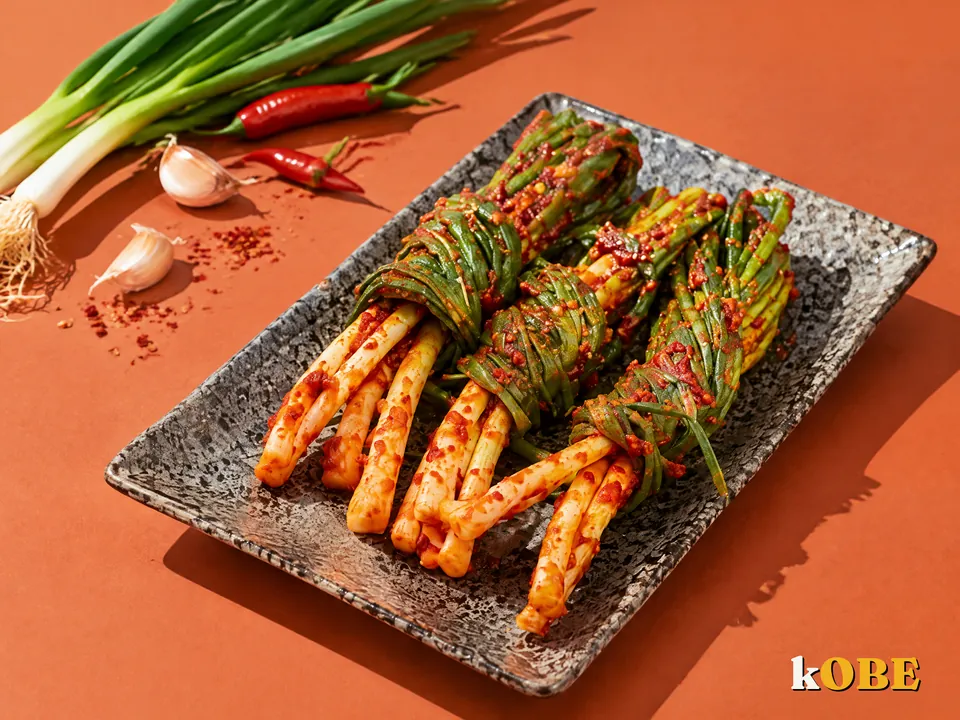
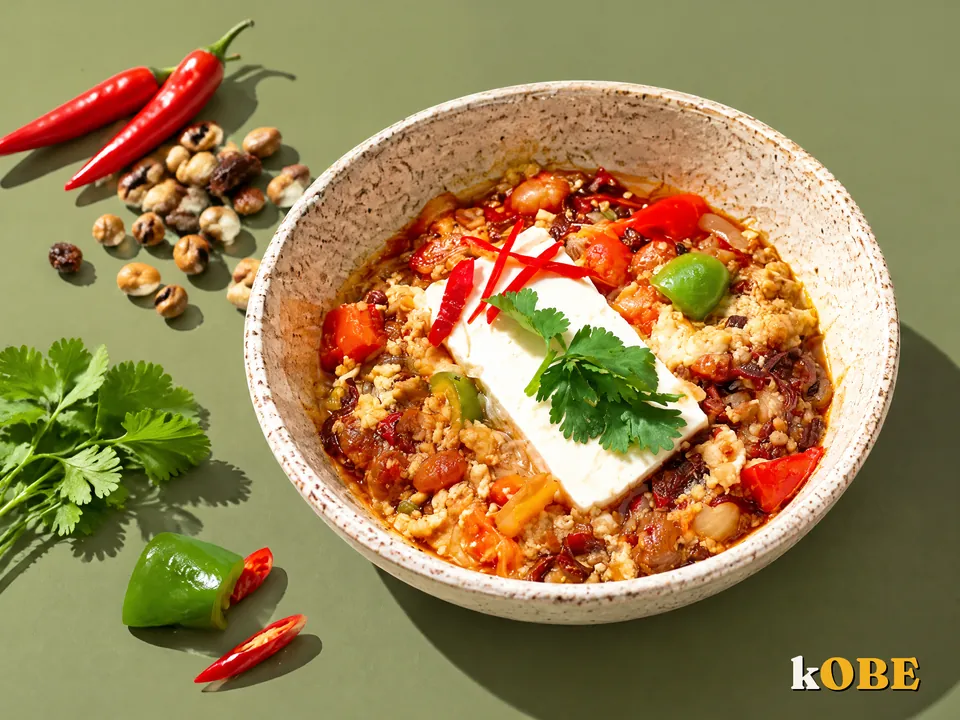
The Vietnamese table is full of dishes like this: dưa cải, cà pháo (pickled baby eggplant), dưa món (mixed pickled vegetables), tương (fermented soybean paste), chao (fermented tofu), mắm (fermented fish and shrimp pastes) and nem chua (sour fermented pork). Now add Korean kimchi too. What do they have in common, and does every one of them contain "good bacteria"?
In this article
- Who makes the pickle crock sour?
- The Vietnamese table: a different fermentation for every dish
- Live bacteria or not? It depends on raw or cooked
- What does science say about fermented foods and your gut?
- Two things to watch: salt, and pickles that are "not ready"
- Inside the kOBE kitchen
- Frequently asked questions
Who makes the pickle crock sour?
The surface of mustard greens always carries a few bacteria. Among them is a group called lactic acid bacteria, cousins of the bacteria that make yogurt.
When you soak the greens in salt water, the fun begins:
- Salt knocks out the competition. Many spoilage bacteria cannot tolerate salt. Lactic acid bacteria can.
- Lactic acid bacteria eat the sugar in the vegetables. They turn it into lactic acid. That is the sour taste.
- The acid makes the environment more and more sour. The more sour it gets, the fewer other bacteria can survive. The pickle "preserves itself".
That is why many families add a splash of rice-rinsing water or a little sugar when they pickle. It is a starter meal for the lactic acid team.
And where does the yellow color come from? The acid changes chlorophyll (the green pigment), so the leaves turn yellow. It is the same reason morning glory dulls when you squeeze lime over it.
The Vietnamese table: a different fermentation for every dish
Not every fermented food is made by the same "crew":
| Dish | Who ferments it | Notes |
|---|---|---|
| Dưa cải, cà pháo, dưa món | Lactic acid bacteria | Sour, can be eaten raw |
| Kimchi | Lactic acid bacteria | Like dưa cải, with chili and garlic |
| Tương bần, tương hột (soybean pastes) | Molds, then bacteria | Soybeans fermented for many months |
| Chao (fermented tofu) | Mold on tofu | Rich, salty, distinctive aroma |
| Nước mắm (fish sauce) | Mainly the fish's own enzymes | Very salty, aged for many months |
| Nem chua (sour pork) | Lactic acid bacteria on meat | Mildly sour |
| Yogurt | Lactic acid bacteria on milk | The most familiar fermented food |
Fish sauce is a special case. The salt in the aging barrels is so high that most bacteria cannot work. Instead, enzymes already present in the fish's gut and flesh slowly "cut" the protein into deep umami flavor.
Live bacteria or not? It depends on raw or cooked
This is the most important question if you care about your gut.
- Eaten raw, no heat: sour dưa cải, cà pháo, kimchi, homemade yogurt. These still contain live bacteria.
- Cooked or pasteurized: stir-fried dưa cải, sour pickle soup, braised soybean paste, pasteurized canned kimchi. The bacteria are no longer alive.
But do not be sad if you only eat cooked pickles. Fermented foods still keep their sourness and aroma, and dead bacteria may have roles of their own. They just cannot be called "live good bacteria" anymore.
Also remember that bacteria in homemade pickles have not been tested strain by strain like probiotic products. We explain the difference in prebiotics and probiotics.
What does science say about fermented foods and your gut?
There is one notable experiment from Stanford University in 2021.
36 healthy adults were split into two groups and followed for 10 weeks. One group gradually increased fermented foods like yogurt, kimchi, pickled vegetables and kombucha. The other gradually increased fiber.
The surprising result: the fermented food group saw gut bacterial diversity go up, along with some immune markers shifting in a good direction. The high-fiber group did not see diversity rise within that time.
We read this result calmly:
- The study is still small, just a few dozen people over a few months.
- It does not mean fiber matters less. Fiber is still food for bacteria. The microbiome may simply need more time to "catch up".
- Bacterial diversity is a marker still being studied, not yet a standardized measure of health.
An easy picture: fermented foods bring in "new guests", and fiber feeds both the new guests and the old residents. The two complement each other; see our pillar article on fiber and the microbiome.
Two things to watch: salt, and pickles that are "not ready"
First, salt. Most Vietnamese fermented foods are quite salty. WHO recommends adults eat under 5g of salt a day, about one teaspoon, counting the salt in fish sauce, soy sauce, pickles and fermented pastes. A few bites of pickles as a side dish is fun. A whole bowl in place of vegetables is a lot of salt.
A small tip: give pickles a quick rinse before eating, and use less dipping sauce at meals with pickles.
Second, pickles that are "not ready". Many studies on pickled vegetables show nitrite levels are often higher in the first few days, then drop once the pickles are fully sour. So the old advice to "wait until the pickles are sour and yellow" has a real basis.
And if the crock grows a moldy film, smells odd or turns unusually slimy, throw it out. No regrets.
Inside the kOBE kitchen
kOBE's library of 1,480 home recipes has quite a few fermented and pickled dishes: sour pickled mustard greens, pressed pickled baby eggplant, central Vietnamese dưa món, and several kinds of kimchi.
Like all our recipes, any sweetness comes from monk fruit sweetener instead of refined sugar. Every dish lists calories, protein, fat and sugar per 100g, so you know what you are picking up with your chopsticks.
A tip from our kitchen: eat pickles with protein-rich dishes like cá kho or boiled pork. The sourness cuts through the richness, and you will not need much extra fish sauce either.
Frequently asked questions
Does supermarket kimchi have good bacteria?
Can I drink the pickle brine?
Is it okay to keep dưa cải for a long time?
Keep reading
Sources
- Wastyk H.C. et al. (2021). Gut-microbiota-targeted diets modulate human immune status. Cell 184(16):4137 to 4153.
- Marco M.L. et al. (2021). The International Scientific Association for Probiotics and Prebiotics (ISAPP) consensus statement on fermented foods. Nature Reviews Gastroenterology & Hepatology 18:196 to 208.
- WHO. Salt reduction (fact sheet).
- Battcock M., Azam-Ali S. (1998). Fermented Fruits and Vegetables: A Global Perspective. FAO Agricultural Services Bulletin 134.
- Further reading: Culinary Nutrition; Understanding Nutrition 16th ed., chapter 3.