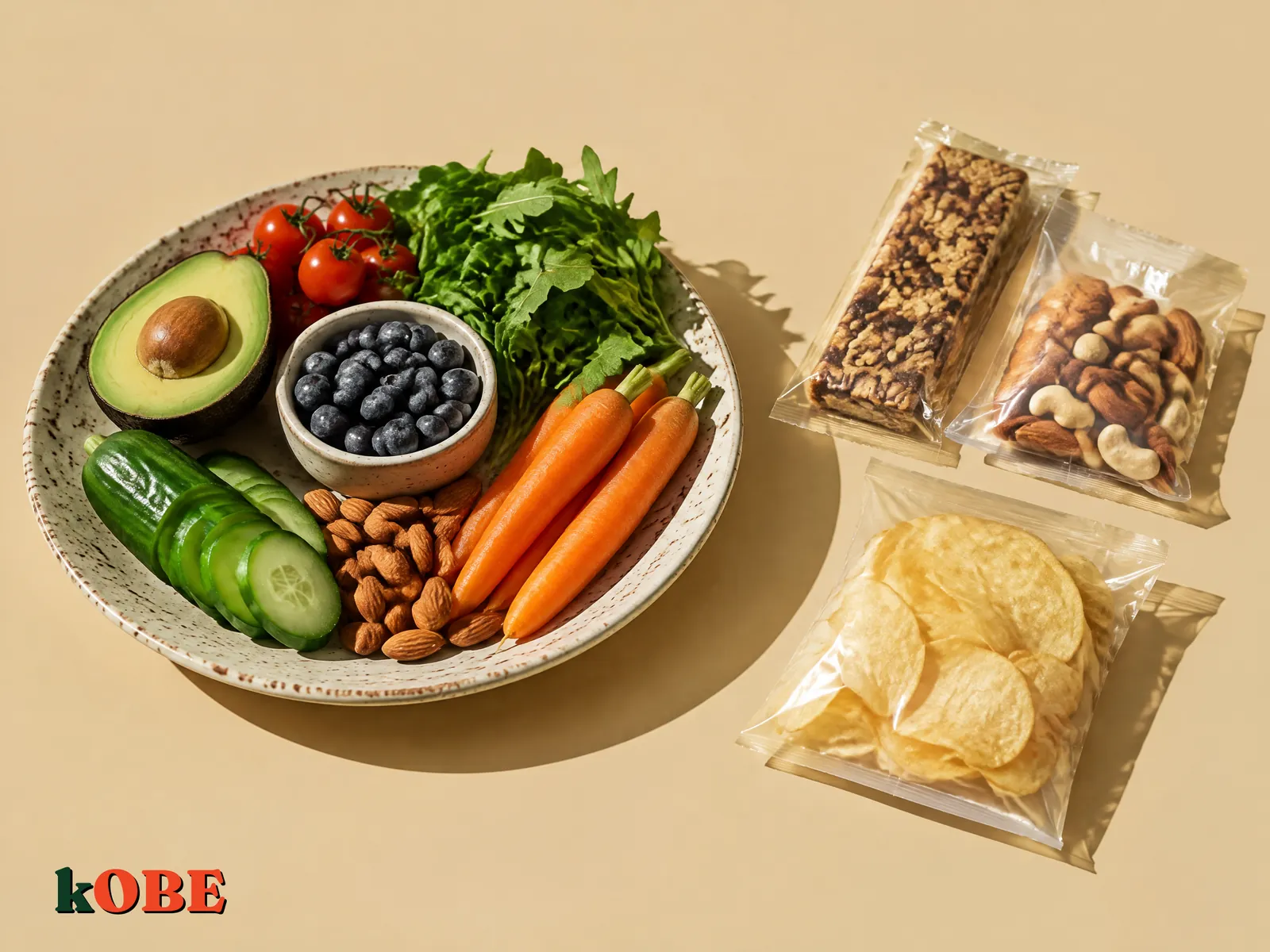
Take a look in your shopping basket. A bag of frozen green peas. A tub of yogurt. A bag of cheese-flavored snacks. A cup of instant noodles.
All four are "processed food". But lumping them together is a little unfair to the bag of peas.
Recently, scientists have started using a clearer idea: ultra-processed food. And the gut is one of the places they are most curious about.
In this article
Processing comes in levels, not just one
A research team in Brazil created a classification system called NOVA, which sorts food into four groups:
| NOVA group | What it is | Examples |
|---|---|---|
| 1. Fresh or minimally processed | Washed, cut, boiled, frozen, dried | Vegetables, eggs, rice, frozen vegetables, cooked and frozen rice |
| 2. Cooking ingredients | Extracted from group 1 | Cooking oil, salt, sugar, lard |
| 3. Processed | Group 1 plus group 2 | Pickles, canned fish, freshly baked bread, cheese |
| 4. Ultra-processed | Industrial recipes, with many ingredients rarely seen in home kitchens | Snacks, soft drinks, instant noodles, industrial sausages |
The hallmark of group 4 is a long ingredient list, with words you would never see in a home kitchen: emulsifiers, thickeners, flavorings, colorings, sugars in syrup form.
Some scientists also criticize NOVA as too broad. But it helps us tell things apart: a bag of frozen vegetables is not in the same league as a bag of snacks. See also are frozen vegetables worse than fresh.
The biggest problem: bacteria go hungry
Here is what is fairly well established: ultra-processed foods are usually very low in fiber.
Flours are refined, vegetables are nearly absent, and grains and beans are replaced with starch and sugar. A lunch of instant noodles and a bottle of soda can contain almost zero grams of fiber.
And fiber is the main food of the bacteria in your large intestine. As we told in our pillar article on fiber and the microbiome: when fiber is missing for a long time, mouse experiments show bacteria switch to eating the protective mucus layer of the gut.
In other words, the main harm of a diet heavy in ultra-processed food may not lie in what it contains, but in what it pushes off your plate: vegetables, beans, grains and fruit.
Emulsifiers: a question still under study
Emulsifiers help oil and water mix, so ice cream is smooth and sauces do not separate. Two names come up often: CMC (carboxymethylcellulose) and polysorbate 80.
In 2015, a mouse study found these two changed the microbiome and thinned the gut's mucus layer. In 2022, the same research group gave CMC to healthy people for a few weeks, and also saw the microbiome change in some of them.
We read this carefully:
- The doses in experiments are not always the same as what people eat day to day.
- Human studies are still very few, with small groups and short timeframes.
- There are dozens of emulsifiers, and you cannot lump them all together.
The current conclusion: this is a question worth watching, not a reason to panic every time you see the word "emulsifier".
Eating more without noticing
A famous 2019 study by the US National Institutes of Health (NIH) had 20 adults live in a research unit. Two weeks on ultra-processed food, two weeks on minimally processed food. The two diets were designed to offer similar calories, sugar, fat and fiber. Everyone could eat as much as they liked.
The result: on ultra-processed food, people ate about 500 kcal more per day, and ate faster. They did not feel they were eating more.
Nobody is sure why yet. It may be that ultra-processed food is soft, easy to chew and quick to eat, so the body has no time to signal fullness. This is about eating habits, not just the gut, but it is well worth knowing.
So what should you do, realistically?
Nobody living in Ho Chi Minh City can avoid processed food completely. And you do not need to. A few easy principles:
- Read the ingredient list. The shorter it is, and the more words you recognize, the closer it is to a home kitchen.
- Make use of group 1. Frozen vegetables, cooked and frozen beans, and frozen rice are "good convenience food".
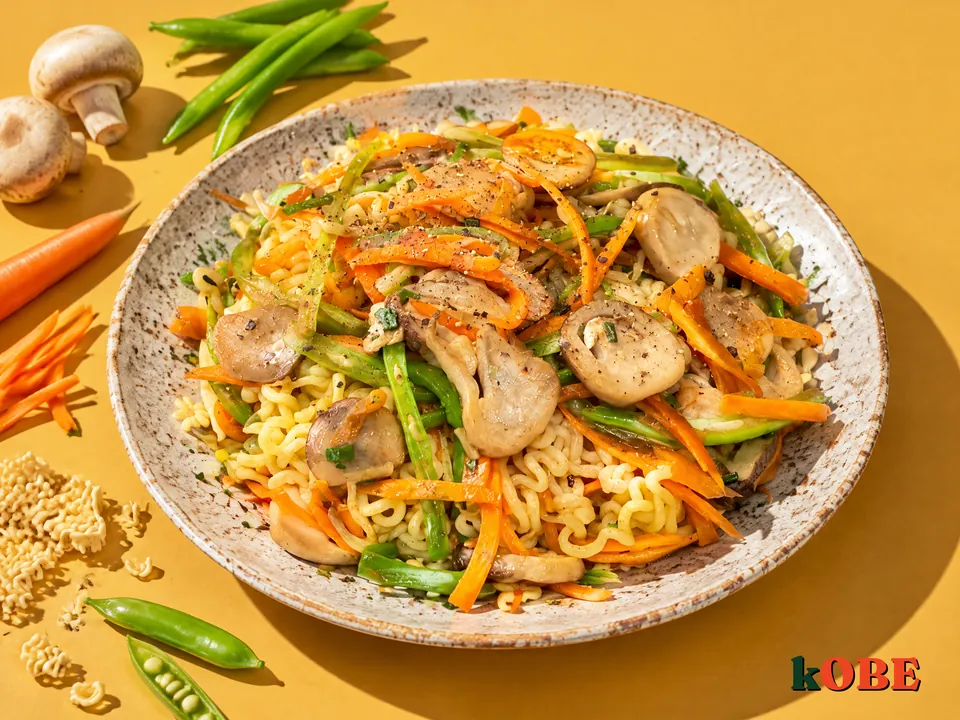
- Give every meal one whole plant food. Having instant noodles? Add a handful of greens and an egg.
- Slow down. Especially with soft, easy-to-swallow foods.
Inside the kOBE kitchen
The items on our Ingredients page are cooked and then frozen, but with simple ingredients. For example, our Sous Vide Chicken Breast is only brined in sea salt, cooked sous vide at 60°C for 90 minutes, quickly chilled and then frozen.
Chickpeas, Green Peas, Edamame, Red Brown Rice, Black Brown Rice and roasted diced sweet potato follow the same idea: cooked, frozen, so you have ready food where you still recognize every ingredient.
A tip from our kitchen: keep a few boxes of frozen beans and vegetables in the freezer. On busy days when you have to eat convenience food, you can still add a plant dish to your meal. See the items on our Ingredients page.
Frequently asked questions
Are instant noodles bad for your gut?
Is frozen food ultra-processed?
Should I avoid all emulsifiers?
Keep reading
Sources
- Monteiro C.A. et al. (2019). Ultra-processed foods: what they are and how to identify them. Public Health Nutrition 22(5):936 to 941.
- Hall K.D. et al. (2019). Ultra-processed diets cause excess calorie intake and weight gain: an inpatient randomized controlled trial of ad libitum food intake. Cell Metabolism 30(1):67 to 77.
- Chassaing B. et al. (2015). Dietary emulsifiers impact the mouse gut microbiota promoting colitis and metabolic syndrome. Nature 519:92 to 96.
- Chassaing B. et al. (2022). Randomized controlled-feeding study of dietary emulsifier carboxymethylcellulose reveals detrimental impacts on the gut microbiota and metabolome. Gastroenterology 162(3):743 to 756.
- Further reading: Understanding Nutrition 16th ed., chapter 3; Diet Cults.