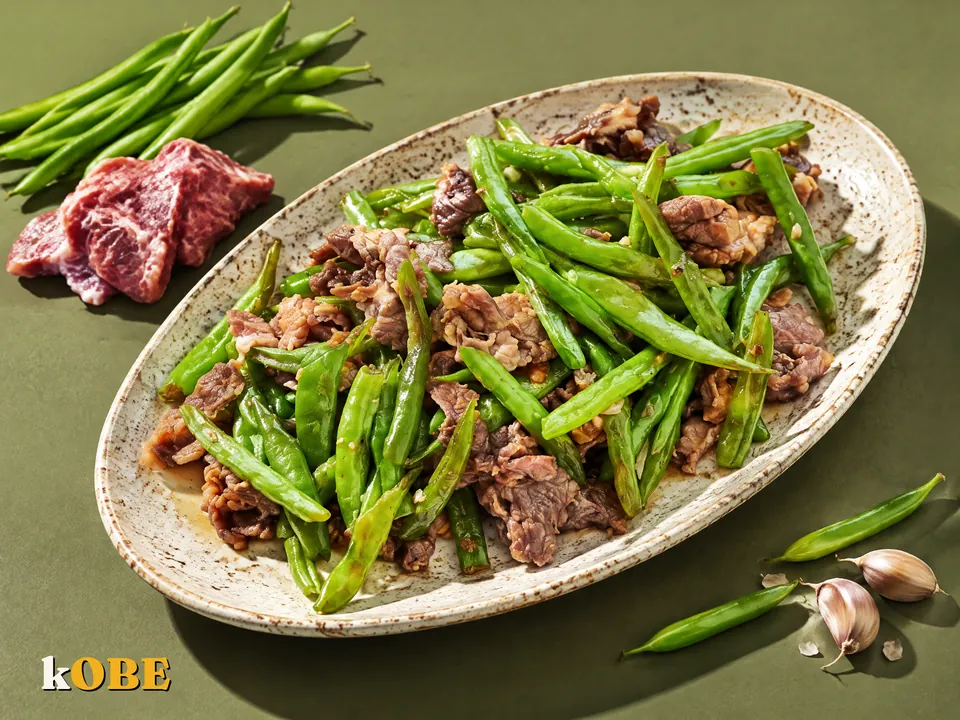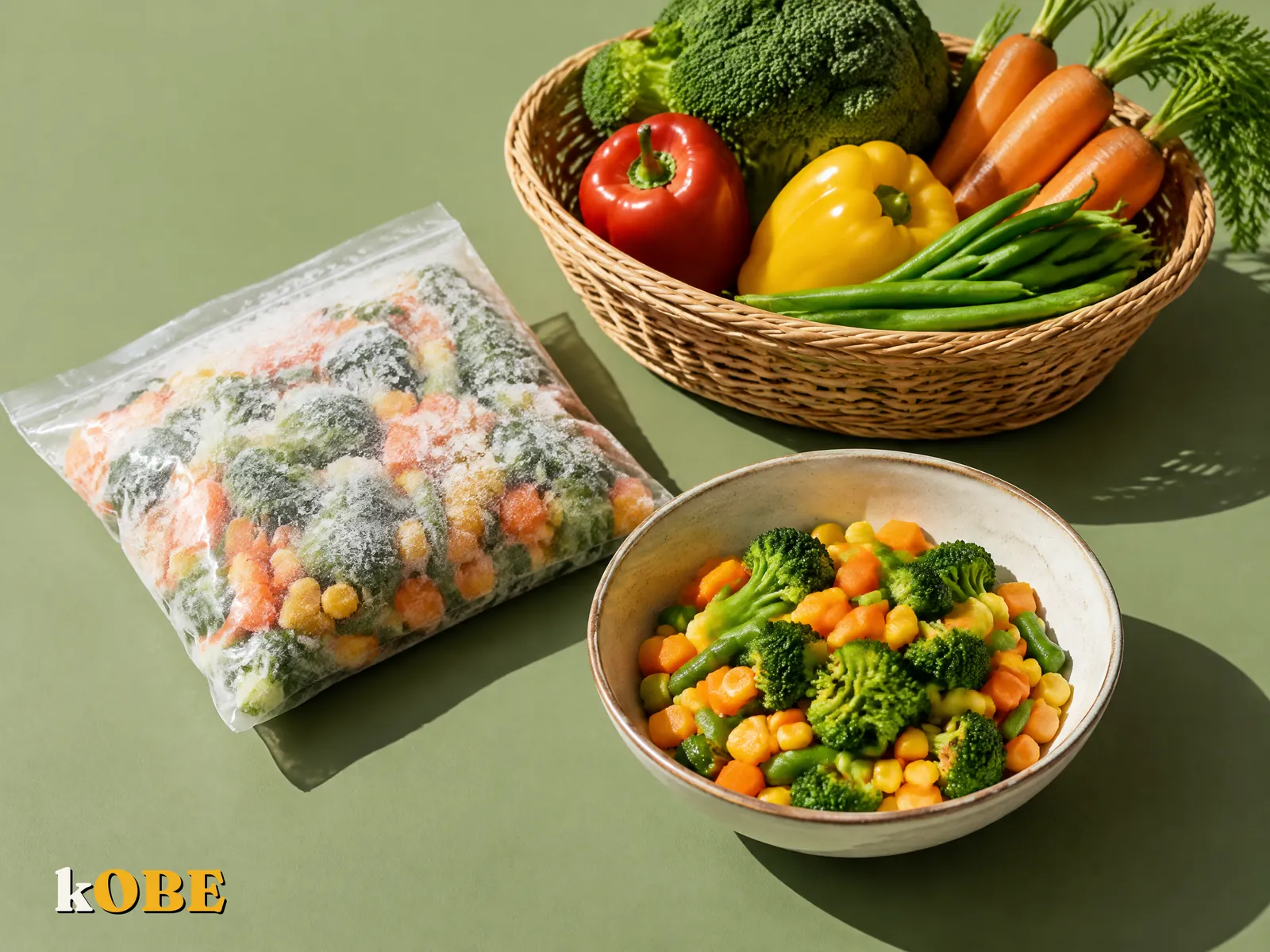
Sunday morning you go to the market and buy a bunch of greens, a bag of green beans and a few heads of broccoli. You get home and put them in the fridge. Monday is busy, Tuesday is busy. By Thursday you open the fridge and the greens have wilted.
Meanwhile, in the freezer, a bag of frozen green peas sits quietly, waiting for you.
Honest question: which one still has more vitamins? The answer is not always the "fresh" greens.
In this article
Vegetables start "running down" the moment they leave the soil
Picked vegetables are still alive. They keep breathing and burning the energy stored inside. And along the way, they slowly lose some nutrients.
The biggest losses are vitamin C and some B vitamins. They dissolve in water and break down easily with heat, light and oxygen.
Picture the journey of a bunch of greens at the market:
- Picked early in the morning at the farm.
- Loaded onto a truck, taken to the wholesale market.
- Laid out at a stall, in Ho Chi Minh City temperatures of about 30 to 35°C.
- You buy it and keep it in the fridge for a few days.
At every step, the bunch loses a little more. Some studies report that spinach kept at room temperature can lose most of its vitamin C in just a few days.
Freezing: pressing the "pause" button
Commercial frozen vegetables usually go through a process like this: harvest, wash, blanch quickly in boiling water or steam, then freeze very fast. All of it often within a few hours.
Blanching sounds like it would strip nutrients, and it is true that a little vitamin C and B vitamins leach into the blanching water. But it does an important job: it switches off the enzymes in the vegetables. Without blanching, those enzymes quietly keep changing the color, smell and nutrients, even in the freezer.
After that, deep-freeze temperatures almost stop every reaction. Just like the frozen rice we described in cold rice and resistant starch: fast freezing is pressing pause.
The comparison: a draw, and sometimes frozen wins
Scientists at the University of California reviewed many studies, then ran their own comparison of fresh produce, fresh produce stored in the fridge for 5 days, and frozen produce.
A summary of what they found:
| Comparison | Overall result |
|---|---|
| Frozen vs freshly picked | Roughly equal for most nutrients |
| Frozen vs "fresh" after 5 days in the fridge | Frozen is usually equal, sometimes slightly ahead |
| Fiber, minerals | Almost unchanged by freezing |
| Vitamin C | Some lost during blanching, then fairly stable |
As for fiber, you can relax. Freezing does not remove fiber. Ice crystals can break some cell walls so the vegetables turn softer, but the amount of fiber stays the same.
When to choose fresh, when to choose frozen?
Fresh vegetables are still wonderful, especially when:
- You buy and cook them within a day or two.
- They are eaten raw, like lettuce, fresh herbs and cucumber. Freezing makes them mushy and not fit for eating raw.
- They are in season at your local market, both tasty and cheap.
Frozen vegetables are handy when:
- You shop once for the whole week.
- You want peas, beans and corn like green peas, edamame and sweet corn. They lose their sweetness fast after harvest; see what is in green peas.
- You are having a busy day, so your meal still has vegetables instead of skipping them.
What matters is not fresh or frozen, but whether you eat enough vegetables. A bag of frozen vegetables that actually gets eaten is always better than a bunch of fresh greens that wilts in the fridge and gets thrown away.
How to cook frozen vegetables so they taste good
- Do not thaw leafy greens and small vegetables first. Put them straight into a hot pan or pot. Long thawing makes them watery and mushy.
- Cook briefly. They are already blanched and only need heating.
- Use little water. Stir-fry, steam, or add at the end of a soup. Boiling in lots of water loses more vitamin C.
- Dishes that were fully cooked before freezing (like ready-cooked beans) can simply be thawed overnight in the fridge and eaten.
Inside the kOBE kitchen
Many items on kOBE's Ingredients page follow exactly this "cook it, then pause it" idea: Green Peas, Edamame, Chickpeas, Sesame Kale, roasted diced sweet potato and brown rice. All are cooked and then frozen.
How we suggest reheating: thaw overnight in the fridge, or warm in the microwave on low. Low power heats the food evenly without drying it out.
A trick for busy people: every evening, move one box of vegetables or beans from the freezer to the fridge. The next morning you have a plant dish ready for your lunch box. See the items on our Ingredients page.
Frequently asked questions
How long do frozen vegetables keep?
Can I freeze vegetables at home?
Is it a problem to thaw and refreeze?
Keep reading
Sources
- Rickman J.C., Barrett D.M., Bruhn C.M. (2007). Nutritional comparison of fresh, frozen and canned fruits and vegetables. Part 1. Vitamins C and B and phenolic compounds. Journal of the Science of Food and Agriculture 87(6):930 to 944.
- Li L. et al. (2017). Selected nutrient analyses of fresh, fresh-stored, and frozen fruits and vegetables. Journal of Food Composition and Analysis 59:8 to 17.
- USDA FSIS. Freezing and Food Safety.
- Further reading: Culinary Nutrition; Understanding Nutrition 16th ed., chapter 10.