Every generation that grew up on cartoons knows Popeye. Pop open a can of spinach, gulp it down, and the biceps swell up like balloons.
Thanks to Popeye, the whole world believes spinach is the "king of iron". The truth is quite a way off. And the real story of iron is far more fun than the cartoon.
In this article
- Your whole body holds just enough iron for one nail
- Two kinds of iron: one has a VIP pass
- The Popeye story: spinach has iron, but holds on tight
- Which Vietnamese dishes are rich in iron?
- The guides and the gatekeepers
- Fun fact: cast-iron pans chip in some iron too
- Inside the kOBE kitchen
- Frequently asked questions
Your whole body holds just enough iron for one nail
An adult carries only about 3 to 4g of iron. Roughly one small nail.
Most of that iron sits in hemoglobin, the red protein inside red blood cells. Each hemoglobin molecule has iron at its center, like a hook that holds on to oxygen. That is why blood is red.
Your body guards its iron carefully. It recycles iron from old red blood cells and loses only a small amount each day. That small loss is what we top up through food.
Needs vary a lot between people. Women of menstruating age need considerably more than men. Pregnant women need more still. Vietnam's National Institute of Nutrition has separate recommendations for each group (2016).
Two kinds of iron: one has a VIP pass
Iron in food comes in two forms, and your body handles them very differently.
| Heme iron | Non-heme iron | |
|---|---|---|
| Where it is | Red meat, liver, fish, clams, baby clams | Leafy greens, beans, tofu, sesame, grains (and some in meat) |
| Absorption | Easy, rarely blocked by other foods | Much harder, easily blocked or helped |
| Picture it as | Holding a VIP pass, walks straight in | Waiting in line, needs someone to show the way |
Heme iron is absorbed several times better than non-heme iron. So 100g of beef and 100g of greens might show the same iron number on paper, but what your body actually takes in is still different.
Do not cross greens off your list just yet, though. Non-heme iron has a nice quality: it listens closely to the food it comes with. Pick the right companion and you get noticeably more.
The Popeye story: spinach has iron, but holds on tight
Spinach really does have iron. But it also has plenty of oxalate, a compound that latches on to iron and calcium and makes them hard for your body to pull out.
There is also a famous tale that spinach's iron number was written down with a misplaced decimal point, ten times too high. The funny part is that historians later cast doubt on the "decimal point" tale itself. One myth explained by another myth.
The lesson: do not rely on a single "miracle" food. Vietnamese cooking has more dependable options.
Which Vietnamese dishes are rich in iron?
No need for a long list. Here are familiar foods, sorted into groups:
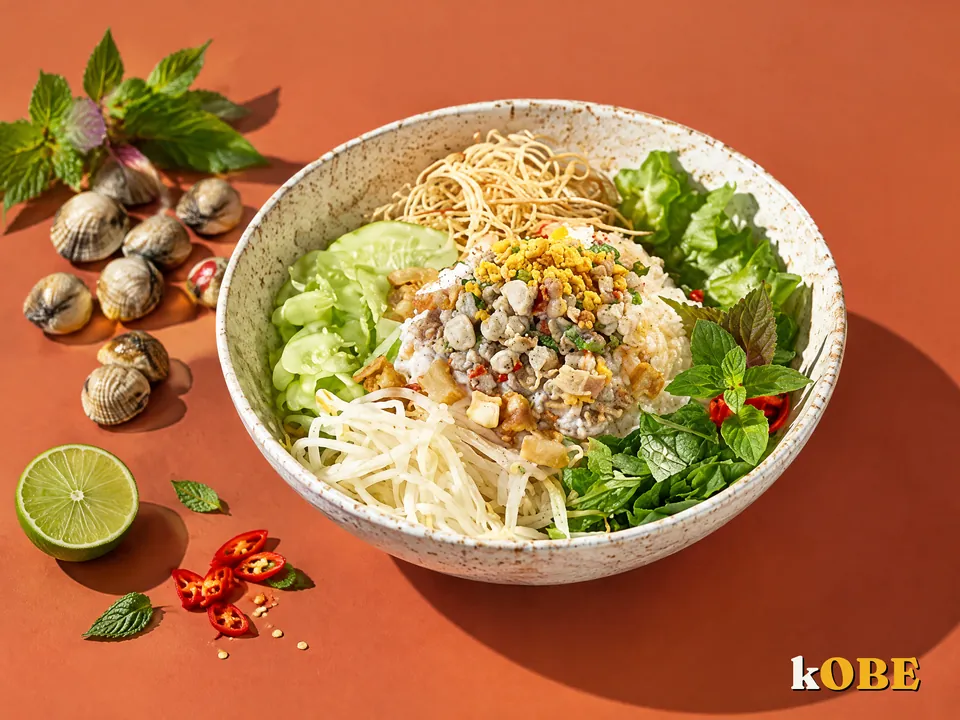
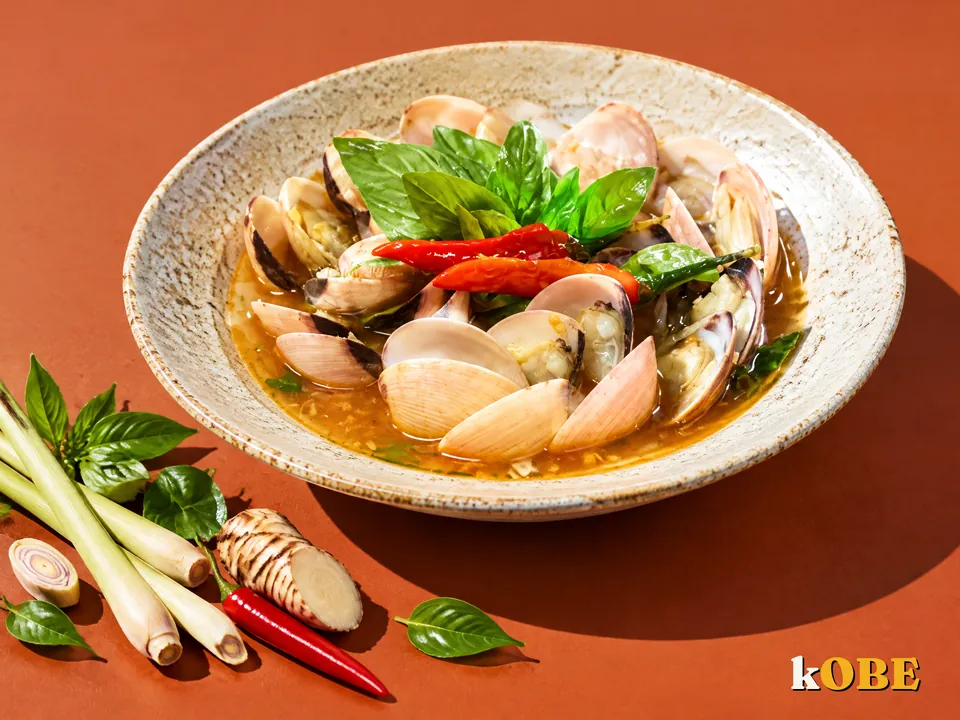
- The "VIP pass" group: beef (phở bò, the beef noodle soup; bò kho, beef stew; stir-fried beef), pork liver, chicken liver, egg yolk, and especially shellfish like clams, baby clams and cockles. A bowl of cơm hến from Huế (rice with tiny river clams) or a plate of clams steamed with lemongrass are impressive sources of iron.
- The "needs a guide" group: water spinach, amaranth greens, mustard greens, Malabar spinach, beans (black beans, chickpeas, soybeans), tofu, black sesame.
About liver: it is very rich in iron, but also very rich in vitamin A. So think of liver as an occasional dish, not something for every day. If you are pregnant, ask a health professional about how much liver suits you.
The guides and the gatekeepers
This is the most practical part of the article.
The guides (they help you absorb non-heme iron):
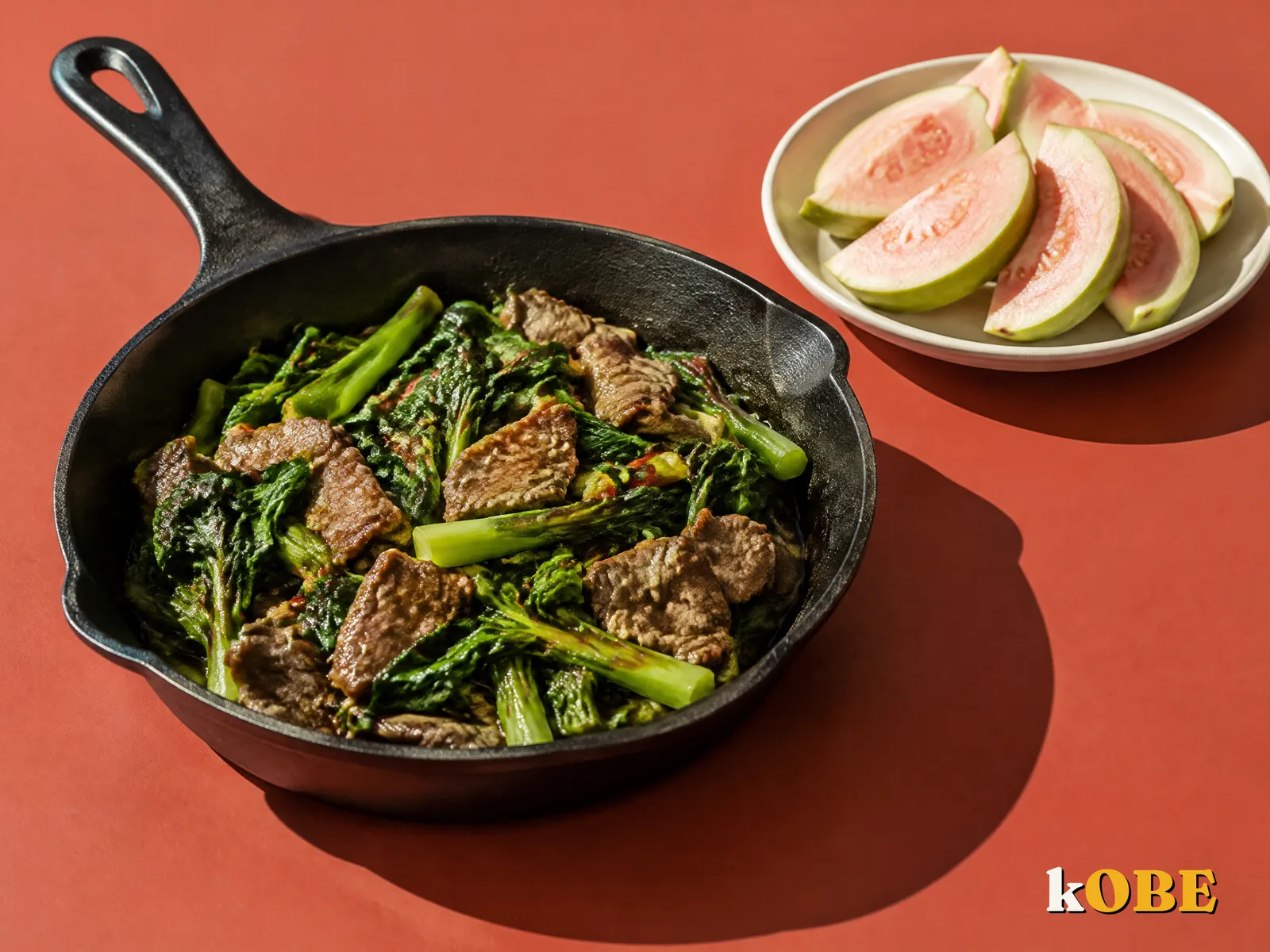
- Vitamin C. It changes iron into a form that is easier to absorb. Stir-fried water spinach with a few slices of guava, a salad with a squeeze of lime, canh chua (sweet and sour soup) with tomato and pineapple. Vietnamese cooks were doing it right without knowing it.
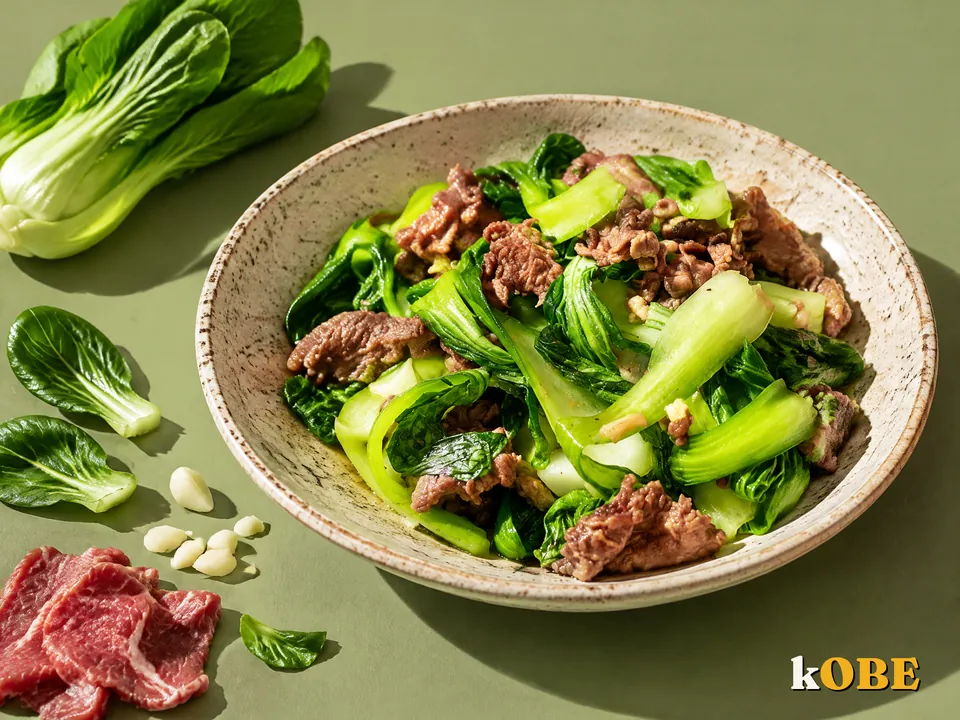
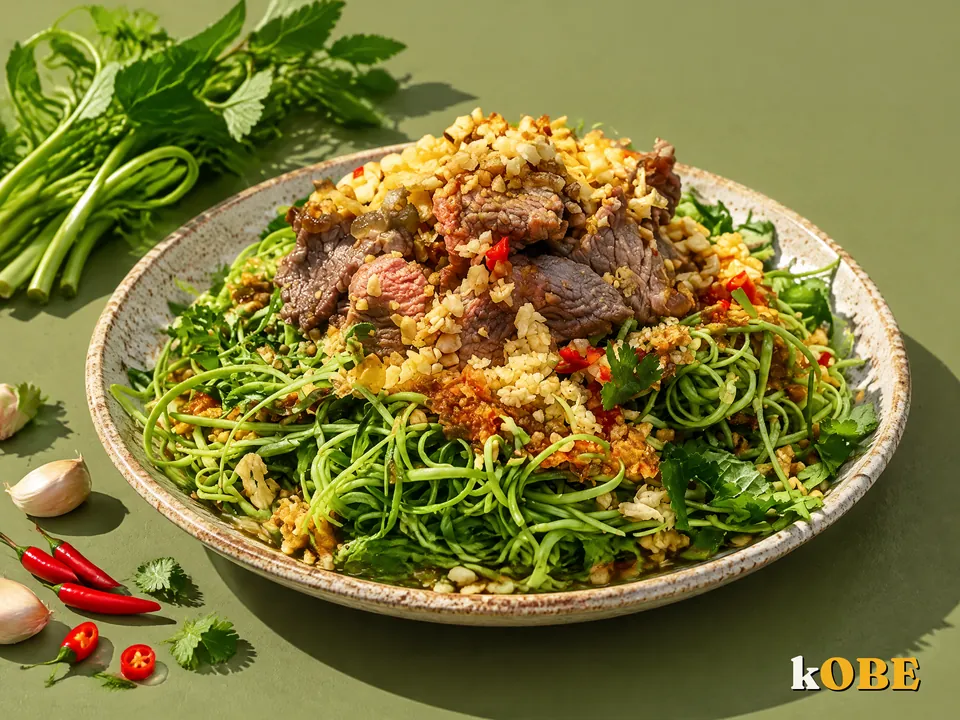
- A little meat or fish in the vegetable dish. Meat and fish do not just bring heme iron; they also help you absorb more iron from the greens eaten alongside. Water spinach stir-fried with beef is a beautiful example.
The gatekeepers (they reduce absorption):
- Tea and coffee drunk right with the meal. Tannins and polyphenols grab on to non-heme iron. The free glass of iced tea at a rice shop is lovely, but if you are paying attention to iron, drinking it a while after the meal works better.
- A big dose of calcium at the same time. A large glass of milk with an iron-rich meal can also block some of it.
- Phytate in bran, seeds and beans. Soaking, sprouting and fermenting help reduce it.
Fun fact: cast-iron pans chip in some iron too
Cooking in a cast-iron pot or pan can let a little iron from the pan move into the food. The more acidic the dish and the longer it cooks, the more iron goes in. A tomato sauce simmering in a cast-iron skillet is the classic example.
This is no reason to replace all your pots. But it is a sweet detail about how cooking and nutrition weave together.
A reminder: do not start taking iron pills on your own without asking a health professional. Extra iron does not leave your body as easily as the B vitamins do. If you suspect you need more, a blood test and professional advice are more reliable than guesswork.
Inside the kOBE kitchen
We do not list iron numbers on our products, so we will not guess. But a few of our ready-cooked ingredients belong to exactly the groups that carry non-heme iron: Chickpeas, Edamame and Sesame Kale.
Following the "guides" lesson, the smart way to eat them is with something rich in vitamin C. A Chicken Kale Namul Poke with a few orange segments or guava slices on the side. Or chickpeas tossed with red bell pepper and tomato and a squeeze of lime. See our ready-cooked ingredients.
Frequently asked questions
Is eating amaranth greens and water spinach enough for iron?
Where do vegetarians get iron?
How long after a meal should I wait before drinking tea?
Keep reading
Sources
- Hurrell R., Egli I. (2010). Iron bioavailability and dietary reference values. American Journal of Clinical Nutrition 91(5):1461S to 1467S.
- Hallberg L., Brune M., Rossander L. (1989). Iron absorption in man: ascorbic acid and dose-dependent inhibition by phytate. American Journal of Clinical Nutrition 49(1):140 to 144.
- WHO and FAO (2004). Vitamin and mineral requirements in human nutrition, 2nd ed., chapter on Iron.
- National Institute of Nutrition (Vietnam) (2016). Recommended Dietary Allowances for Vietnamese People [Nhu cầu dinh dưỡng khuyến nghị cho người Việt Nam].
- Further reading: Understanding Nutrition 16th ed., chapter 13.