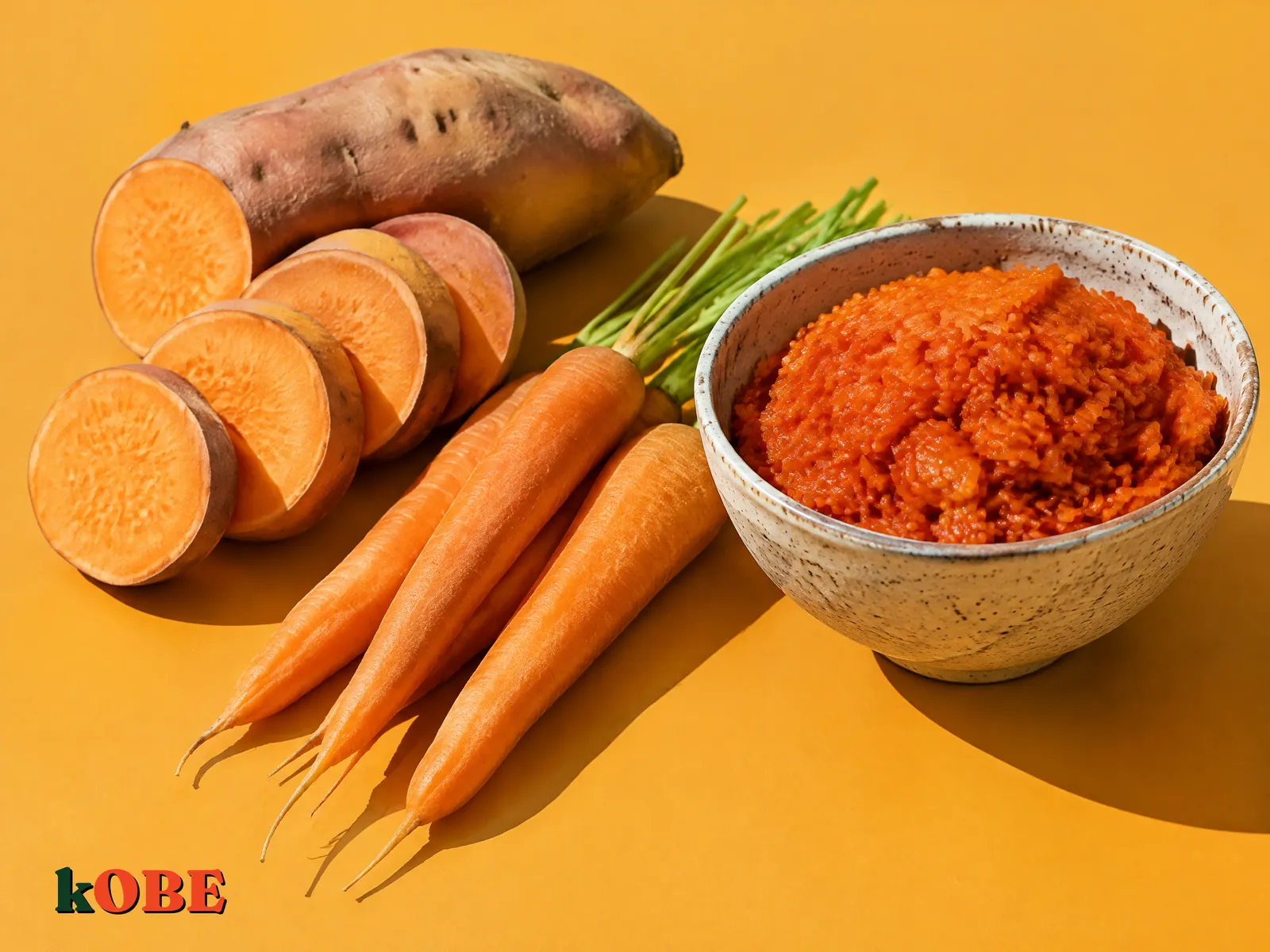
During the Second World War, Britain spread a rumor: its pilots were hitting enemy planes at night because they ate loads of carrots.
The truth was that they had new radar and wanted to keep it secret. The carrots were just a cover story. But the rumor spread so well that many people still believe carrots let you see in the dark.
That is not true. But there is a real thread between carrots and your eyes, and its name is beta-carotene.
In this article
The orange that knows how to transform
Beta-carotene is an orange-yellow pigment. It gives the color to carrots, orange sweet potatoes, pumpkin, ripe mango and ripe papaya.
Here is the special part: your body can split a beta-carotene molecule in half to make vitamin A. That is why it is called provitamin A.
Vitamin A does many jobs. The most famous is making a pigment in the eye that helps you see in dim light. That is the real thread between carrots and your eyes. The catch: eat enough and your eyes work normally; eating extra does not make them sharper.
Vitamin A is also needed for skin, for the mucous lining inside your body, and for cell development.
Your body knows how to close the valve
This is the nicest thing about beta-carotene compared with ready-made vitamin A.
Ready-made vitamin A (in liver, egg yolk and milk) is all taken in by the body, even when you already have enough. Because it dissolves in fat and is stored in the liver, eating too much of it over and over can build up.
Beta-carotene is different. Your body turns it into vitamin A only when needed. Once you have enough, the conversion slows down, like a valve that closes itself.
If you eat lots of carrots and pumpkin, the extra beta-carotene sits in fat tissue and skin. Some people who eat a great deal may see their palms turn slightly orange-yellow. This is considered harmless, and it fades when you eat less.
Xôi gấc: the red champion
Talking about beta-carotene without mentioning gấc would be unfair to the Vietnamese kitchen.
The red membrane around gấc seeds (gấc is a spiky red fruit from the gourd family) has very high levels of beta-carotene, among the highest of any fruit ever measured. Gấc is also rich in lycopene, the red pigment in tomatoes, at levels higher than tomatoes themselves.
The Tết (Lunar New Year) feast table has a plate of bright red xôi gấc (gấc sticky rice). The rice is mixed with a little fat or oil, then steamed. Without knowing it, our grandparents did both things beta-carotene needs: cook it, and add fat.
Raw or cooked carrots? This time, cooked wins
With vitamin C, raw keeps more. With beta-carotene, it is the other way around.
Reason one: cell walls. Beta-carotene is locked inside the tough cell walls of vegetables. Chew a raw carrot and your body only gets part of it. Cooking, chopping finely or blending breaks the cell walls, so beta-carotene escapes more easily.
Reason two: the oil team. Beta-carotene dissolves in fat, not water. A meal with a little fat helps your gut absorb it much better. One study found that eating a vegetable salad with an oil-based dressing gave noticeably more carotenoid absorption than a fat-free dressing.
So these everyday dishes turn out to be very "hard-working":
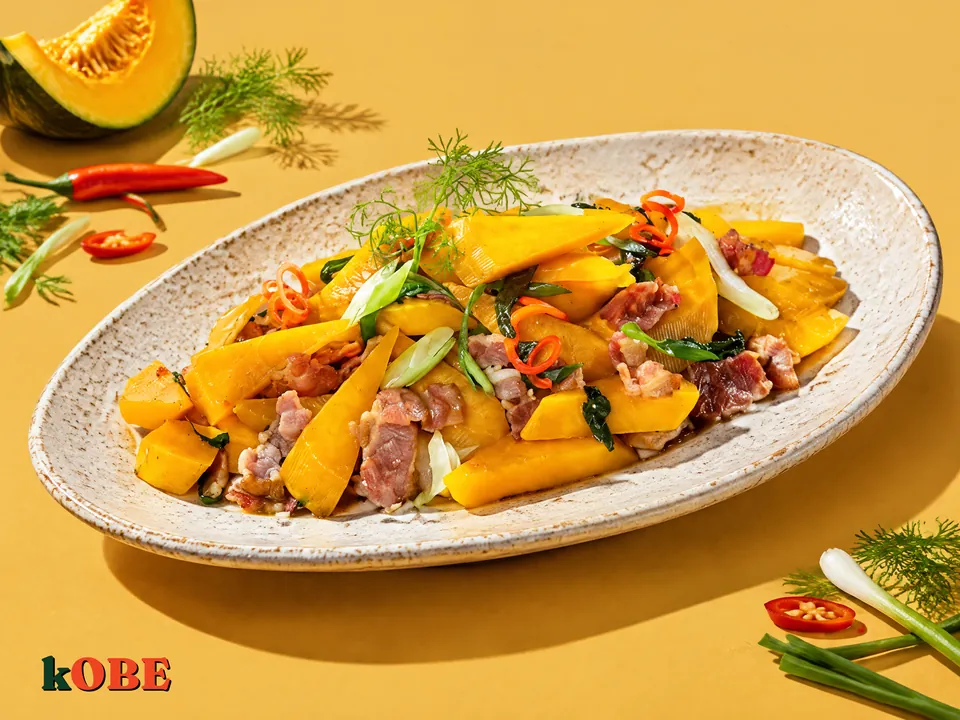
- Pumpkin stir-fried with garlic, sautéed carrots.
- Pumpkin and shrimp soup, with a little fat from the shrimp and meat.
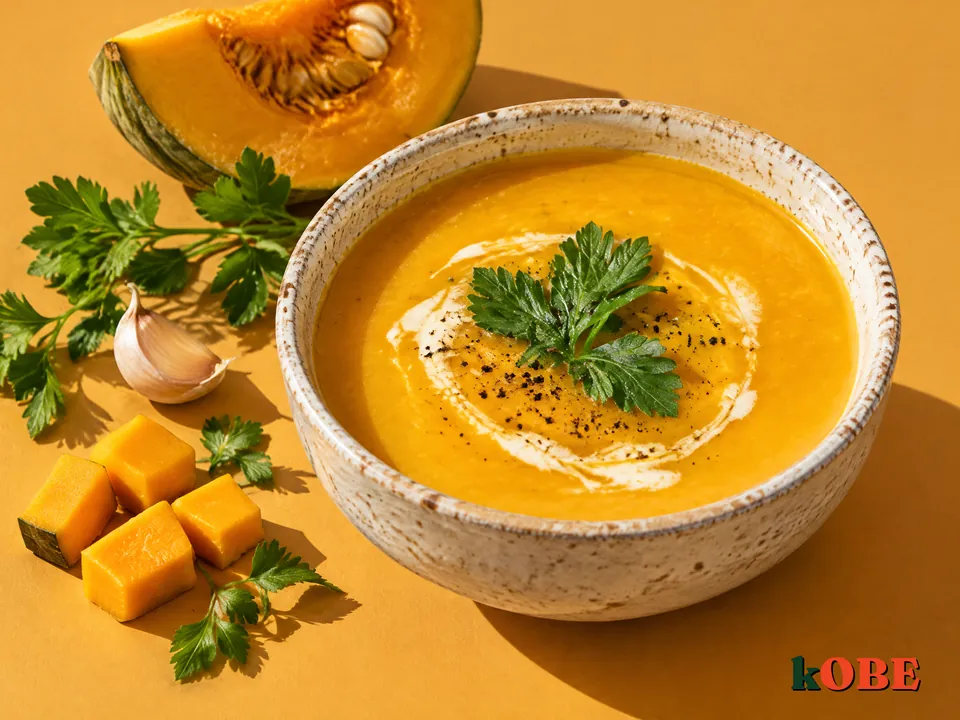
- Pumpkin soup blended smooth with a little butter or milk.
- Water spinach or mustard greens stir-fried with garlic: dark leafy greens are rich in beta-carotene too.
A fun fact about greens: water spinach, spinach and kale have quite a lot of beta-carotene, but you do not see orange. The deep green chlorophyll hides it. Only in autumn, when leaves stop making chlorophyll, does the yellow-orange of the carotenoids show through.
Which sweet potato flesh has the most beta-carotene?
Not every sweet potato is the same. Simple rule: the deeper orange the flesh, the more beta-carotene.
| Sweet potato type | Main pigment | Notes |
|---|---|---|
| Orange flesh | Beta-carotene | The most in the sweet potato group |
| Yellow flesh | Beta-carotene | Less than orange flesh |
| White flesh | Very little | Mostly starch |
| Purple flesh | Anthocyanin | A different pigment group, does not turn into vitamin A |
Purple sweet potatoes are no worse; they are just strong in a different group of compounds. Anthocyanin is also the pigment in black rice, red cabbage and blueberries.
Carrots have a similar story. Carrots used to come in many colors, with purple and yellow common. The familiar orange carrot of today was widely grown in the Netherlands around the 17th century. As for the Dutch creating orange carrots to honor the House of Orange, that is just a legend.
Inside the kOBE kitchen
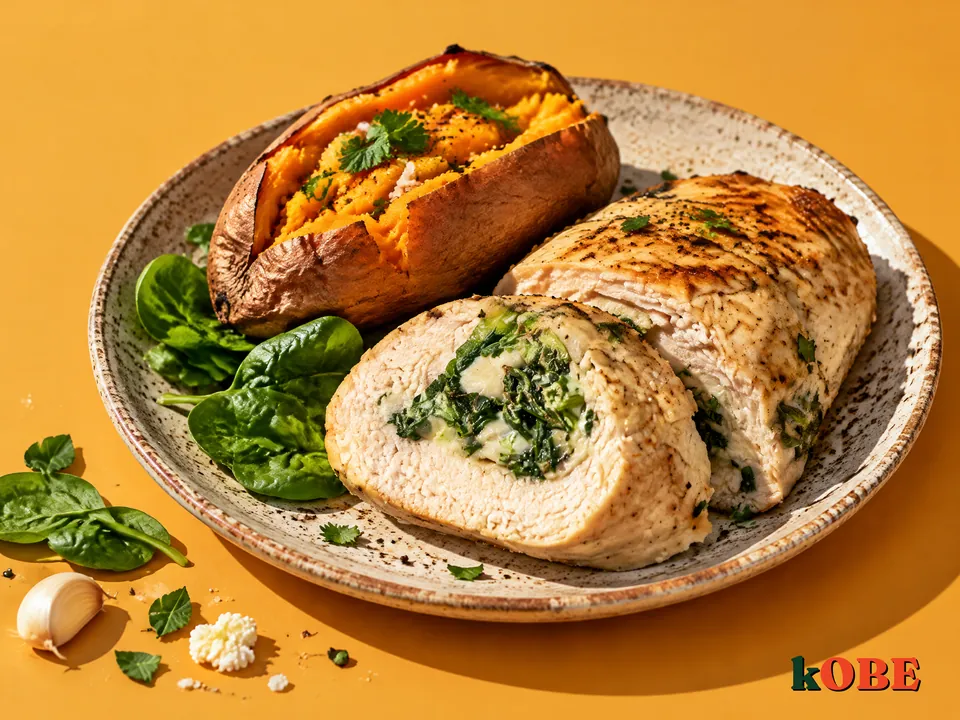
kOBE's Japanese, Purple and Honey Sweet Potatoes are roasted with a little olive oil, diced and then frozen. Cooked through with a little oil: exactly the two things beta-carotene needs.
The Purple Sweet Potato carries anthocyanin, the purple pigment group. Sesame Kale is a dark leafy green massaged with sesame oil, so it comes with its own fat. We do not list beta-carotene numbers on our products, so we will not give a figure. See our ready-cooked ingredients.
Frequently asked questions
Is carrot juice better than eating carrots?
Can eating lots of pumpkin and carrots turn your skin yellow?
Do ripe mango and papaya have beta-carotene?
Keep reading
Sources
- Vuong L.T., Franke A.A., Custer L.J., Murphy S.P. (2006). Momordica cochinchinensis Spreng. (gac) fruit carotenoids reevaluated. Journal of Food Composition and Analysis 19(6 to 7):664 to 668.
- Brown M.J. et al. (2004). Carotenoid bioavailability is higher from salads ingested with full-fat than with fat-reduced salad dressings as measured with electrochemical detection. American Journal of Clinical Nutrition 80(2):396 to 403.
- WHO and FAO (2004). Vitamin and mineral requirements in human nutrition, 2nd ed., chapter on Vitamin A.
- USDA FoodData Central (carrot, sweet potato, pumpkin).
- Further reading: Understanding Nutrition 16th ed., chapter 11.