Data source: USDA FoodData Central, SR Legacy, FDC 172410 (Duck, domesticated, meat only, raw).
Fun facts
- Duck meat is dark red because its muscles hold a lot of myoglobin, the protein that stores oxygen for hard working muscles. Ducks swim and walk a lot, so their meat is much darker than chicken breast.
- 100g of raw skinless duck gives about 135 kcal, 18.3g of protein and 6g of fat. That is the meat alone. Duck skin is thick and fatty, so eating it adds a noticeable amount of calories.
- Iron is a bonus: about 2.4mg per 100g of meat, which is high for poultry.
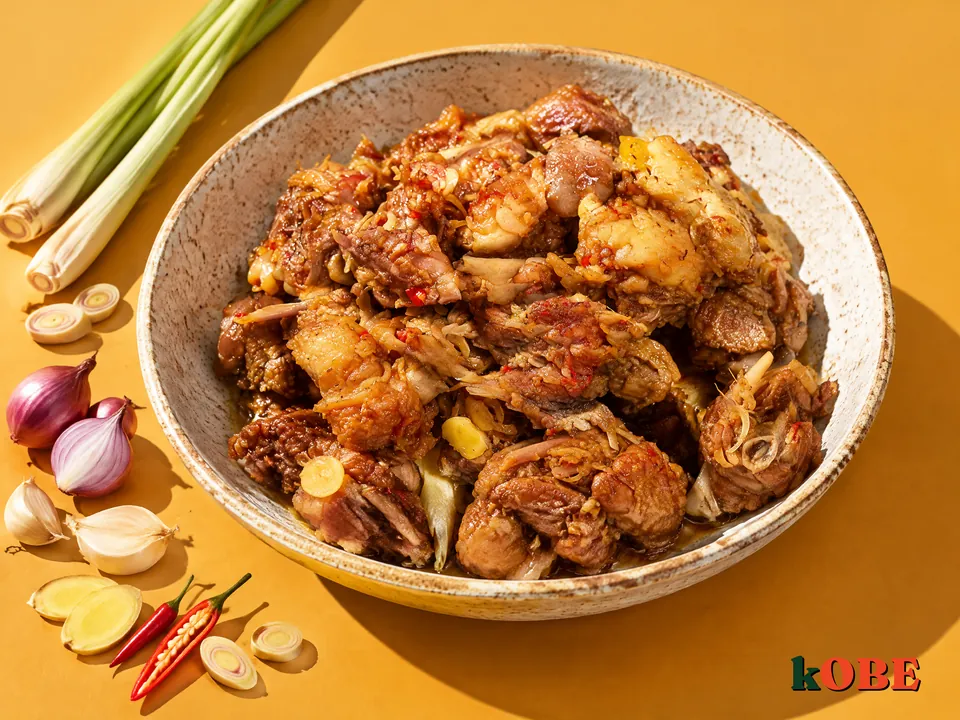
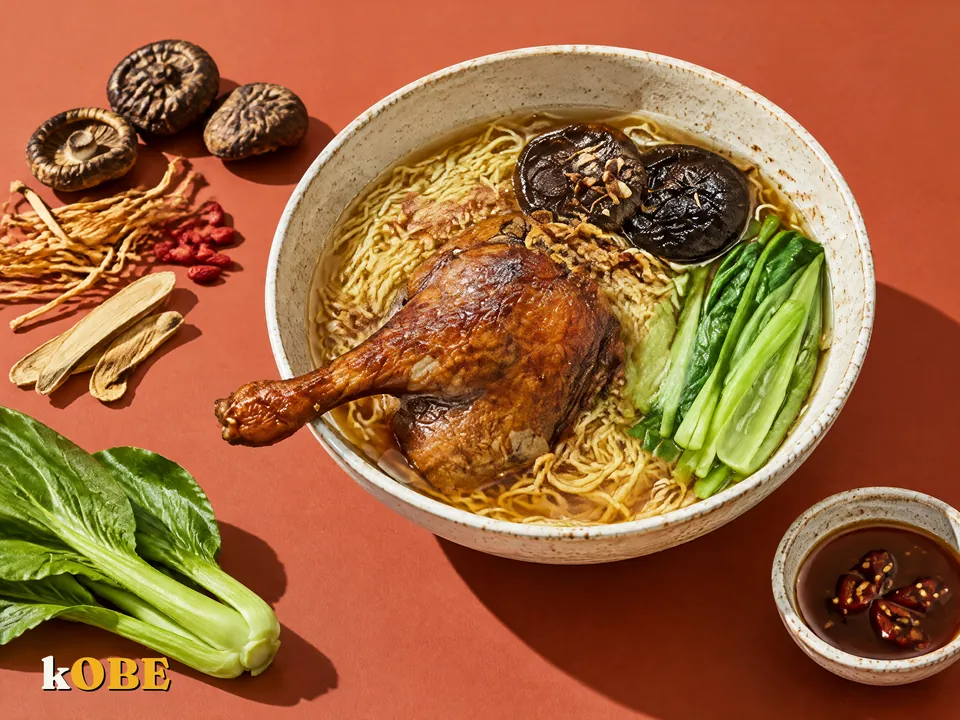
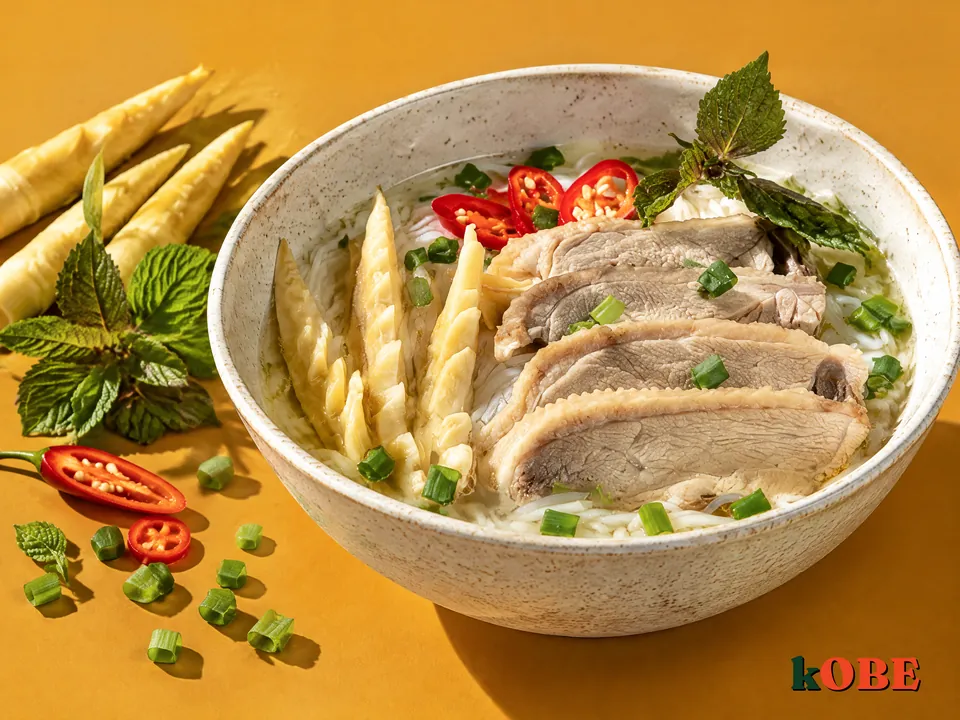
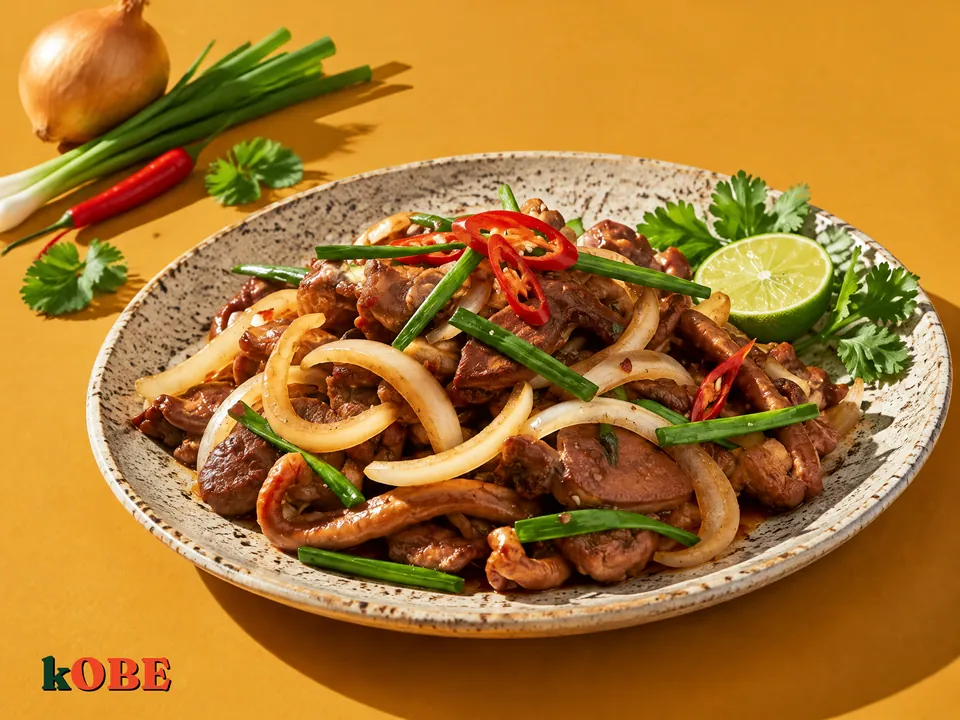
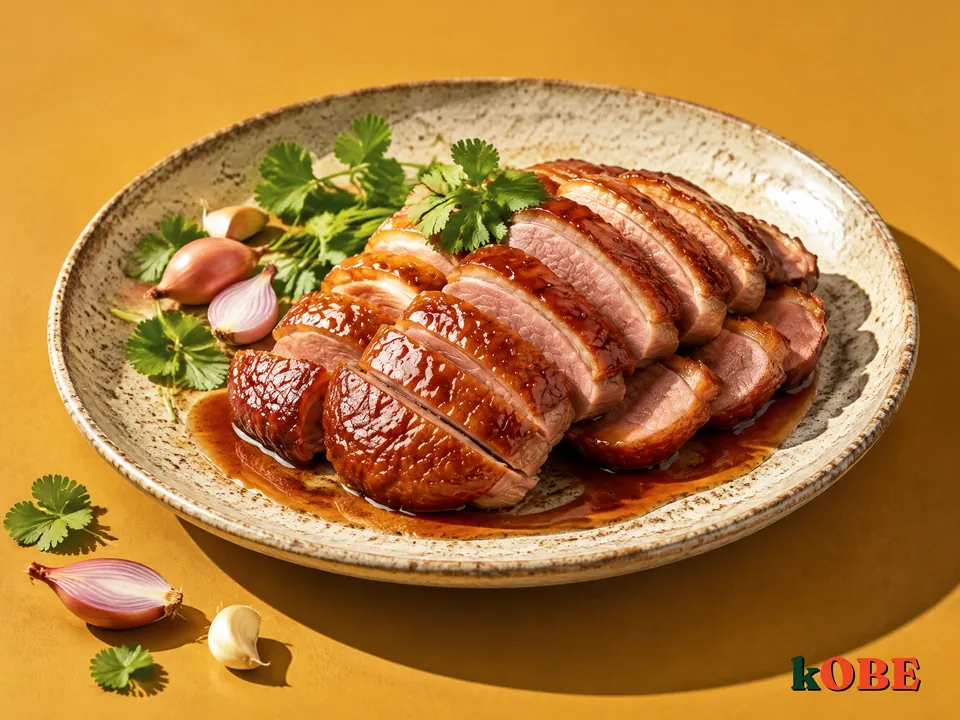
- Vietnamese cooks love duck in many forms: boiled duck with ginger fish sauce, duck rice porridge, duck and bamboo shoot noodle soup, duck braised with fermented tofu, roast duck. Duck appears in 38 recipes in the kOBE recipe bank.
Choosing and storing
Fresh duck has ivory or pale yellow skin that looks dry, and the meat springs back when pressed with no odd smell. Skip birds with slimy skin, bruises or very soft flesh. Keep raw duck in the fridge and use it within 1 to 2 days. For longer, split it into meal sized portions and freeze, then thaw overnight in the fridge when needed.
Cooking it well
Much of duck's strong aroma comes from the tail gland and the fat under the skin, so trim off the tail and rub the bird with salt and ginger before cooking. For a lighter meal, trim some skin and fat, or let a duck broth cool until the fat sets on top and lift it off. For duck breast, sear it skin side down over medium heat so the fat renders out on its own and the meat stays tender with no extra oil. To see how much protein you need in a day, read how much protein per day.