Data source: USDA FoodData Central, SR Legacy, FDC 167812 (Pork, fresh, belly, raw).
Fun facts
- According to the USDA, 100g of raw pork belly has 518 kcal, 53g of fat and only 9.3g of protein. So more than half the piece is fat, and it carries nearly 4 times the calories of the same weight of lean pork loin.
- In Vietnamese it is called ba chỉ (ba rọi in the South), and a cross section shows stripes of lean and fat stacked like ruled lines. A good piece has thin skin followed by even layers of fat and meat.
- Pork fat is not all saturated, as many people think. A large part is monounsaturated fat, the same kind olive oil is known for, even though the total amount of fat is still very high.
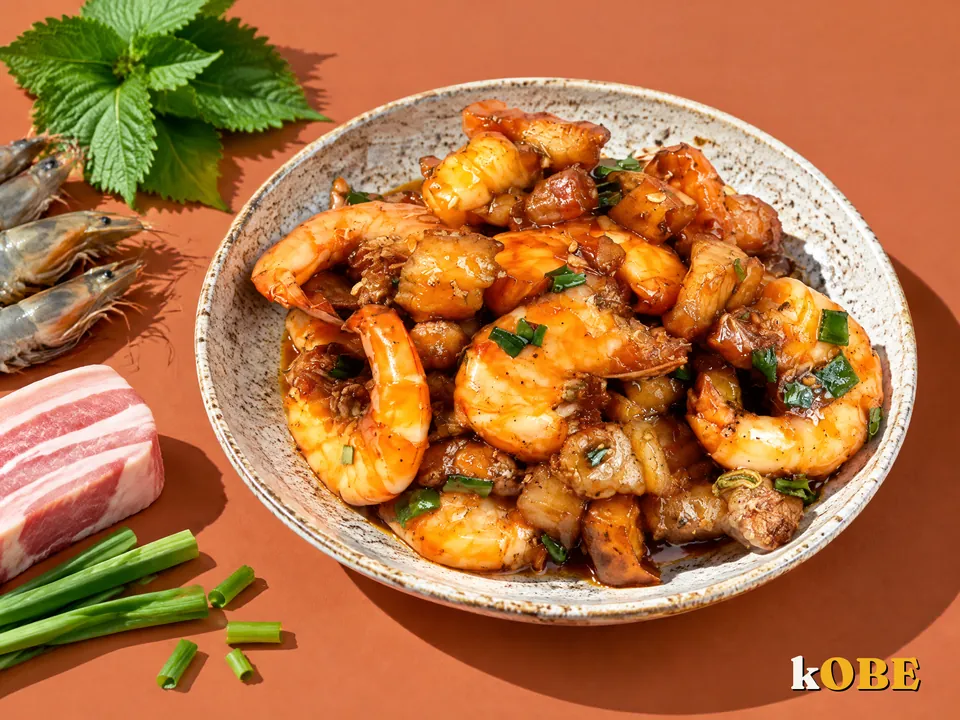
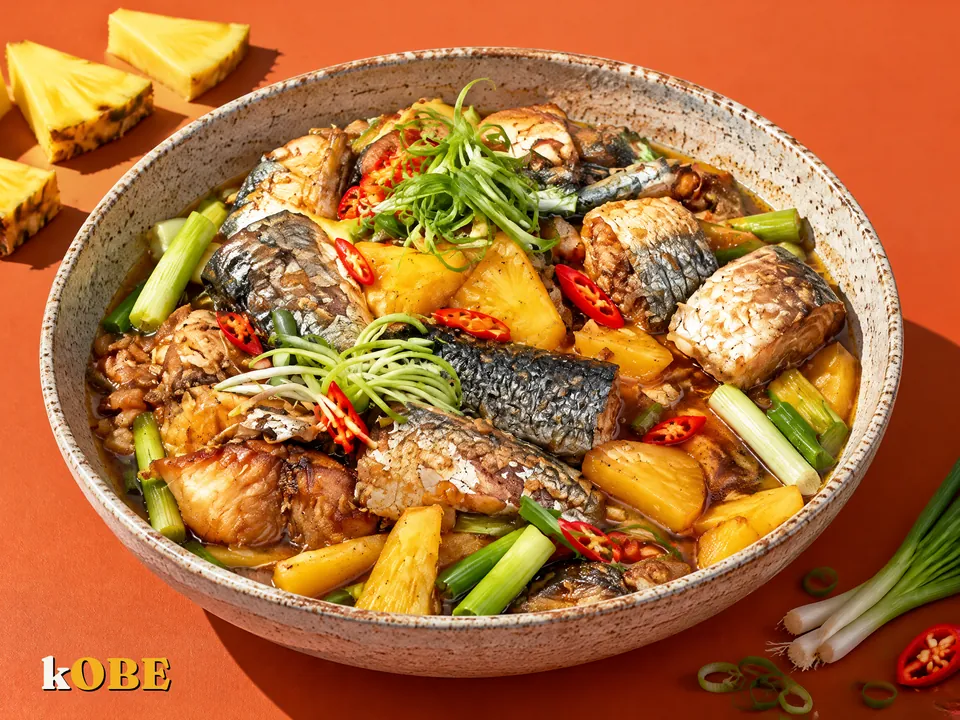
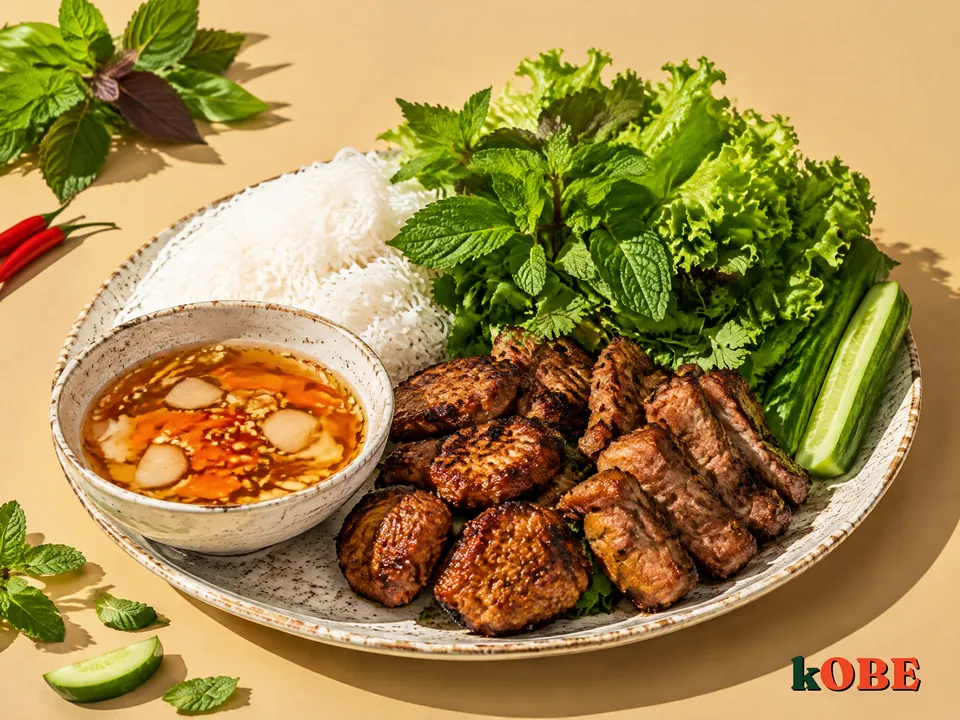
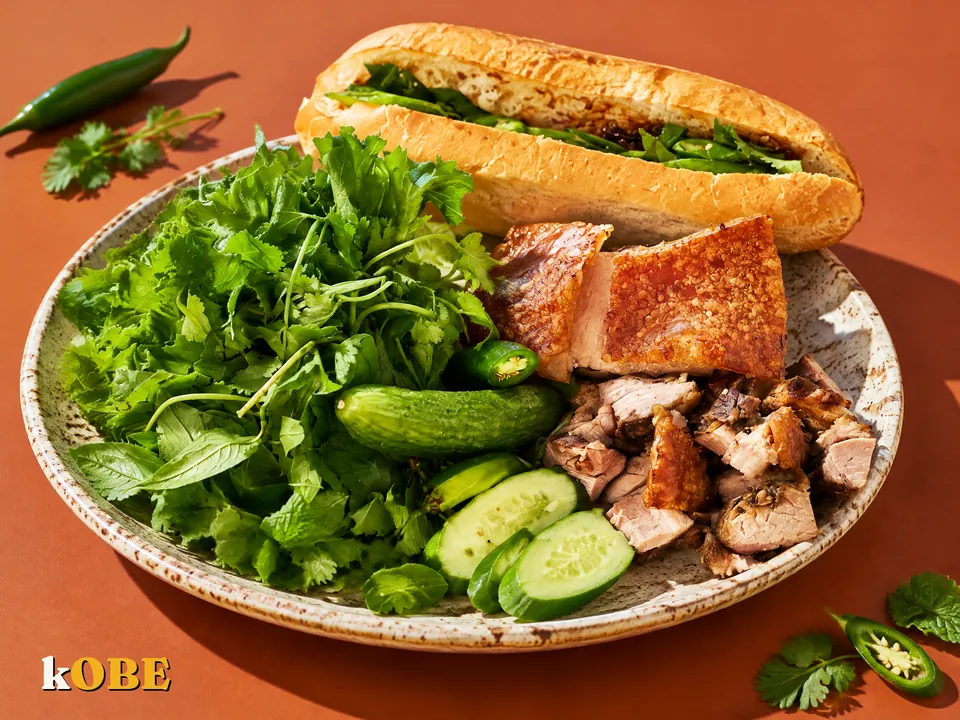
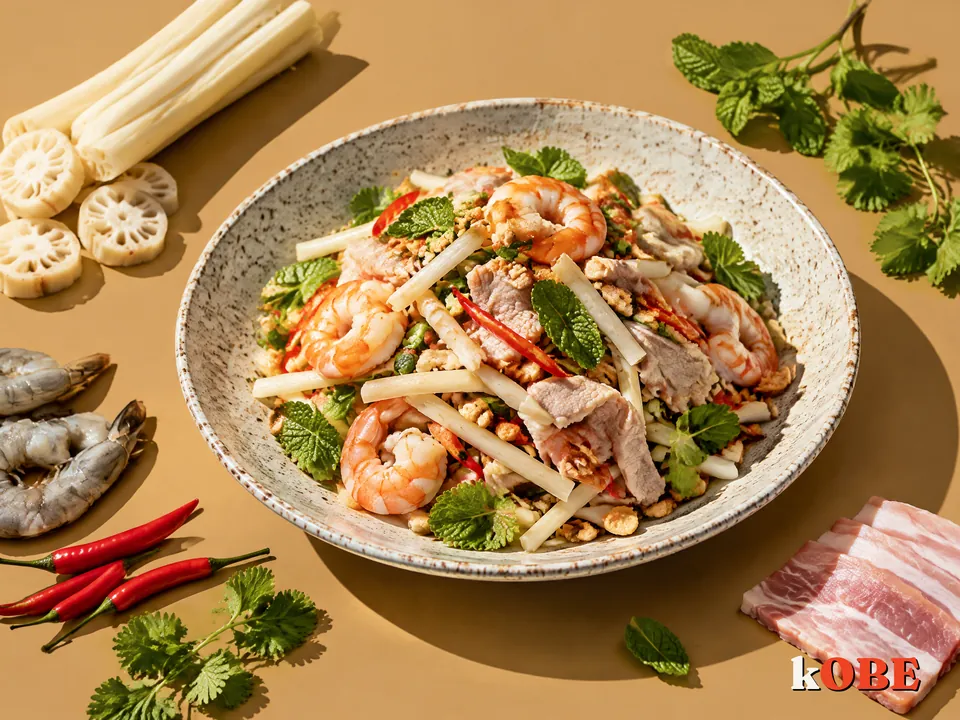
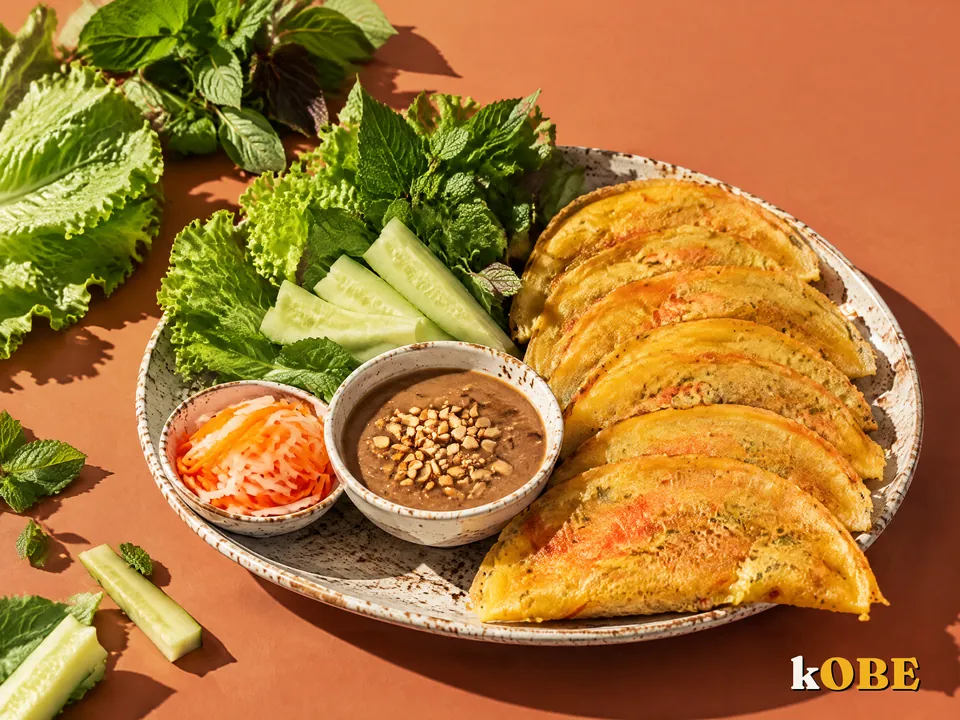
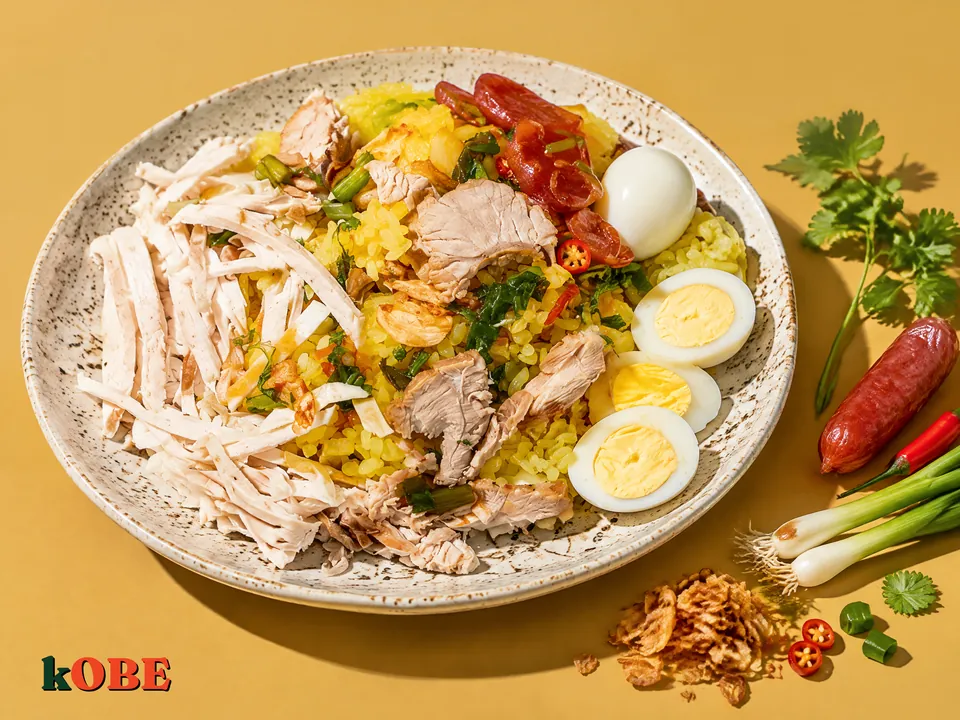
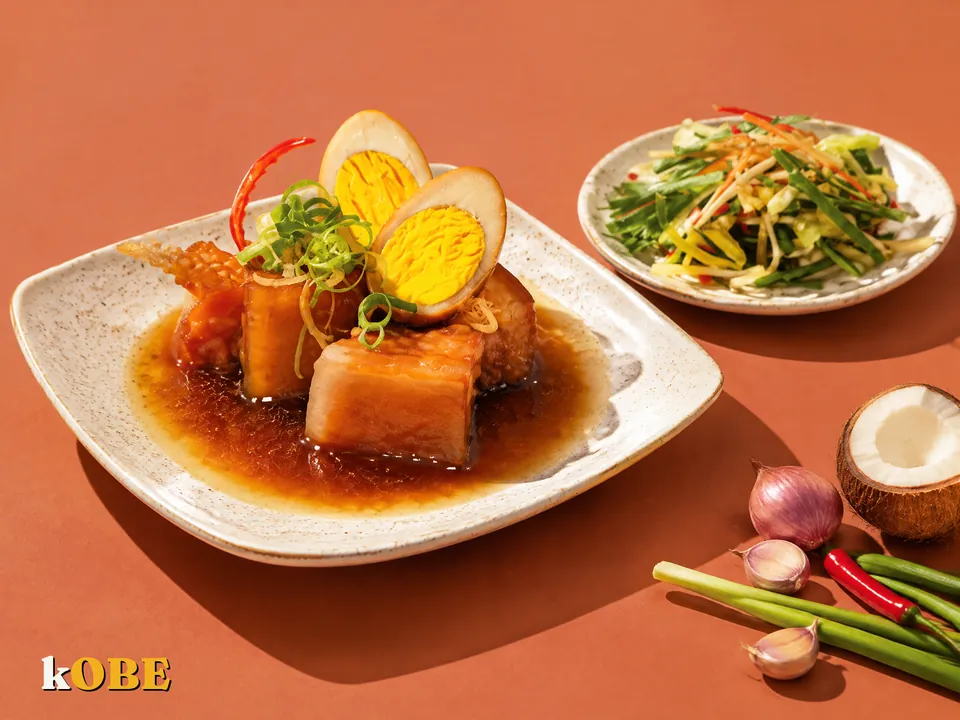
- Braised pork with eggs at Tết, crackling roast pork, boiled pork rolled in rice paper: pork belly is the star of many dishes. In the kOBE recipe library, it appears in 71 dishes, the most of any pork cut.
Choosing and storing
Choose a piece with clear layers, fresh pink meat, clean white fat and thin, dry skin, with no odd smell. For a lighter option, pick a piece where the lean layers are thicker than the fat. Use fresh belly within 2 to 3 days in the fridge; to keep it longer, cut it into cooking portions, wrap tightly and freeze.
Cooking it well
A trick for braises: once cooked, let the pot cool or chill it, and the fat will set as a white layer on top that you can simply lift off before reheating. Boiling the belly and slicing it very thin also makes each bite lighter, especially rolled up with lots of fresh herbs. When grilling or roasting, set the meat on a rack so the fat drips away. To learn more about types of fat, read our piece on saturated vs unsaturated fat.