Data source: USDA FoodData Central, SR Legacy, FDC 174214 (Mollusks, clam, mixed species, raw).
Fun facts
- Clams are filter feeders: they draw in seawater to catch food and push it back out, which is why sand and salty water end up inside the shell. That is also why you soak clams before cooking.
- 100g of raw clam meat gives about 86 kcal, 14.7g of protein and just 1g of fat, plus about 90µg of vitamin A and 1.6mg of iron.
- Sodium is fairly high, about 601mg per 100g, because clams live in salt water. For perspective, WHO advises adults to eat under 2,000mg of sodium a day, which is under 5g of salt, so go easy on seasoning.
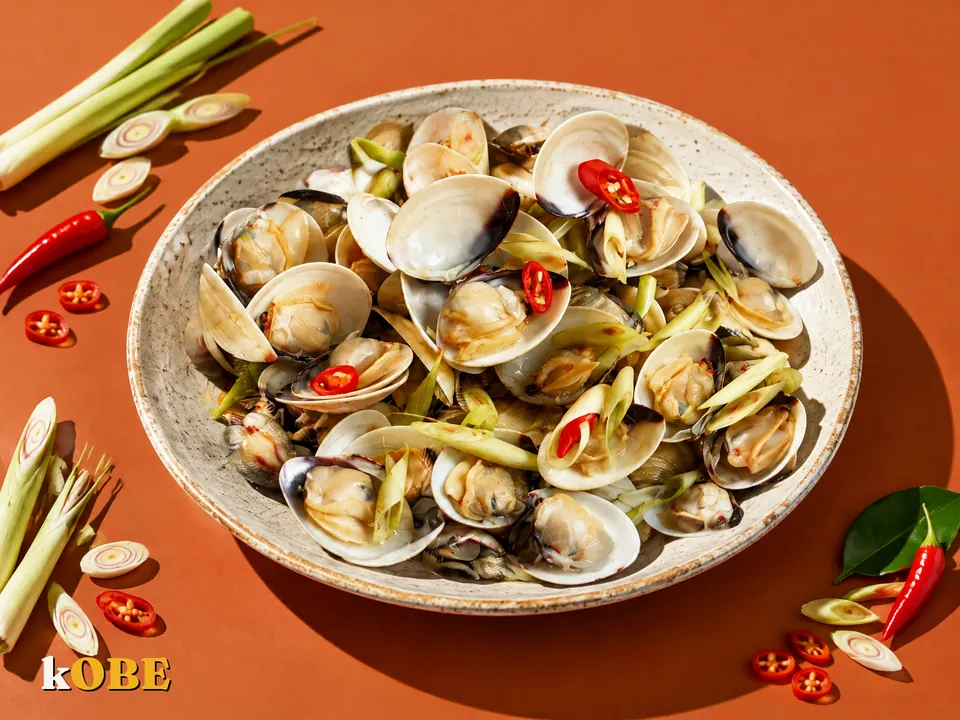
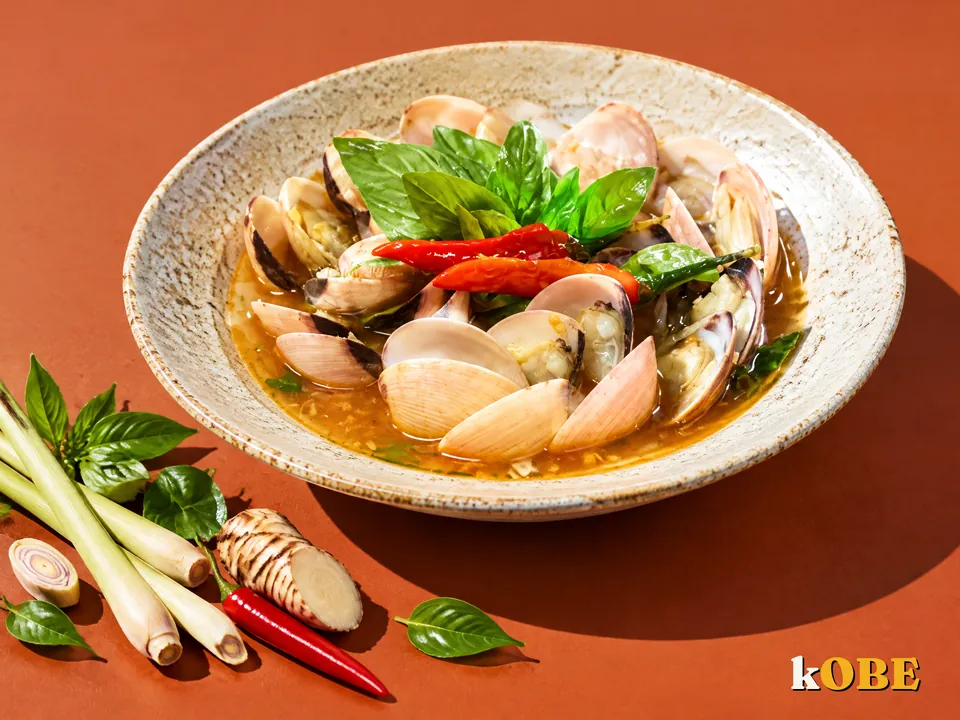
- Clams steamed with lemongrass, sour clam soup, clam porridge and clams stir fried with morning glory are simple but delicious. Clams appear in 8 recipes in the kOBE recipe bank.
Choosing and storing
Fresh clams have tightly closed shells, or shells that close when tapped gently. Throw out any that stay wide open, have cracked shells or smell bad. At home, soak them in lightly salted water for about 1 to 2 hours so they spit out sand. Cook live clams the same day; if you need to hold them a few hours, keep them in an open basket in the fridge, not sealed in a plastic bag.
Cooking it well
Clams are done when their shells open, usually after just a few minutes. Pull out the open ones right away so the meat does not shrink and turn rubbery, and discard any that never open. The steaming liquid is wonderfully sweet and makes a great base for soup or porridge. Since clams are already salty, taste first and season at the very end. To understand how sodium relates to salt, read sodium to salt conversion.