Data source: USDA FoodData Central, SR Legacy, FDC 174223 (Mollusks, squid, mixed species, raw).
Fun facts
- Squid have three hearts: two pump blood through the gills and one pumps it around the body. Their blood is blue because it uses copper to carry oxygen, instead of iron like ours.
- 100g of raw squid gives about 92 kcal, 15.6g of protein and 1.4g of fat. It also has about 3.1g of carbs, which is unusual for fish and meat.
- Squid and cuttlefish ink was once used for writing ink and paint. Today cooks still use it to turn pasta and rice jet black.
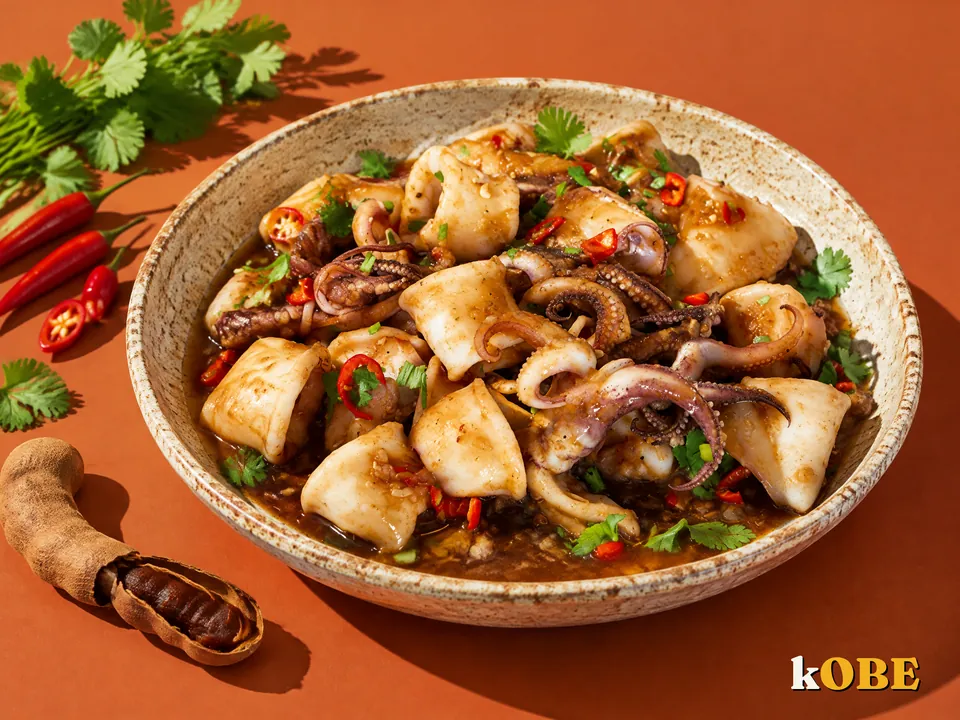
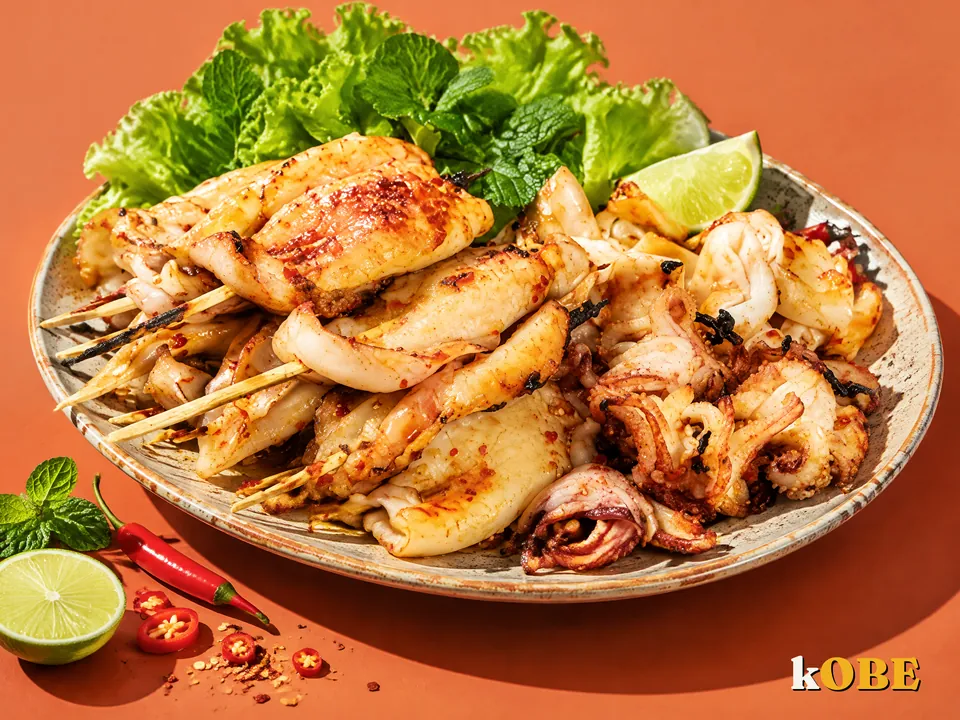
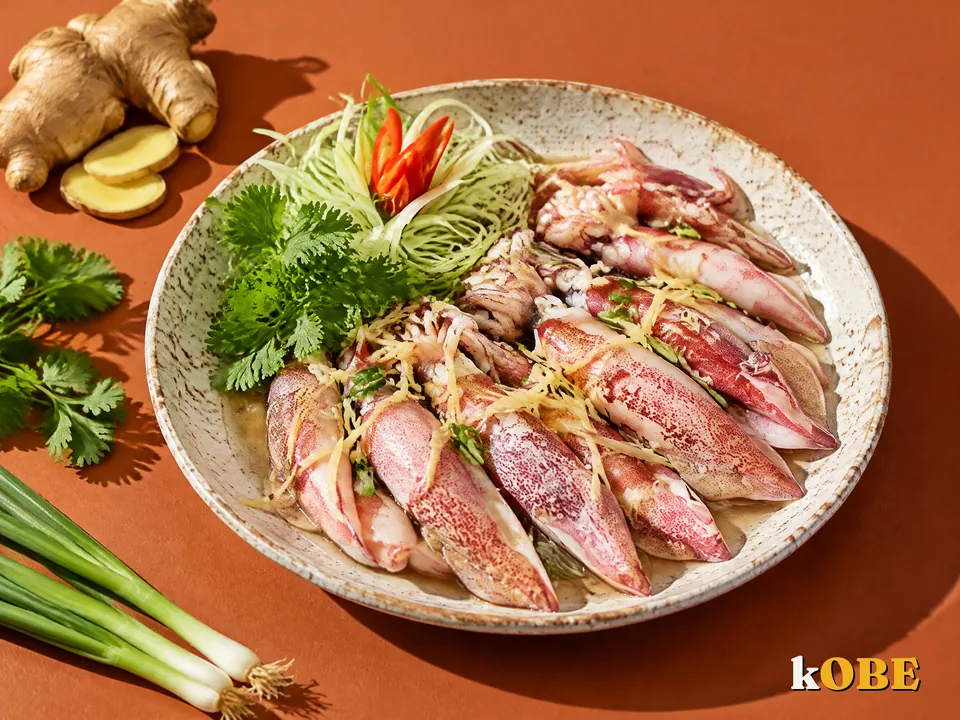
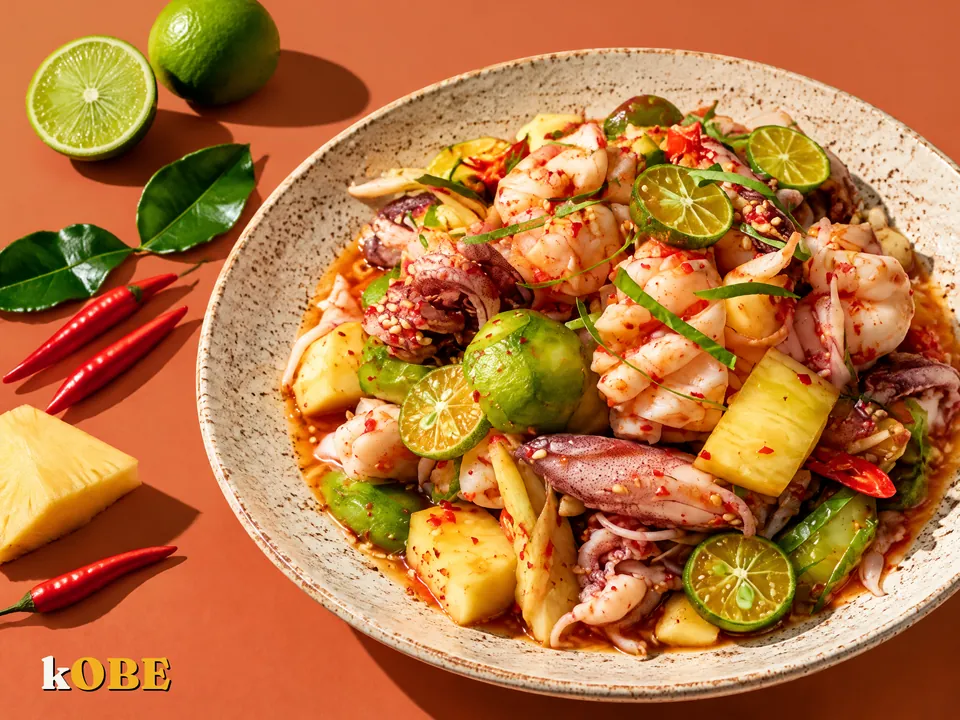
- With its long coastline, Vietnam puts squid on tables everywhere: squid steamed with ginger, sweet and sour squid, grilled dried squid, squid cakes. Squid appears in 27 recipes in the kOBE recipe bank.
Choosing and storing
Fresh squid has a translucent or milky white body, glossy skin that still shows colored spots, clear eyes and a head firmly attached. Squid that turns pinkish red, slimy or smells of ammonia is no longer fresh. Clean it the same day: remove the innards, pull out the clear quill, and peel the skin if you want white flesh. If you are not cooking it yet, portion it, pat it dry and freeze.
Cooking it well
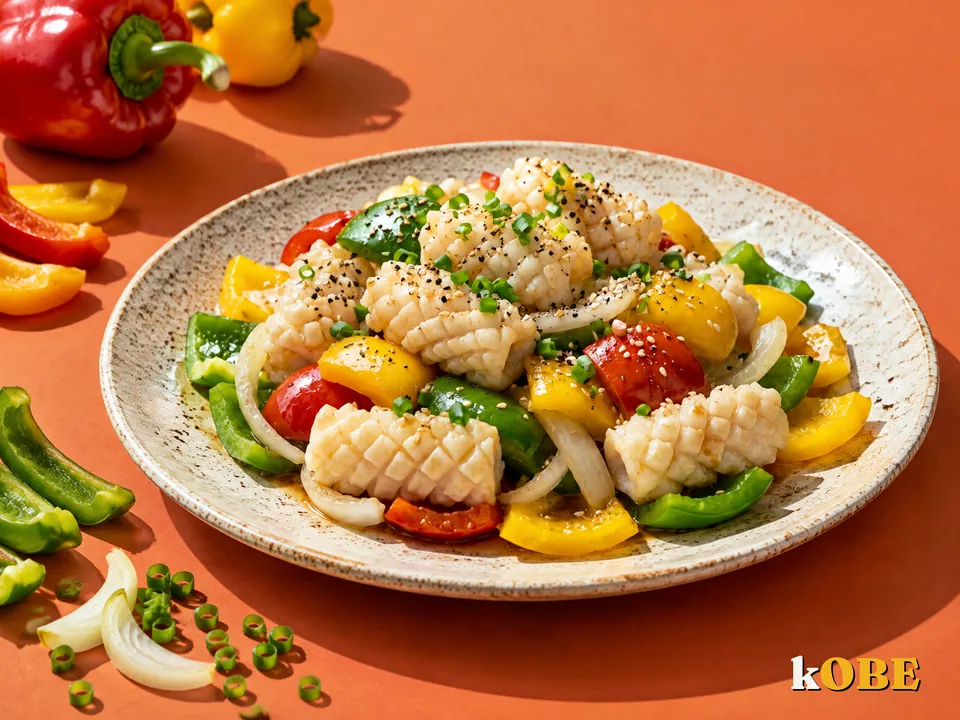
The golden rule of squid: cook it very fast, about 1 to 2 minutes over high heat, or braise it slowly for more than 30 minutes. Anywhere in between and the flesh tightens into rubber. Scoring a crosshatch on the inside helps it cook evenly, curl nicely and soak up sauce. Steaming with ginger or a quick stir fry with vegetables keeps it fragrant with little oil. Thaw frozen squid in the fridge, see how to thaw food safely.