Data source: USDA FoodData Central, SR Legacy, FDC 172430 (Peanuts, all types, raw).
Fun facts
- Peanuts are not tree nuts like walnuts or almonds but legumes. After the flower is pollinated, its stalk pushes down into the soil and the pod grows underground.
- Raw peanuts: 100g has 567 kcal, 25.8g of protein and 49.2g of fat. That is more protein than almonds, cashews or walnuts.
- Because they are rich in fat, a small handful already packs plenty of energy. About 30g of peanuts comes to roughly 170 kcal.
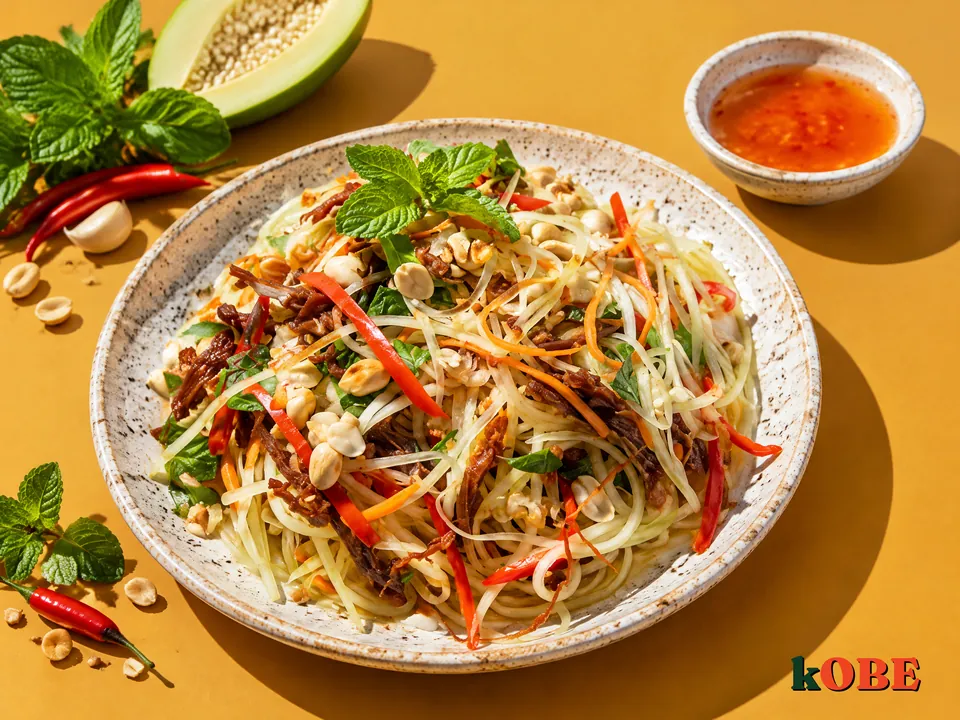
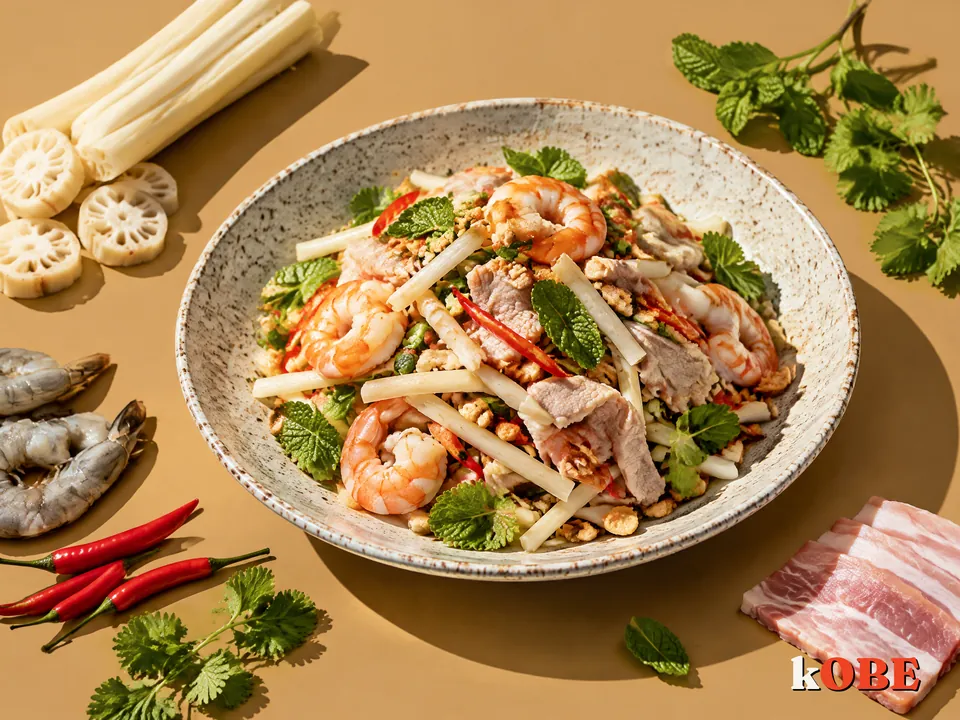
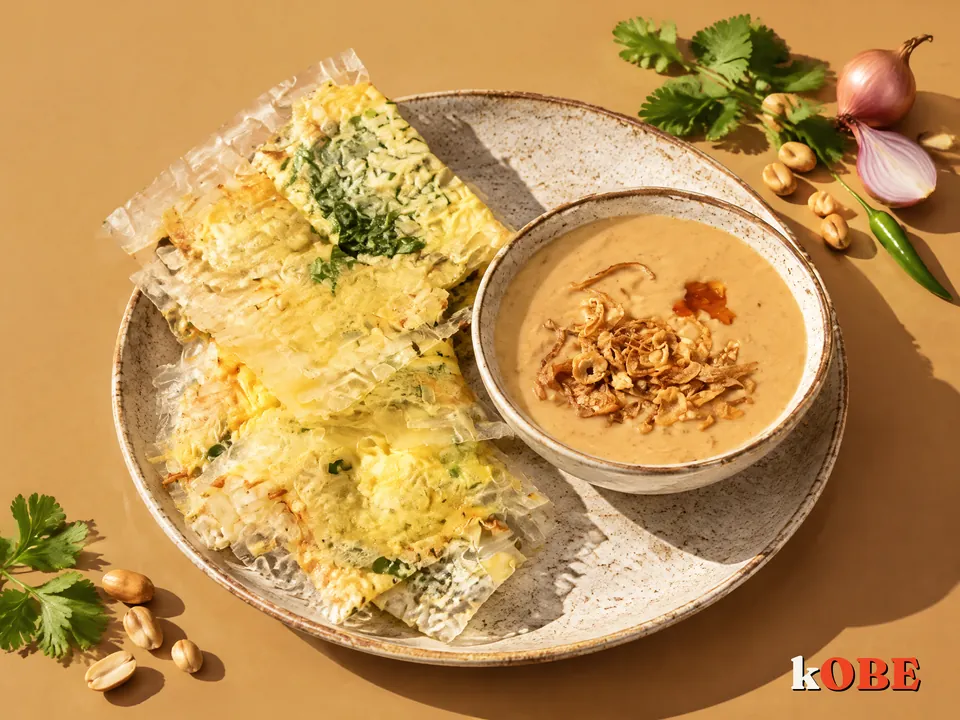
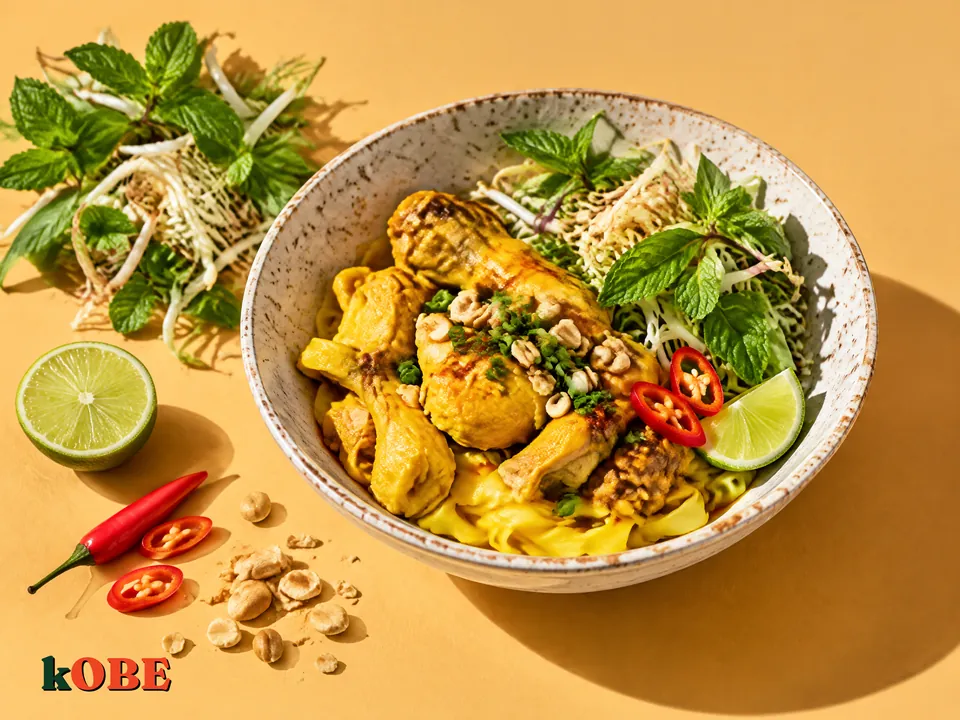
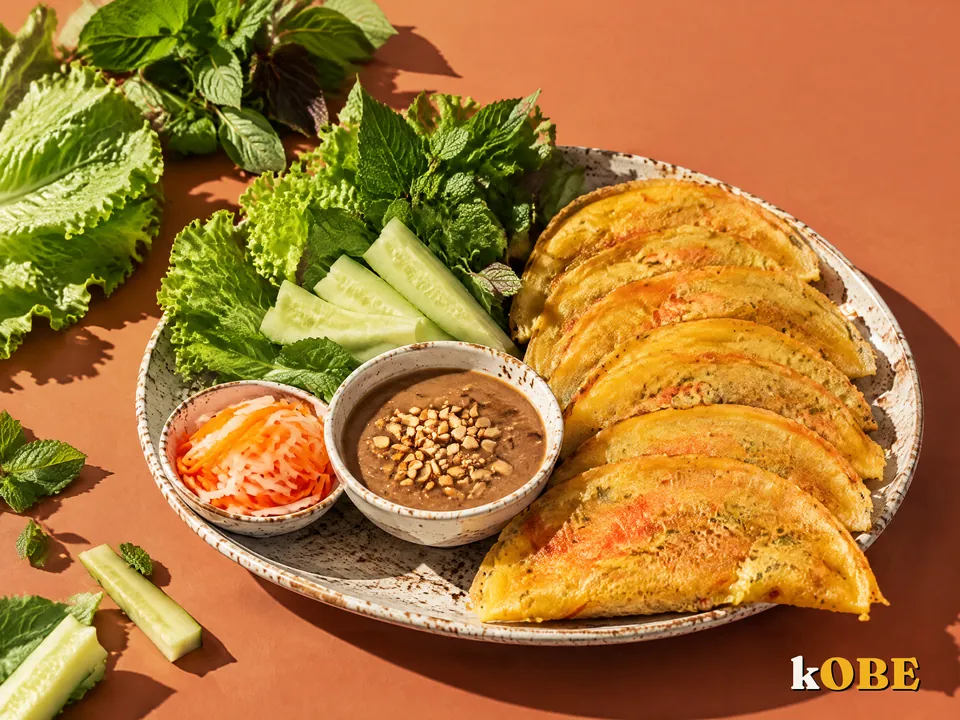
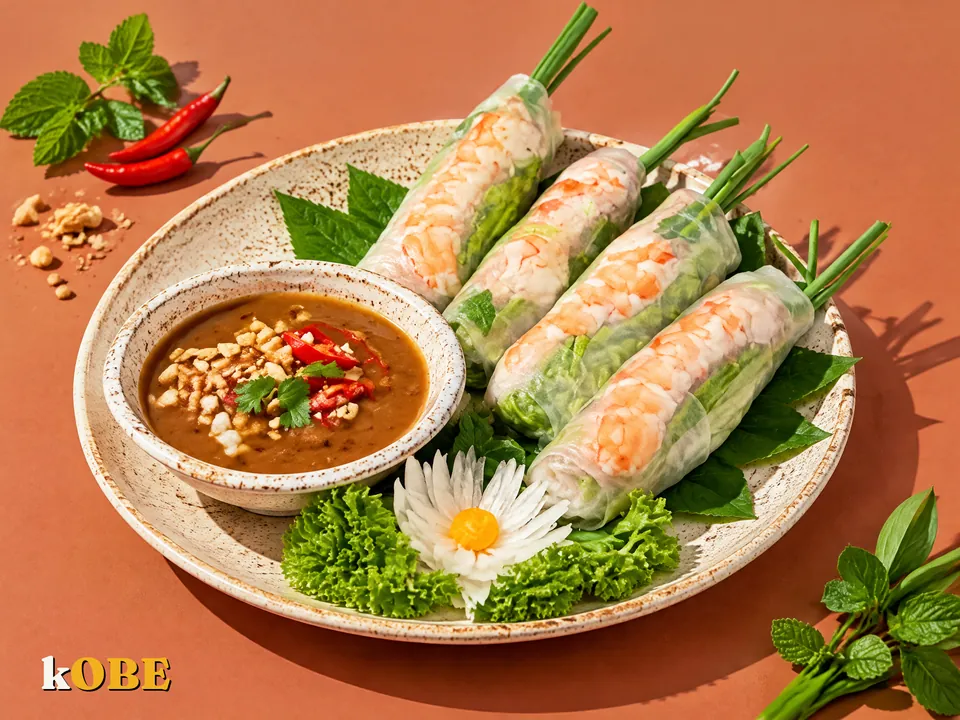
- Peanuts are everywhere in Vietnamese food: sesame and peanut salt, sticky rice with peanuts, salads topped with roasted peanuts, and fermented soybean dipping sauce. Peanuts appear in 102 kOBE recipes.
Choosing and storing
Choose firm, plump peanuts with intact skins, no wrinkles, no mold and no bitter taste or stale oil smell. Throw away any moldy or bitter nuts, because molds on peanuts can produce toxins. With so much fat, peanuts turn rancid easily; keep them in an airtight jar somewhere cool and dry, or in the fridge for longer storage.
Cooking it well
Roast over medium heat, stirring often, until fragrant and the skins start to flake off; they only turn crunchy once cooled. Boiling them in the shell is delicious too and needs no oil. For store-bought peanut butter, read the label and pick one with little added sugar and salt. To see why a handful of nuts is almost a bowl of rice, read the fat story of sesame, peanuts and nuts.