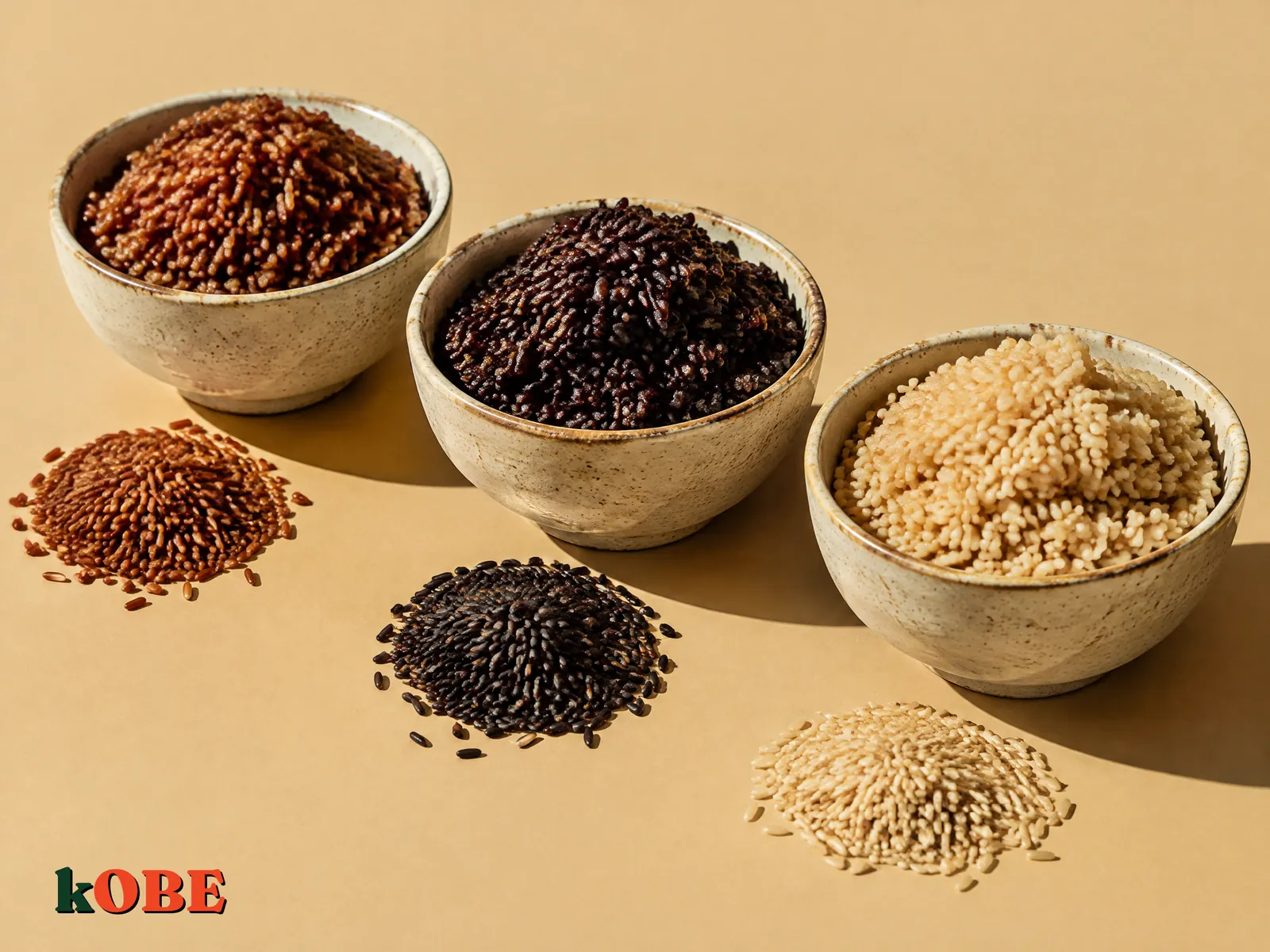
Walk through a Vietnamese market or supermarket and you will find a whole row of brown rice: light tan, brick red, deep charcoal purple. Every bag says "nutritious".
Soak a handful of black rice and the water turns inky purple. Squeeze in a few drops of lime and the water blushes pink. A little chemistry experiment, right in your kitchen.
The color of the grain is not there for decoration. It tells you what the bran is holding.
In this article
Three siblings from one family
First, a few names to keep things clear:
- Plain brown rice (lứt tẻ): regular brown rice, light tan. "Tẻ" is the Vietnamese word that separates everyday rice from sticky rice.
- Red brown rice: a bran layer from brick red to reddish brown.
- Black brown rice: a deep purple bran that looks almost black. The sticky version is what Vietnamese cooks call nếp cẩm (black sticky rice).
All three are brown rice, meaning only the husk is removed and the bran stays on. The inside is still white, like every grain of rice. Mill red or black rice white and it becomes plain white rice.
So the color lives only in the bran, that thin outer coat. To see why the bran matters so much, read How brown rice and white rice differ.
The purple in black rice: a cousin of red cabbage
The purple in black rice comes from a group of compounds called anthocyanins. They are the same pigments that color red cabbage, purple sweet potato, blueberries and butterfly pea flowers.
Anthocyanins have two delightful quirks:
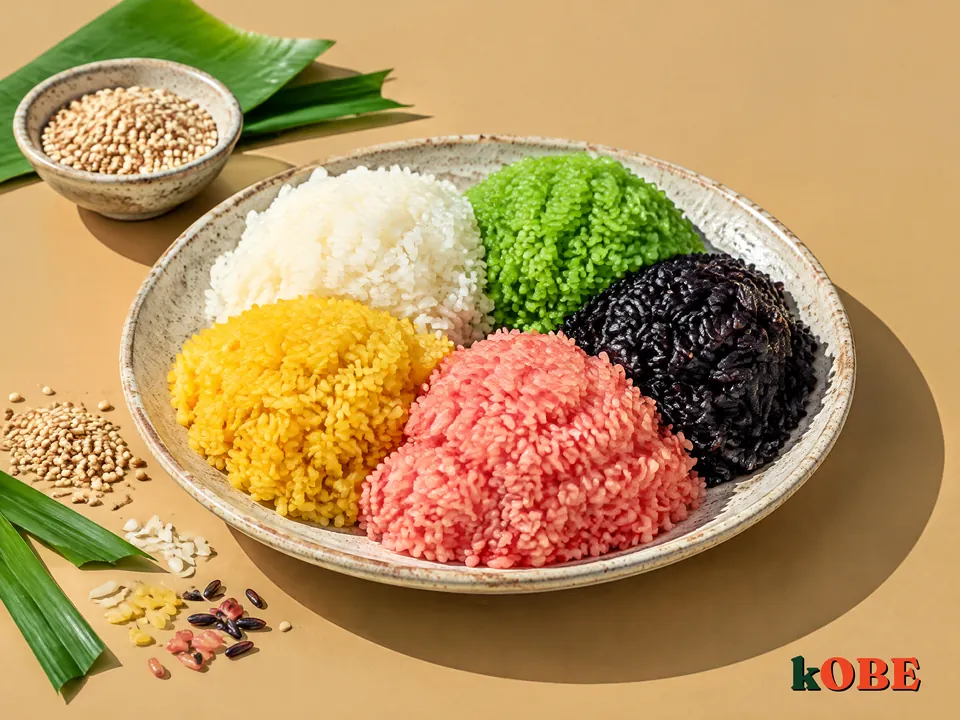
- They dissolve in water. That is why black rice soaking water turns deep purple, and why xôi nếp cẩm (steamed black sticky rice) dyes the whole pot.
- They change color with acidity. In something sour like lime juice they shift toward pinkish red. In something alkaline they shift toward blue-violet. Butterfly pea tea changes color when you add lime for exactly the same reason.
A kitchen tip: do not pour away the black rice soaking water. Cook the rice in it to keep the pigment that has already dissolved.
The red in red rice: a different family of pigments
Many people think red rice is just a "paler" black rice. It is not.
Lab analyses show that red rice has almost none of the main anthocyanin found in black rice. Its red color comes mostly from proanthocyanidins, a group of polyphenols related to the astringent compounds in tea and grape skins.
In short: black rice and red rice are two different "palettes", made from two different groups of pigments.
Does colored rice have more antioxidants?
Yes, at least when measured in the lab.
A 2017 study measured total polyphenols in rice flours:
| Rice flour | Polyphenols (mg per 100g) |
|---|---|
| Black rice | about 148 |
| Plain brown rice | about 36 |
| White rice | about 18 |
Black rice had about four times more than plain brown rice and about eight times more than white rice. Other studies also find that colored rice in general is richer in polyphenols than uncolored rice.
But to be fair and honest:
- Those numbers were measured in a test tube, on raw rice flour. Once cooked, some pigment leaches into the water or breaks down with heat.
- How the human body absorbs and uses polyphenols is still being studied. We cannot say that eating black rice gives your body four times the "antioxidant power".
So think of the pigments as a nice bonus, not a reason to force yourself to eat a rice you do not like.
Which one to pick? Let your taste buds decide
On basic nutrition like calories, starch and fiber, the three brown rices are quite close. The big differences are flavor, texture and color:
| Plain brown | Red brown | Black brown | |
|---|---|---|---|
| Flavor | Mildly nutty, easy to eat | Nutty, slightly astringent | Fragrant, deeper flavor |
| Texture | Fluffy | Firm, a little hard | Depends on variety: fluffy or sticky (nếp cẩm) |
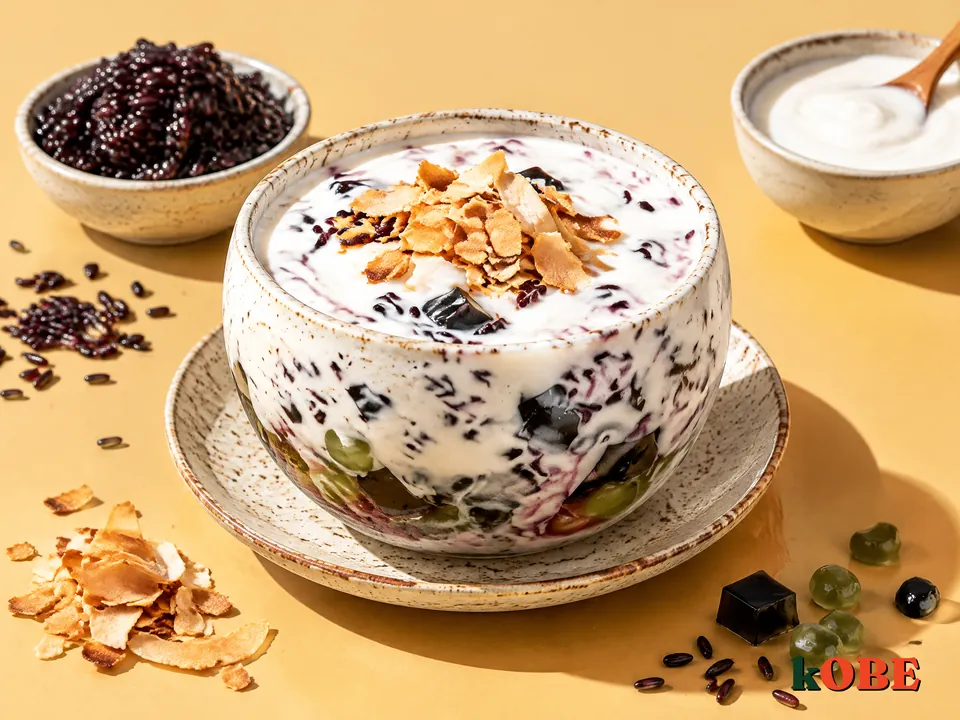
| Good for | Everyday rice, beginners | Meal-prep boxes, rice bowls | Rice bowls, cháo (rice porridge), chè (sweet dessert soup), sữa chua nếp cẩm (yogurt with black sticky rice) |
A few small suggestions:
- New to brown rice: start with plain brown, or toss a handful of black rice into your pot of white rice for a pretty pinkish purple.
- Nếp cẩm is sticky rice. It is almost all amylopectin, so it is very sticky and usually raises blood sugar about as fast as xôi (steamed sticky rice). Why rice is sticky or fluffy is explained in What is amylose.
- Every rice needs soaking. The darker and thicker the bran, the longer the soak. See How to cook soft brown rice.
Inside the kOBE kitchen
We cook two colors so you can switch things up: Red Brown Rice and Black Brown Rice.
Every 100g of Red Brown Rice has 123 kcal, 2.7g of protein and 25.6g of carbs. Every 100g of Black Brown Rice has 100 kcal, 4g of protein and 21.2g of carbs, plus anthocyanins, the very purple you just read about.
Both are cooked and then frozen. To reheat, thaw in the fridge overnight, or use the microwave on low.
A tip for a pretty plate: put Black Brown Rice next to green Sesame Kale and a few cubes of golden Japanese Sweet Potato. Three colors on one plate look delicious before the first bite.
Frequently asked questions
When black rice turns the water purple, does that mean it was dyed?
Is red brown rice the same as gạo huyết rồng?
Can I eat black rice every day?
Keep reading
Sources
- Tian J. et al. (2023). Science of Rice: Chemistry and Nutrition. Springer. Chapter 5 (polyphenols in colored rice; summarizing Rocchetti et al. 2017, Callcott et al. 2018, Peanparkdee et al. 2019).
- USDA FoodData Central: long-grain brown rice, raw and cooked.
- Harvard T.H. Chan School of Public Health, The Nutrition Source. Whole Grains.
- Further reading: Understanding Nutrition 16th ed., chapter 4; Culinary Nutrition.