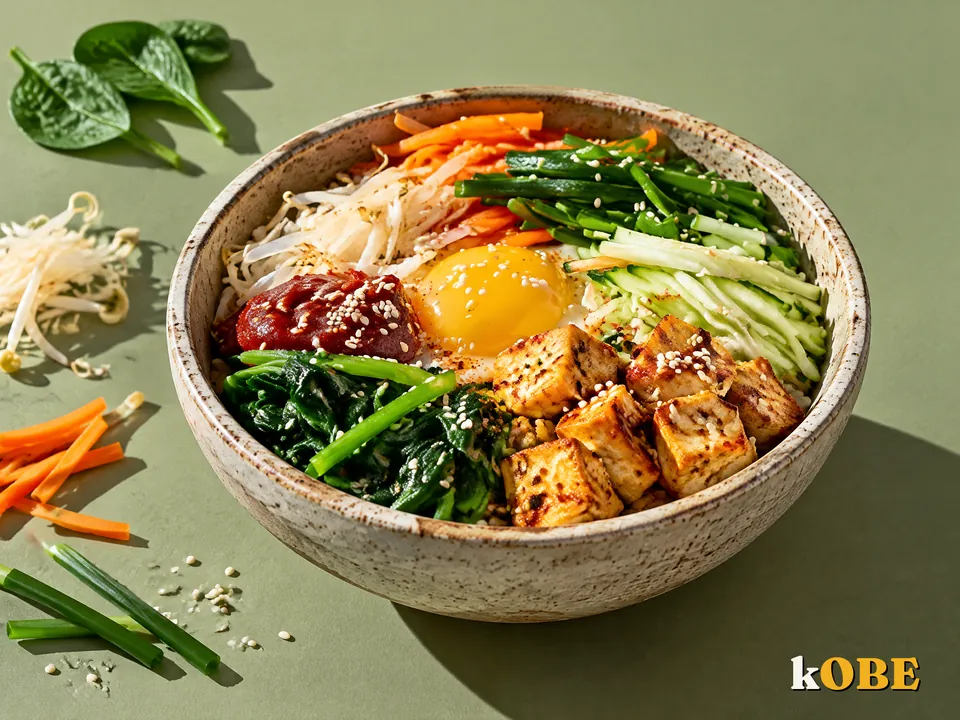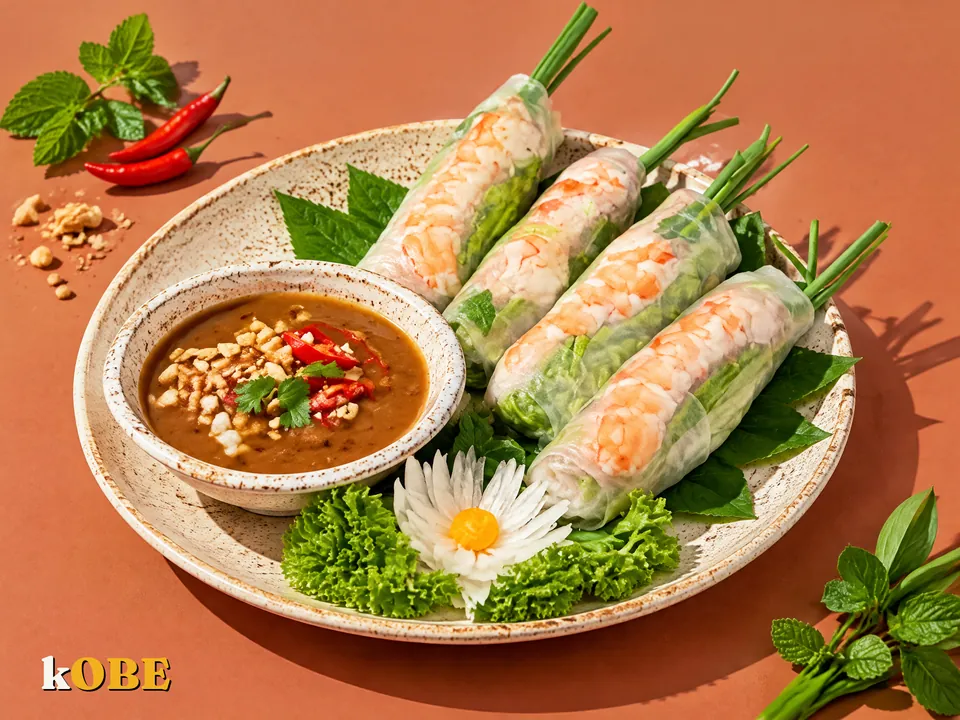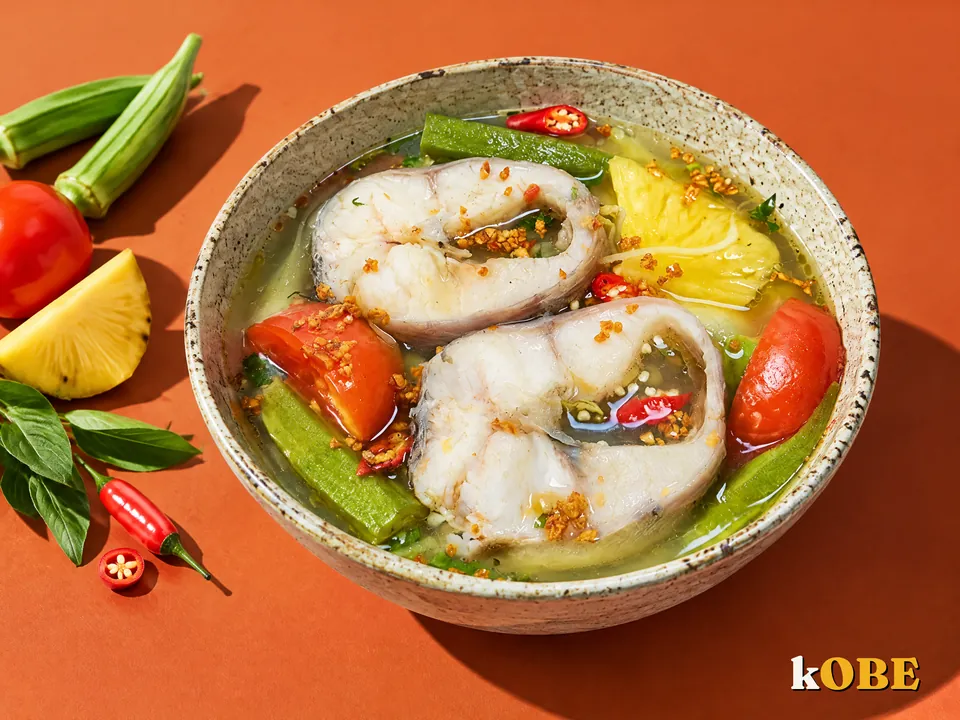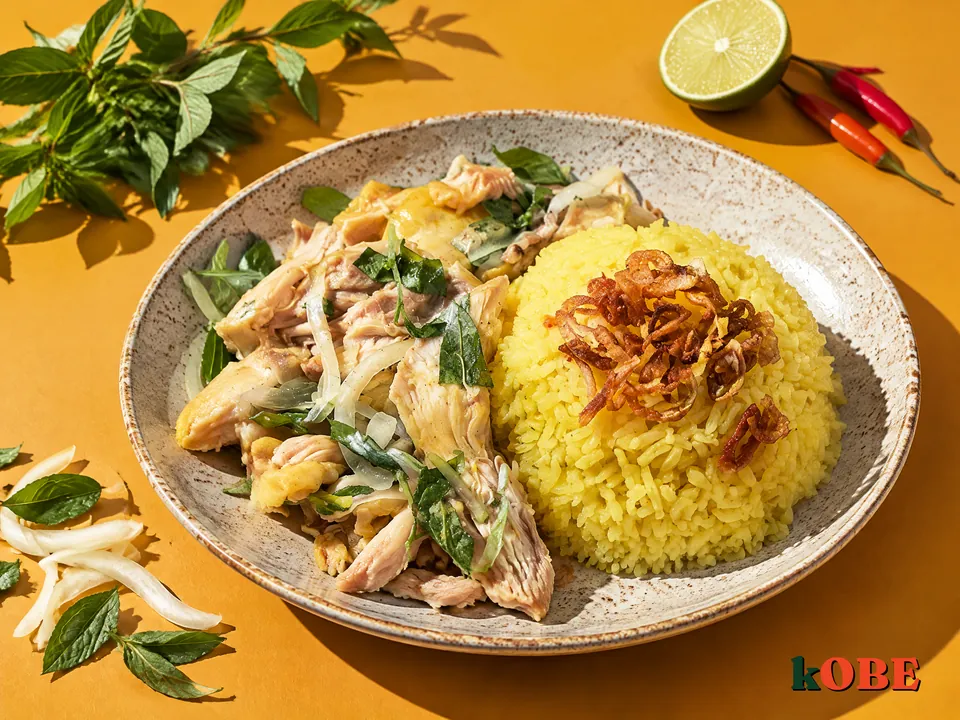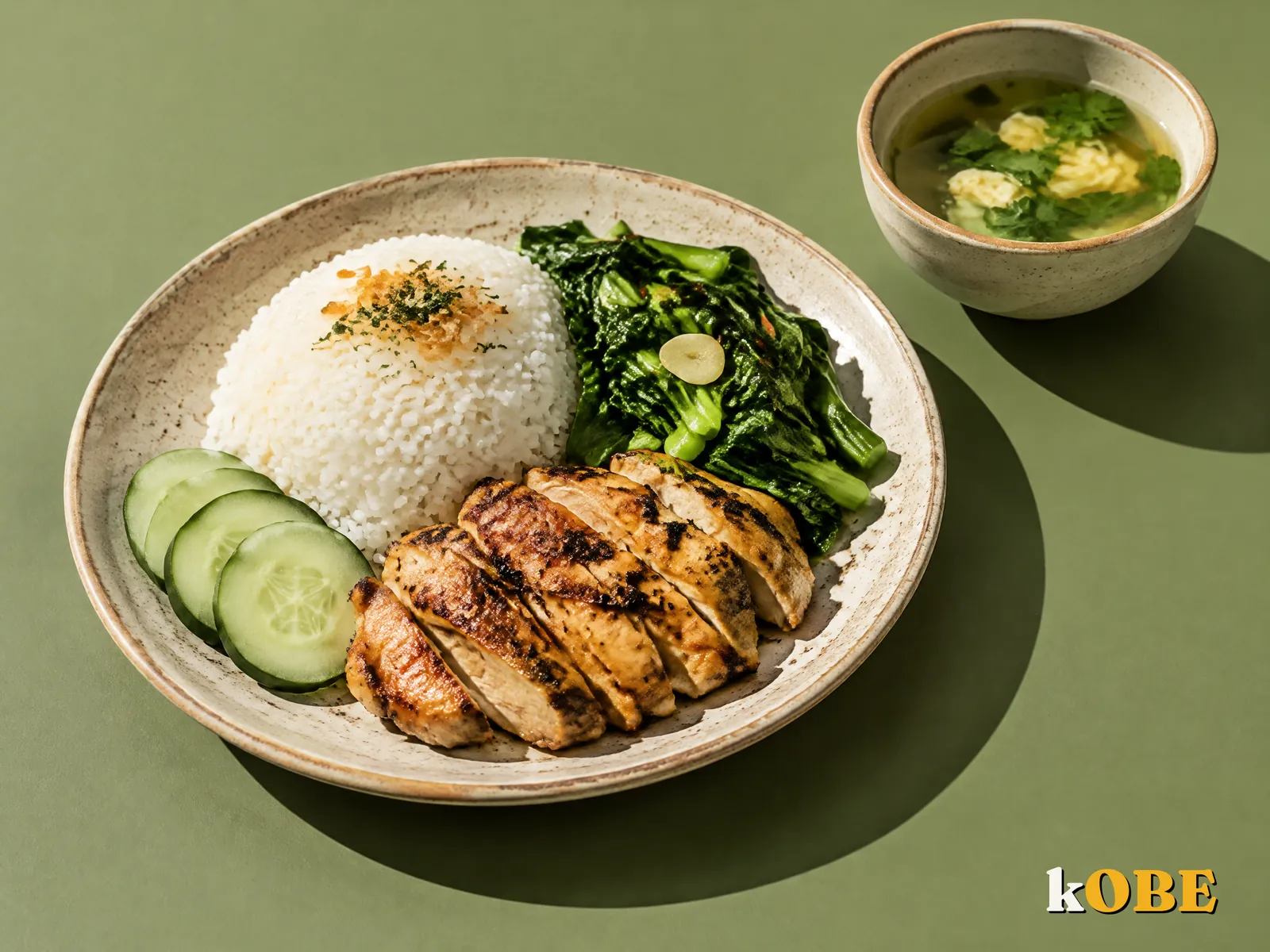
Grandma's family meals always came as a full spread: a pot of rice, a bowl of vegetable soup, a plate of cá kho (caramelized braised fish), a little dish of nước mắm (fish sauce), a plate of boiled greens. Nobody ever ate a bowl of plain white rice on its own.
And office lunches today? A box of fried rice, a bánh mì, a cup of milk tea. Convenient and quick, but almost nothing but starch.
It turns out Grandma's "everything on the table" meal holds a nutrition secret that science has only recently measured: what you eat with your rice matters as much as the rice itself.
In this article
- "Naked" starch and "dressed" starch
- Veggies first, rice after: the order matters too
- The Vietnamese family meal: a ready-made "dressed up" model
- Five ways to "dress up" your starch every day
- Don't confuse "dressing up" with "eating more to make up for it"
- Inside the kOBE kitchen
- Frequently asked questions
"Naked" starch and "dressed" starch
What happens when you eat a bowl of plain white rice on an empty stomach?
Your stomach pushes the rice into your small intestine very quickly. Enzymes chop the starch into glucose, which goes straight into your blood. Blood sugar shoots up, then drops fairly fast too. Many people feel sleepy, then hungry again soon after.
Now picture that same bowl of rice "dressed up": with veggies, fish and a little sesame oil. Each layer slows down one step:
- Fiber from veggies forms a thick mesh in your stomach and gut, slowing the starch down.
- Protein from meat, fish, eggs and beans prompts your gut to release fullness hormones, which make your stomach empty more slowly.
- Fat also makes your stomach "take a longer break" before sending food on to the gut.
The result: sugar enters your blood more gradually, like opening a small tap instead of dumping a whole bucket.
Veggies first, rice after: the order matters too
A small 2015 study in the US tried something simple. The same meal of bread, orange juice, chicken breast and vegetables. Only the eating order changed.
- Round one: starch first, then protein and vegetables 15 minutes later.
- Round two: protein and vegetables first, then starch 15 minutes later.
When vegetables and protein came first, blood sugar after the meal was noticeably lower, down by about a third at the 30 and 60 minute marks compared with eating starch first.
This study had only 11 people, all of whom already had blood sugar issues. So we won't blow it out of proportion. But other studies, for example in Japan, have found a similar trend. And the mechanism fits what we already know about fiber and protein.
The best part: this trick costs nothing, and you don't have to give up any dish. Just pick up a few bites of veggies and fish before you start on the rice.
The Vietnamese family meal: a ready-made "dressed up" model
The Harvard School of Public Health has a model called the Healthy Eating Plate. They suggest dividing your plate like this:
| Part of the plate | What goes there |
|---|---|
| Half the plate | vegetables and fruit, mostly vegetables |
| One quarter | grains, preferably whole grains |
| One quarter | protein: fish, chicken, beans, eggs |
| On the side | a little plant oil, water |
Look at this table. Does it seem familiar? The traditional Vietnamese family meal is already pretty close: vegetable soup, boiled greens, a savory main, a bowl of rice. The only difference is that we tend to eat more than a quarter plate of rice.
So instead of learning a whole new way to eat, often all you need is to go back to the family table, and tweak the proportions a little.
Five ways to "dress up" your starch every day
- Never let your rice go out alone. At every starchy meal, add at least one protein dish and one veggie dish.
- Veggies first, rice after. Sip a few spoonfuls of vegetable soup and have a few bites of boiled greens before you dig into the rice.
- A well-filled bánh mì. Choose one with egg or meat, plenty of cucumber and đồ chua (pickled carrot and daikon), instead of plain bread or just pork floss.
- Noodle soups with lots of greens. Ask for extra fresh herbs and bean sprouts, and add an egg to your phở or bún.
- Enough fat, not lots. A spoonful of sesame oil, a few slices of avocado or a handful of peanuts is plenty of "dressing". Deep frying adds more calories than benefits.
Bonus tip: a little sourness at the meal, like pickles, a vinegar-dressed salad or a squeeze of lime, may also make your blood sugar a bit gentler. The effect is small, but it suits Vietnamese taste perfectly.
Don't confuse "dressing up" with "eating more to make up for it"
There's a common misunderstanding: thinking that if you add veggies and meat, you can eat as much rice as you like.
Not quite. "Dressing up" makes starch enter your blood more slowly. It doesn't make it disappear. Three bowls of rice, dressed up, are still three bowls of rice.
So two things go together: a bowl of rice that fits your appetite, and that bowl wearing its "outfit". How much is the right amount is in our article on how much starch to eat per meal.
Inside the kOBE kitchen
Our ready-cooked ingredients have everything you need to "tailor an outfit" for your rice in a few minutes:
- The starch: Red Brown Rice, Black Brown Rice, White Rice, Quinoa, sweet potatoes.
- The protein: Sous Vide Chicken Breast, 31g of protein per 100g cooked. Or Chickpeas and Edamame for a plant-based meal.
- The veggies: Sesame Kale, kale massaged with sesame oil and toasted sesame in the Korean namul style, 78 kcal and 4g protein per 100g. Green Peas are another option.
Our frozen rice bowls follow exactly this idea: rice, a main dish and Sesame Kale in one box, with sauces cooked with monk fruit sweetener. See our ingredients on the Ingredients page.
Frequently asked questions
How long before rice should I eat my veggies?
Does vegetable soup count as "dressing"?
Can fruit be used as "dressing"?
Keep reading
Sources
- Shukla A.P., Iliescu R.G., Thomas C.E., Aronne L.J. (2015). Food order has a significant impact on postprandial glucose and insulin levels. Diabetes Care 38(7):e98 to e99.
- Harvard T.H. Chan School of Public Health, The Nutrition Source: Healthy Eating Plate.
- Atkinson F.S., Foster-Powell K., Brand-Miller J.C. (2008). International tables of glycemic index and glycemic load values: 2008. Diabetes Care 31(12):2281 to 2283.
- National Institute of Nutrition (Vietnam) (2016). Recommended Dietary Allowances for Vietnamese People.
- Further reading: Understanding Nutrition 16th ed., chapters 3 and 4; Culinary Nutrition.