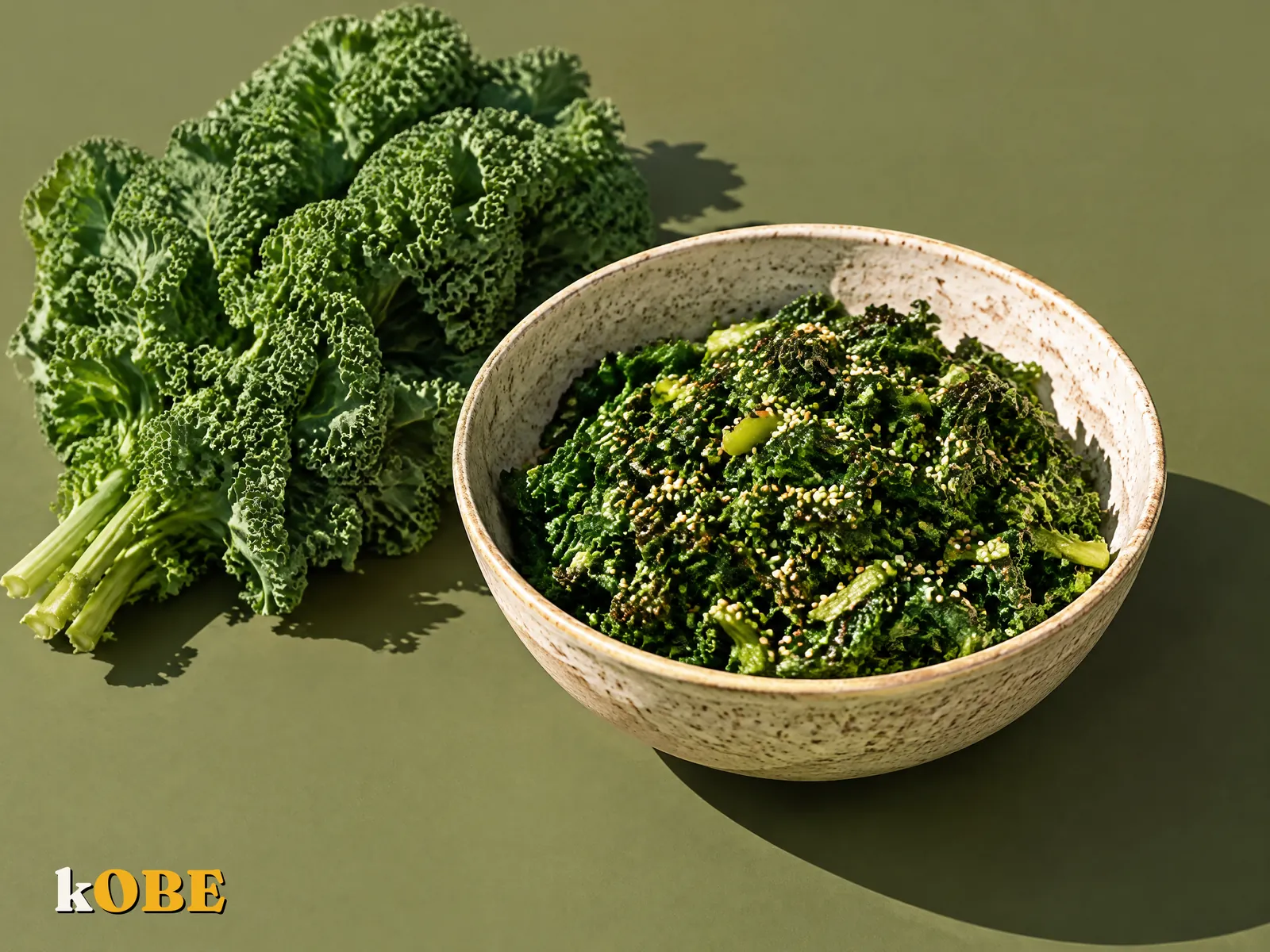
Ten years ago, almost nobody at a Vietnamese market knew what kale was. Now it sits in supermarkets, in smoothies and in office salad bowls. People call it a "superfood".
But did you know kale and cabbage are siblings? You could even say they are the same plant species, just bred by humans in two different directions.
So what is special about kale, and does it deserve the "super" label? Let us take a close look.
In this article
Kale, cabbage, broccoli: one big family
Thousands of years ago, a wild cabbage grew along the Mediterranean coast, with thick, slightly bitter leaves. Farmers began breeding it.
- Those who liked big leaves kept the big-leaf plants. Over time, that became kale.
- Those who liked tight, rolled heads of leaves got cabbage.
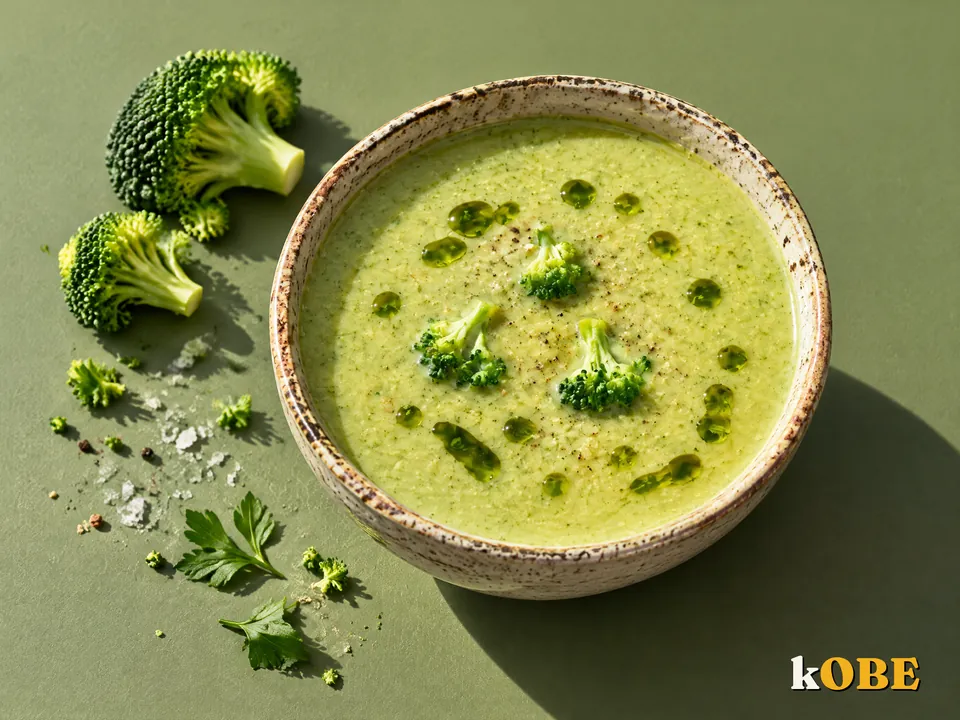
- Those who liked the young flower clusters got broccoli and cauliflower.
- Those who liked a swollen stem got kohlrabi (su hào in Vietnamese).
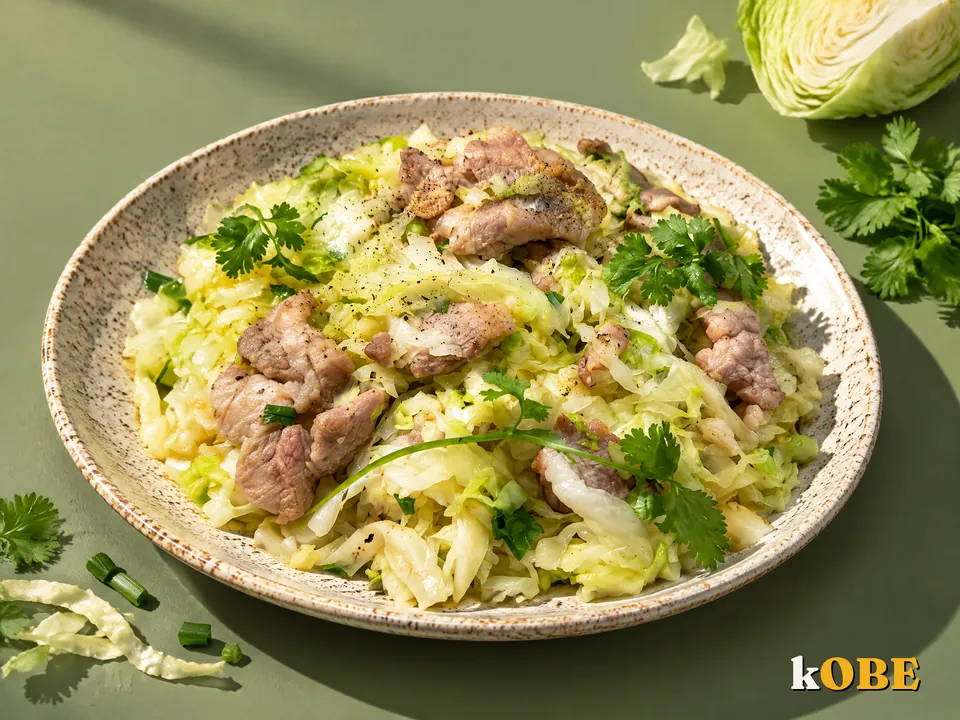
All of them belong to the species Brassica oleracea. So every time you eat stir-fried cabbage or kohlrabi soup, you are eating a very close relative of kale.
In Vietnam, kale is grown mostly in Đà Lạt, the cool highland town. Some kinds have tightly curled leaves, and some have long, dark leaves known as dinosaur kale (lacinato).
Small but mighty: kale's report card
According to the USDA food database, 100g of raw kale has about 35 to 50 kcal (depending on the data version) and around 4g of fiber. But the headline is the vitamins:
| In 100g raw kale | A picture to compare |
|---|---|
| Vitamin C about 90mg or more | More than 100g of orange (about 50mg) |
| Vitamin K several hundred micrograms | About three times an adult's daily need |
| Beta-carotene (provitamin A) | Among the high-scoring leafy greens |
| Calcium about 150mg or more | A meaningful share, and fairly well absorbed |
The calcium story deserves a little more. Spinach is also high in calcium, but it contains a lot of oxalate, a compound that "locks up" calcium. Kale has far less oxalate. A classic 1990 study found that the share of calcium absorbed from kale was no worse than from cow's milk. The catch: to match the calcium in a glass of milk, you would need to eat quite a lot of kale.
Why is kale bitter, and why do people "massage" it?
The cabbage family has a group of compounds called glucosinolates. They are the plant's weapon against insects. When you chew or cut the leaves, glucosinolates meet an enzyme and form sharp, bitter compounds. The nose-tingling bite of mustard and of cải bẹ xanh (Vietnamese mustard greens) comes from this same family.
Scientists are studying glucosinolates and their by-products a great deal. But so far there is not enough evidence to say eating kale protects against any specific illness. We see it as one part of "eating a variety of vegetables", not a miracle food.
Kale leaves are also tough and chewy because their cell walls are thick. That is why Korea has namul: vegetables gently massaged by hand with sesame oil, salt and toasted sesame seeds.
When you massage the leaves, some of the cell walls break. The leaves soften, collapse, lose some bitterness and turn a deeper green. A full basket of kale shrinks to a small bowl.
Sesame oil is not just for flavor
Here is the most fun detail. The vitamin K and beta-carotene in kale are fat-soluble. They need a little fat alongside to be absorbed well.
Many studies found that eating leafy greens with a bit of oil boosts carotenoid absorption far more than eating the greens plain. So kale massaged with sesame oil, or a kale salad with a dressing that has some oil, is a very sensible way to eat it. Our grandparents stir-frying greens in lard were getting this right without knowing it.
How to make kale easy to eat
- Strip out the center stem if it is thick, because it is very fibrous and chewy.
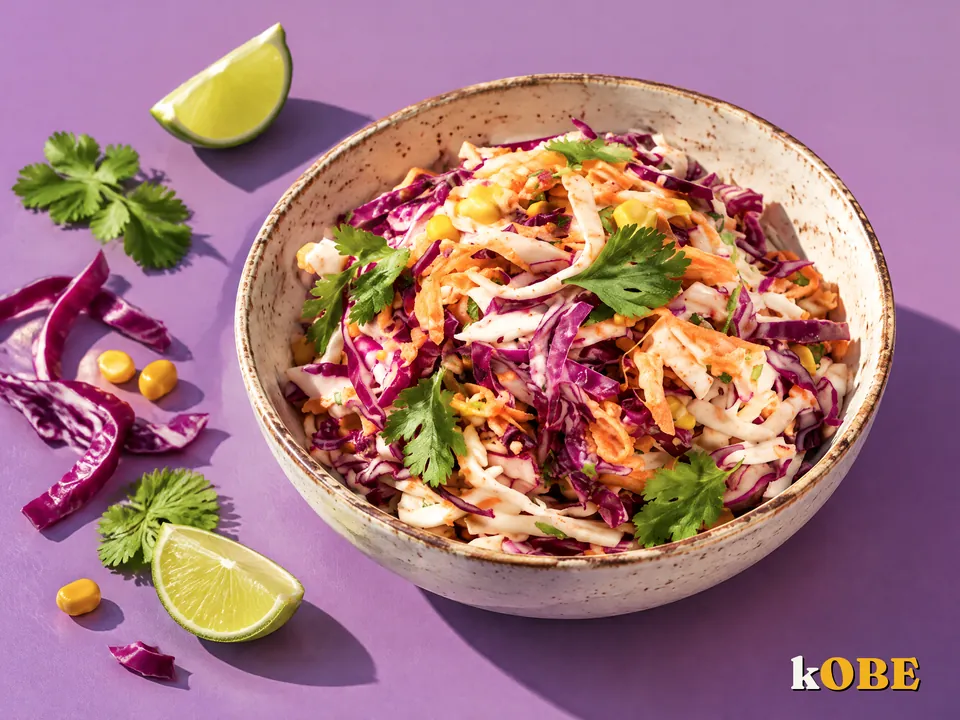
- Eating it raw? Massage it with a little oil and salt for about two minutes.
- Stir-fry it fast with garlic, like morning glory. Kale handles heat better than soft leafy greens.
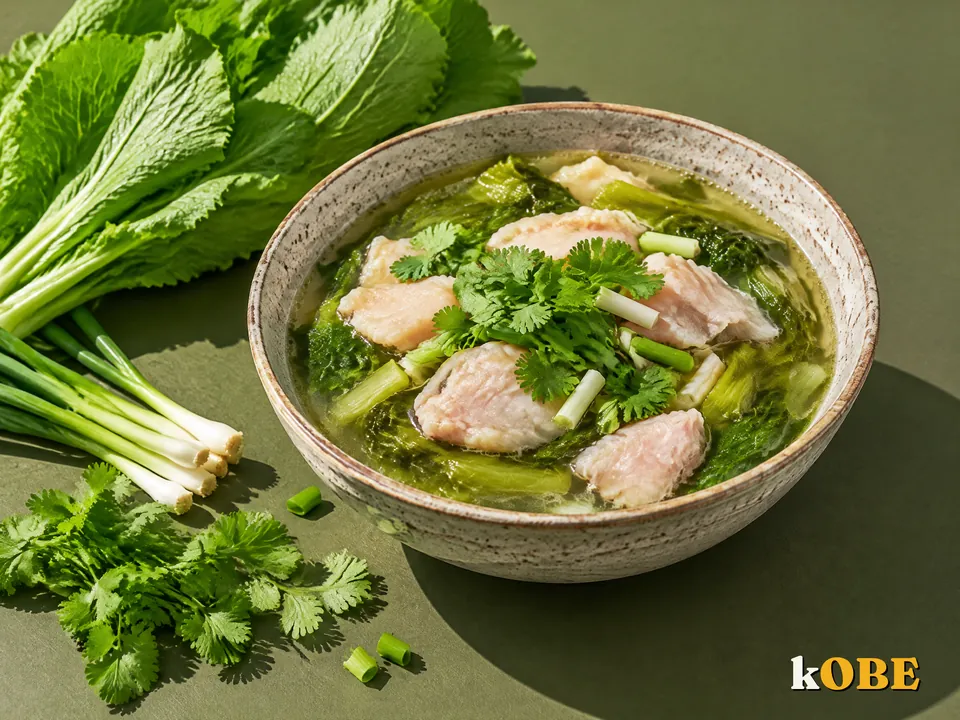
- Add it to soup like mustard greens, dropping it in at the end to keep the color.
- Blending a smoothie? Keep the pulp, do not strain, so you keep the fiber.
And remember: kale is not "better" than cabbage or cải ngọt (choy sum) in every way. Every vegetable has its own strengths. Rotating many kinds is the real way to eat your greens well.
Inside the kOBE kitchen
The Sesame Kale on our Ingredients page is kale massaged with sesame oil and toasted sesame seeds, namul style. Every 100g has 78 kcal and 4g protein. It is made ready and frozen; thaw it overnight in the fridge and it is ready to eat.
Sesame Kale also appears in our Chicken Kale Namul Poke and comes with our frozen rice bowls.
Our kitchen's favorite way to use it: toss a handful of Sesame Kale with hot brown rice and a soft-boiled egg. Three minutes and you have a vegetable-packed rice bowl. See Sesame Kale on our Ingredients page.
Frequently asked questions
Can you eat kale raw?
Is it okay to eat kale every day?
Does cooking destroy all the vitamins?
Keep reading
Sources
- USDA FoodData Central: Kale, raw; Oranges, raw.
- Heaney R.P., Weaver C.M. (1990). Calcium absorption from kale. American Journal of Clinical Nutrition 51(4):656 to 657.
- Brown M.J. et al. (2004). Carotenoid bioavailability is higher from salads ingested with full-fat than with fat-reduced salad dressings as measured with electrochemical detection. American Journal of Clinical Nutrition 80(2):396 to 403.
- NHS (UK). Guidance on vitamin K.
- Further reading: Understanding Nutrition 16th ed., chapter 11 (fat-soluble vitamins); Culinary Nutrition.