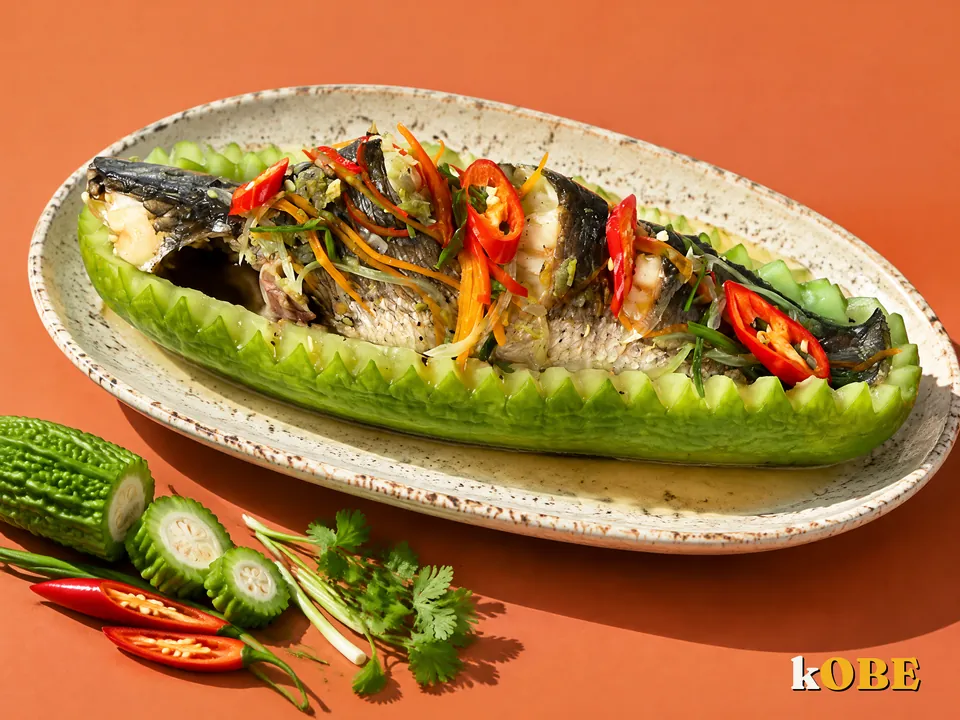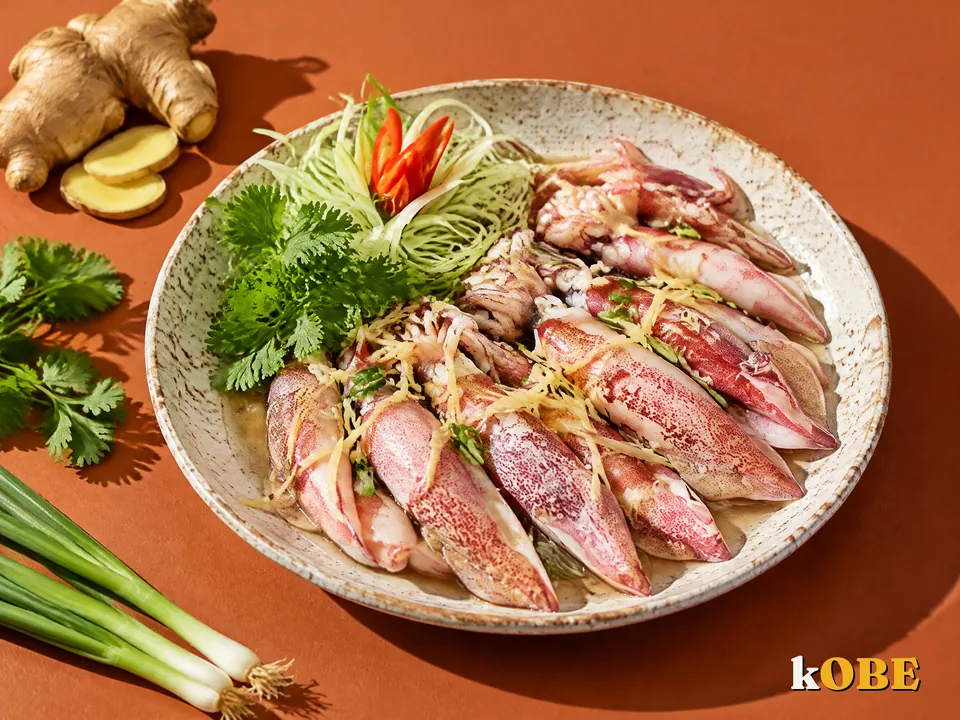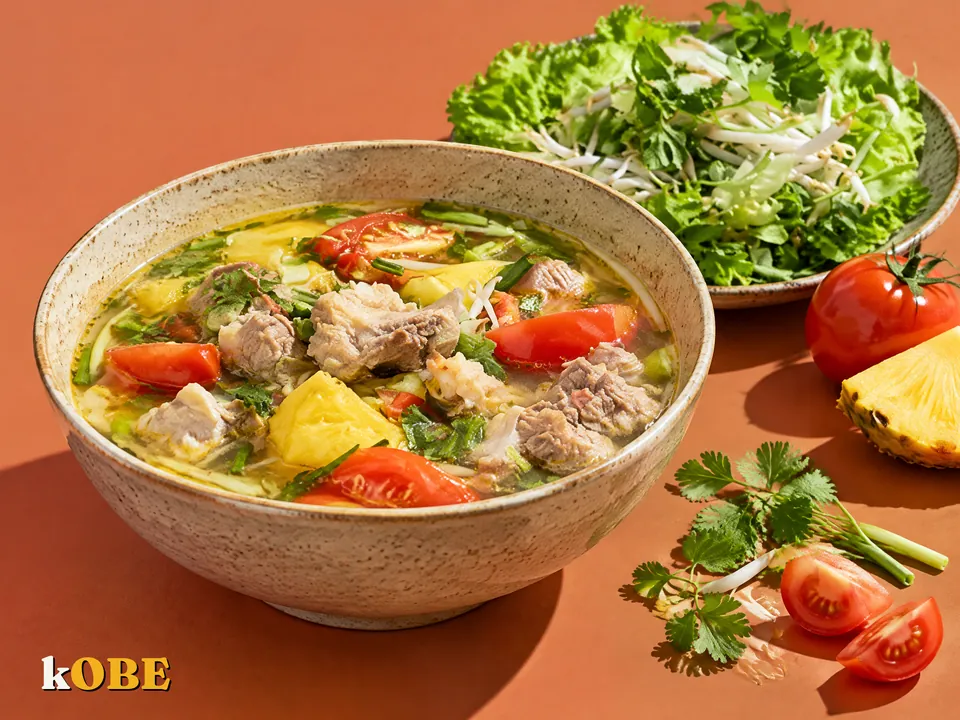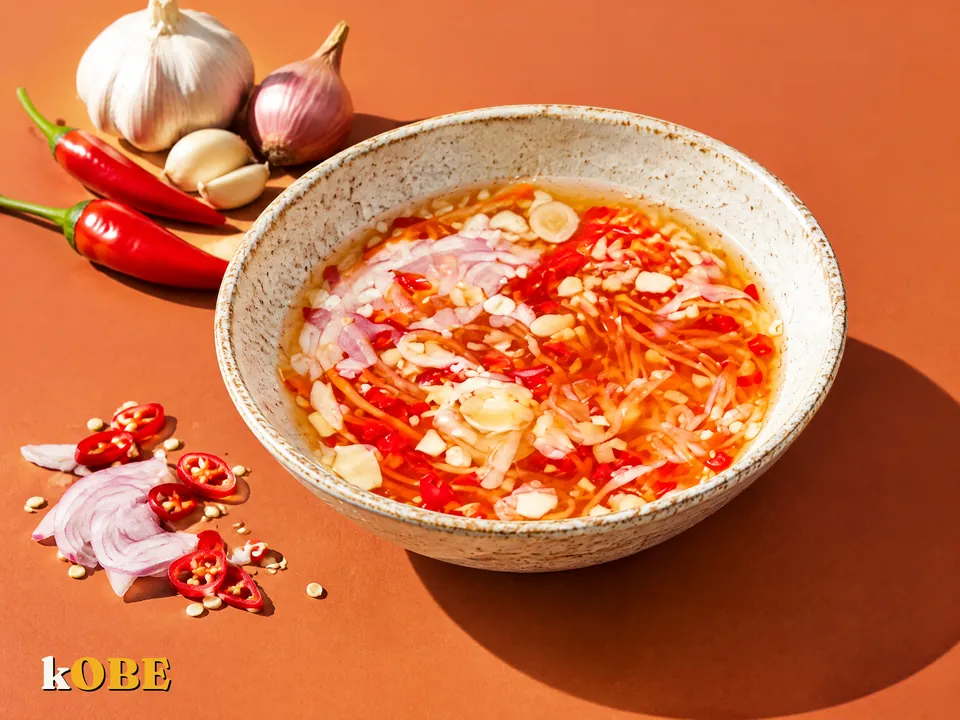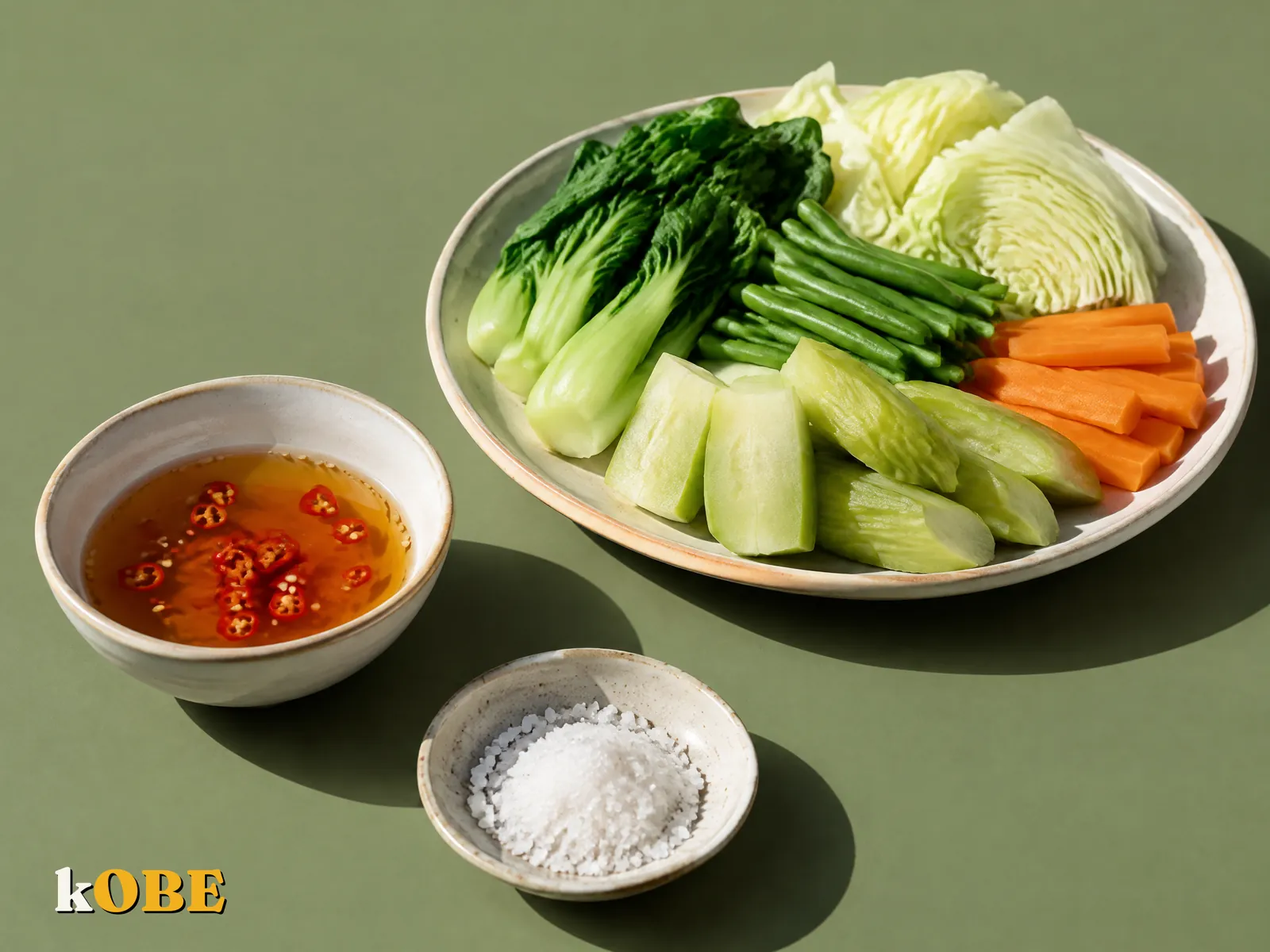
Vietnamese eaters have a very particular habit: every dish comes with a dipping bowl. Boiled greens go into nước mắm (fish sauce). Boiled pork goes into mắm tôm (fermented shrimp paste). Fruit goes into chili salt. Some people even dip their rice.
The dipping bowl makes a meal rich and savory. But it is also why Vietnamese diets are quite a bit saltier than recommended. This is not a "ban salt" article. It is an article to help you see where salt is hiding.
In this article
Salt and sodium: two words, one story
Table salt is chemically sodium chloride. Of the two, sodium is the part nutrition scientists care about.
An easy conversion: every 1g of salt has about 0.4g of sodium. Flip it around: multiply the sodium number by 2.5 to get salt.
This trick is really handy for reading labels. Labels usually list sodium in milligrams. See "sodium 800mg", multiply by 2.5, and you get about 2g of salt.
Sodium is not a bad guy. Your body needs it to hold water, send nerve signals and help muscles contract. It works as a pair with potassium, like two ends of a seesaw. The only problem is that modern meals tend to give far more sodium than the body needs.
5g and 9.4g: the Vietnamese gap
WHO recommends adults eat less than 5g of salt a day, equal to less than 2g of sodium. To picture it: 5g of salt is about one level teaspoon.
According to the Ministry of Health's 2015 national risk factor survey, Vietnamese adults eat on average about 9.4g of salt a day. Nearly double the WHO level.
And that teaspoon is not just the salt sprinkled into the pot. It includes all the sodium in fish sauce, soy sauce, seasoning powder, MSG, pickles, chả lụa (Vietnamese pork roll), instant noodles and snacks. It adds up fast.
Where does salt hide in a Vietnamese meal?
In many Western countries, most salt comes from processed food. Vietnam is different: most of it comes from seasoning while cooking and dipping while eating.
| Source | Picture it |
|---|---|
| Fish sauce | One tablespoon can hold about 1.4g of sodium depending on the type, nearly three quarters of the WHO daily level |
| Seasoning powder | Main ingredients are usually salt and MSG |
| Soy sauce | Almost as salty as fish sauce, depending on the type |
| Shrimp paste, mắm ruốc, mắm nêm (fermented fish and shrimp sauces) | Very salty |
| Pickled mustard greens, cà pháo (pickled eggplant), pickled shallots | Salted to keep |
| Instant noodles | Most of the sodium is in the seasoning packet and broth |
| Chả lụa, lạp xưởng (Chinese-style sausage), dried meat, dried fish | Salt is part of how they are made |
A fun fact about MSG: gram for gram, MSG has only about a third of the sodium of salt. But people usually use it alongside salt and fish sauce, not instead of them, so the total sodium still adds up.
And what about a bowl of phở, bún or hủ tiếu (noodle soups)? Most of the salt is in the broth. Draining the bowl and leaving half the broth behind are two quite different amounts of salt.
Your tongue can learn to like less salt
Good news: a taste for salt is not fixed. It is a habit, and habits can change.
Studies show that when people eat less salty food steadily for a few weeks to a few months, the tongue slowly becomes more sensitive to salt. Old dishes start to taste too salty. Lighter dishes start to taste just right.
That means the hardest stretch is the first few weeks. Get past that and you no longer feel like you are "holding back".
Eight tips for less salt without losing flavor
- Season at the end, and gradually. Taste first, then add, rather than seasoning out of habit.
- Dip instead of pouring. Dip the tip of the meat lightly, instead of pouring a whole bowl of fish sauce over your rice.
- Mix a lighter dipping sauce. Add lime, garlic, chili, a splash of water, and less fish sauce.
- Use sour, spicy and aromatic flavors instead of salty. Lime, tamarind, lemongrass, ginger, pepper and fresh herbs make a dish bold without extra salt.
- Leave some broth when you eat phở, bún or instant noodles. Or use only half the noodle seasoning packet.
- Eat pickles and dried fish as a side, not as a main at every meal.
- Read the label and multiply sodium by 2.5 to see how much salt a packet holds.
- Cut back a little at a time. Trim a bit each week and your tongue will keep up.
One note: cutting salt does not mean giving up iodized salt. Iodized salt is a familiar source of iodine for Vietnamese people. Eat less salt, but keep using the iodized kind.
Inside the kOBE kitchen
kOBE's Sous Vide Chicken Breast is simply soaked in sea salt, then cooked sous vide at 60°C for 90 minutes. There is no heavy marinade, so you decide how salty it is when you eat: dip lightly, or eat it with fresh herbs and lime.
Our sauces are cooked with kOBE Signature Monk Fruit Blend. We are not giving sodium numbers here because this article has no product measurements. If you are watching salt, a simple approach is to use just enough sauce and add fresh herbs, lime and chili for bold flavor. See our ready-cooked ingredients.
Frequently asked questions
Do pink salt and sea salt have less sodium than white salt?
Do I need more salt if I sweat a lot?
Does eating less salt make food less tasty?
Keep reading
Sources
- WHO (2012). Guideline: Sodium intake for adults and children. Geneva: World Health Organization.
- Ministry of Health (Vietnam) (2016). National survey on the risk factors of non-communicable diseases (STEPS) Viet Nam 2015 [Điều tra quốc gia yếu tố nguy cơ bệnh không lây nhiễm (STEPS) Việt Nam năm 2015].
- Bertino M., Beauchamp G.K., Engelman K. (1982). Long-term reduction in dietary sodium alters the taste of salt. American Journal of Clinical Nutrition 36(6):1134 to 1144.
- USDA FoodData Central (fish sauce, table salt).
- Further reading: Understanding Nutrition 16th ed., chapter 12.