Per 100g
27kcalCalories
1.7gProtein
0.1gFat
6.2gCarbs
3.6gFiber
2.6gSugars
20mgSodium
350mgPotassium
24mgCalcium
0.4mgIron
62mgVitamin C
2µgVitamin A
Data source: USDA FoodData Central, SR Legacy, FDC 168424 (Kohlrabi, raw).
Fun facts
- Kohlrabi is not a root. The round bulb is a swollen stem sitting just above the ground, and the leaves grow right out of it.
- The name comes from German and means "cabbage turnip". Kohlrabi is the same species as cabbage, kale and broccoli.
- 100g of kohlrabi has about 62mg of vitamin C, more than an orange (about 53mg), for only about 27 kcal.
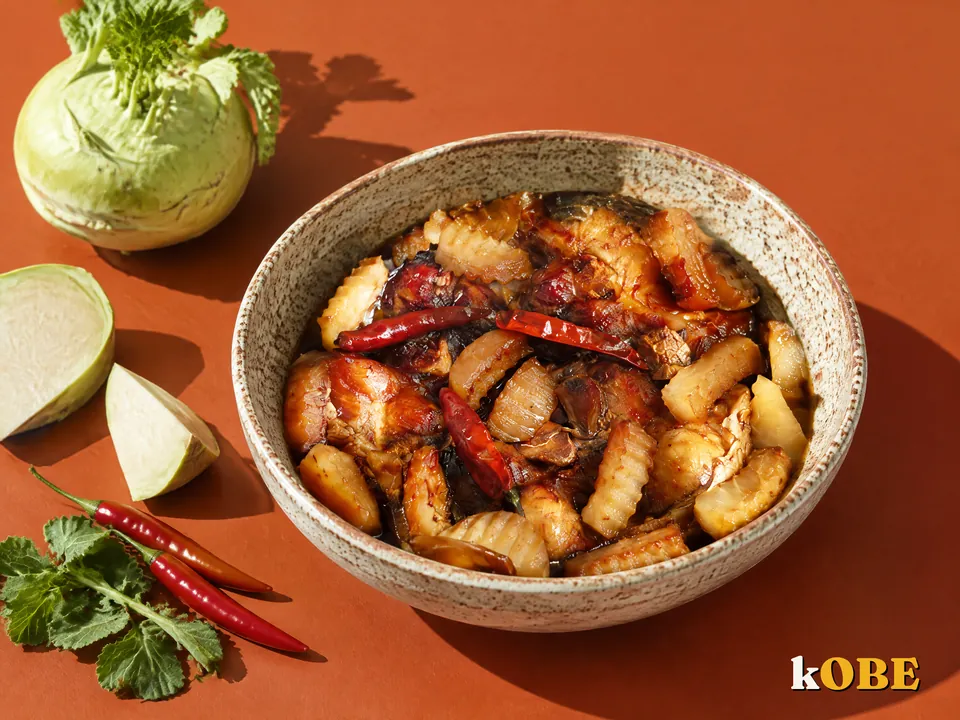
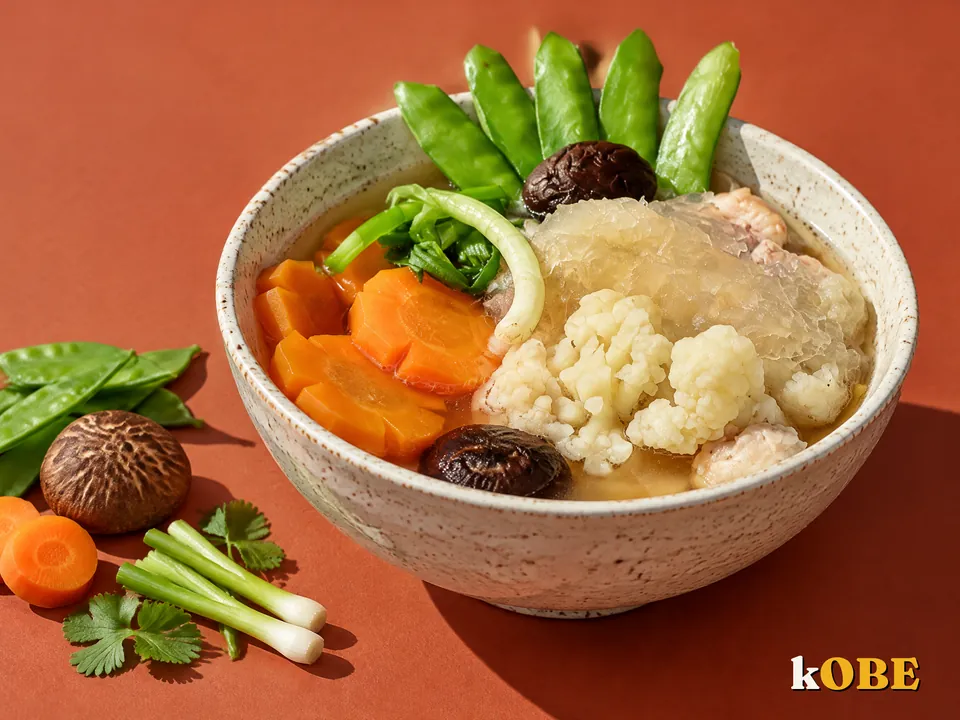
- Each 100g also brings 3.6g of fiber and 350mg of potassium. Stir fried kohlrabi, kohlrabi soup with pork and quick pickles are winter classics in northern Vietnam.
Choosing and storing
Choose fist sized bulbs with smooth green skin, fresh leaves and a heavy feel. Very large or cracked bulbs tend to be old, woody and less sweet. At home, cut off the leaves and keep the bulb in a bag in the crisper drawer for 1 to 2 weeks. Young leaves are edible too, great in soup or stir fried like greens.
Cooking it well
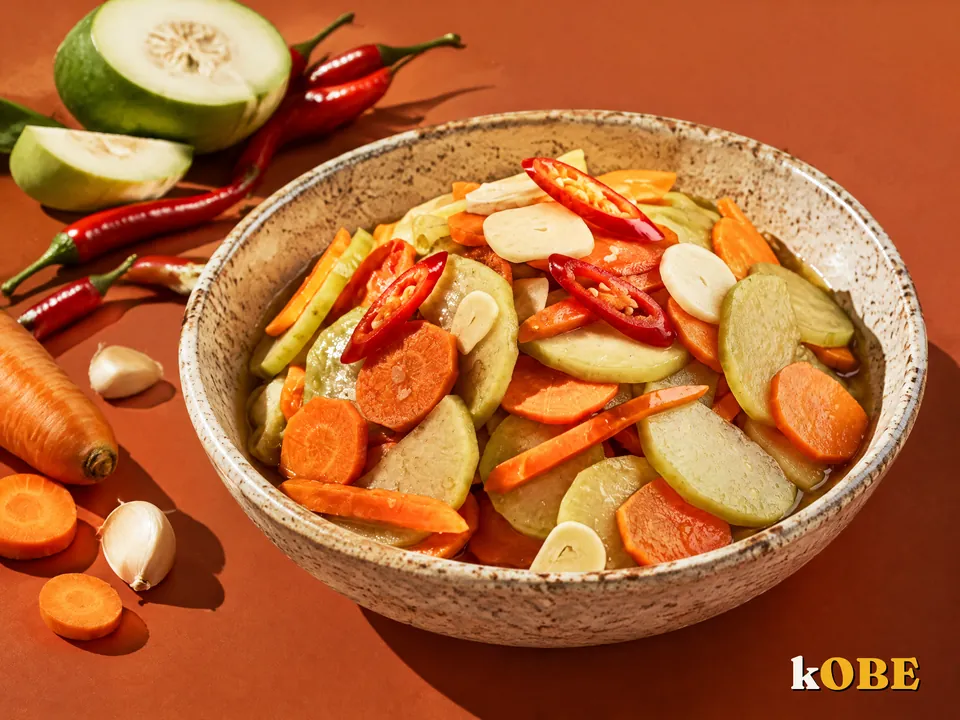
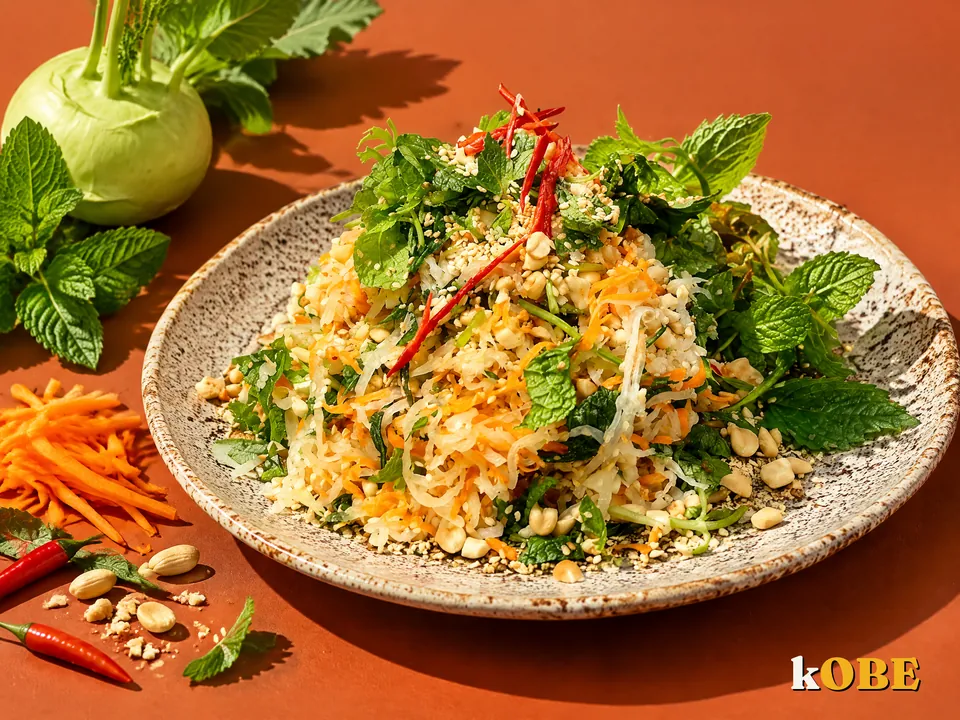
Peel generously to remove all the fibrous outer layer. Raw kohlrabi is crisp and sweet, and slicing it into salads or quick pickles keeps all its vitamin C. For a stir fry, use high heat for 2 to 3 minutes so it cooks but stays crunchy. In soup, add it last, since long cooking softens it and costs a lot of vitamin C. Read more in does cooking destroy vitamin C.
Frequently asked questions
Can you eat kohlrabi raw?
Yes, and it is delicious. Thinly sliced young kohlrabi is crisp and sweet in salads, with a salt dip or as a quick pickle.
What is the difference between purple and green kohlrabi?
Only the skin color. Both are ivory white inside and taste and cook almost the same.