Per 100g
20kcalCalories
2.2gProtein
0.1gFat
3.9gCarbs
2.1gFiber
1.9gSugars
2mgSodium
202mgPotassium
24mgCalcium
2.1mgIron
5.6mgVitamin C
38µgVitamin A
Data source: USDA FoodData Central, SR Legacy, FDC 168389 (Asparagus, raw).
Fun facts
- The asparagus we eat is a young shoot rising from the root. If nobody picks it, it opens into a bush of fine, feathery green fronds.
- After eating asparagus, many people notice their pee smells odd. The body is breaking down a compound found naturally in the spears, and it is harmless. Fun twist: not everyone can smell it.
- 100g of asparagus has only about 20 kcal, among the lightest vegetables around.
- It carries about 2.1mg of iron per 100g, quite high for a vegetable, along with 2.2g of protein and 2.1g of fiber.
Choosing and storing
Choose straight, bright green spears with tight tips and moist cut ends, not dry and woody. Thick or thin both taste great; they just need different cooking times. To keep them fresh, trim the ends, stand them in a glass of water like flowers, cover loosely with a bag and refrigerate for 3 to 4 days.
Cooking it well
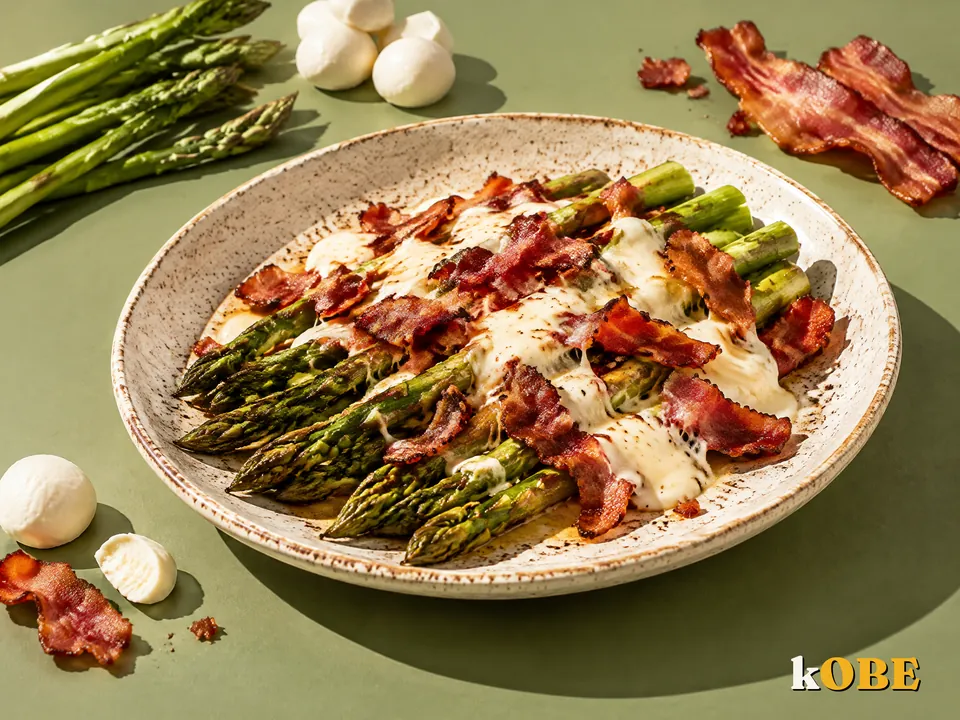
Hold each spear at both ends and bend it: it snaps right where the tender part meets the woody base. Asparagus cooks fast: a garlic stir fry, a quick sear or 2 to 3 minutes of blanching keeps it green and crisp. Cook it too long and it turns limp and olive colored. Plant iron pairs well with vitamin C, as we explain in iron rich foods and absorption.
Frequently asked questions
What is the difference between white and green asparagus?
It is the same plant. White asparagus is covered with soil so it never sees sunlight, which keeps it pale and milder in taste.
Do you need to peel asparagus?
Not thin spears. For thick ones, you can lightly peel the lower half to remove the tougher skin.