Data source: USDA FoodData Central, SR Legacy, FDC 170149 (Seeds, lotus seeds, dried).
Fun facts
- Dried lotus seeds have 332 kcal, 15.4g of protein and 64.5g of carbs per 100g, but only 2g of fat. Unlike fatty nuts such as almonds or walnuts, lotus seeds get their mellow richness from starch.
- Dried lotus seeds are very high in potassium, with 1,368mg per 100g, plus 163mg of calcium.
- In the middle of each seed sits a green germ that tastes very bitter. Cooks usually remove it for sweet soups, while the dried germs are brewed as tea.
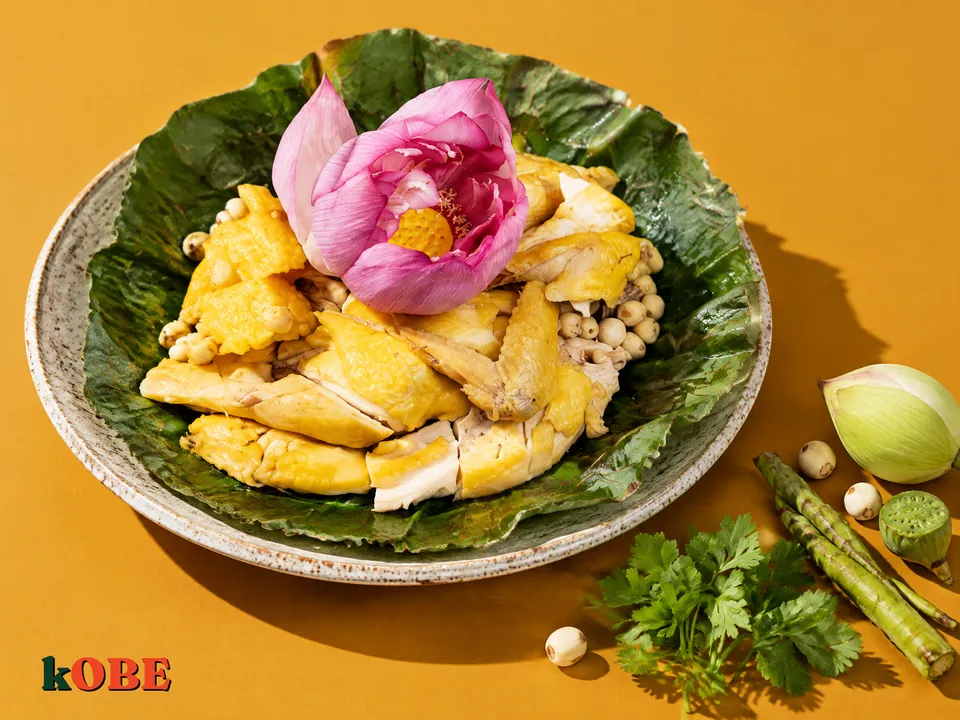
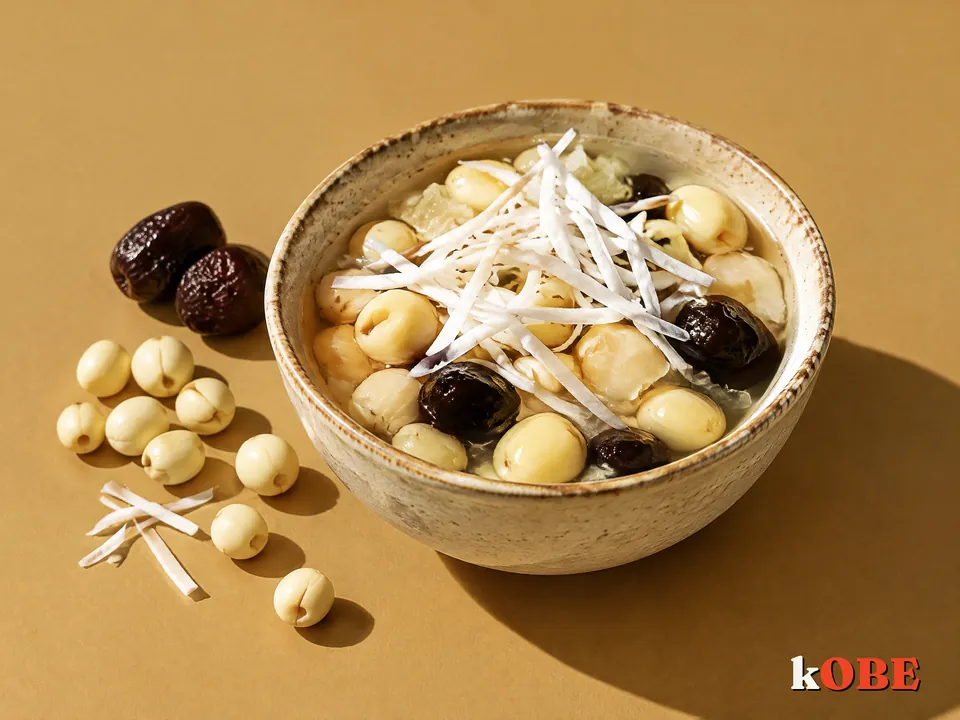
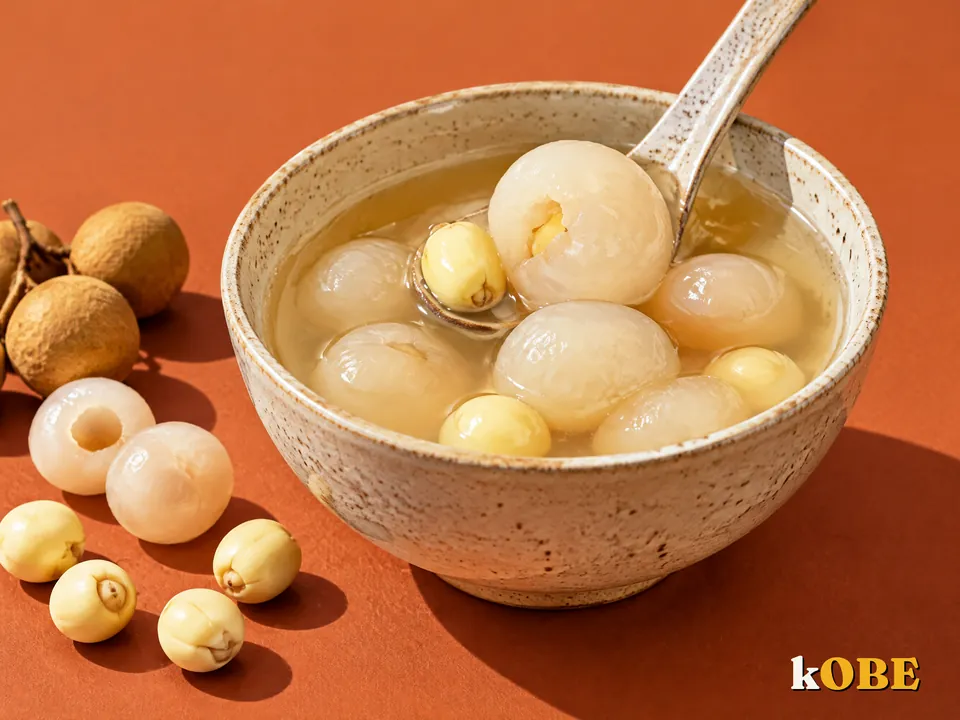
- Hue lotus seeds are famous for their fragrance and are tied to lotus seed and longan sweet soup, candied lotus seeds at Tet and lotus seed sticky rice. Lotus seeds appear in 20 kOBE recipes.
Choosing and storing
For fresh lotus seeds, choose ivory, firm seeds with no dark spots; they spoil quickly, so keep them in the fridge for a few days or freeze them. For dried seeds, choose even ones with a natural ivory colour, not unnaturally bright white, and no mould. Store dried seeds in an airtight jar somewhere dry.
Cooking it well
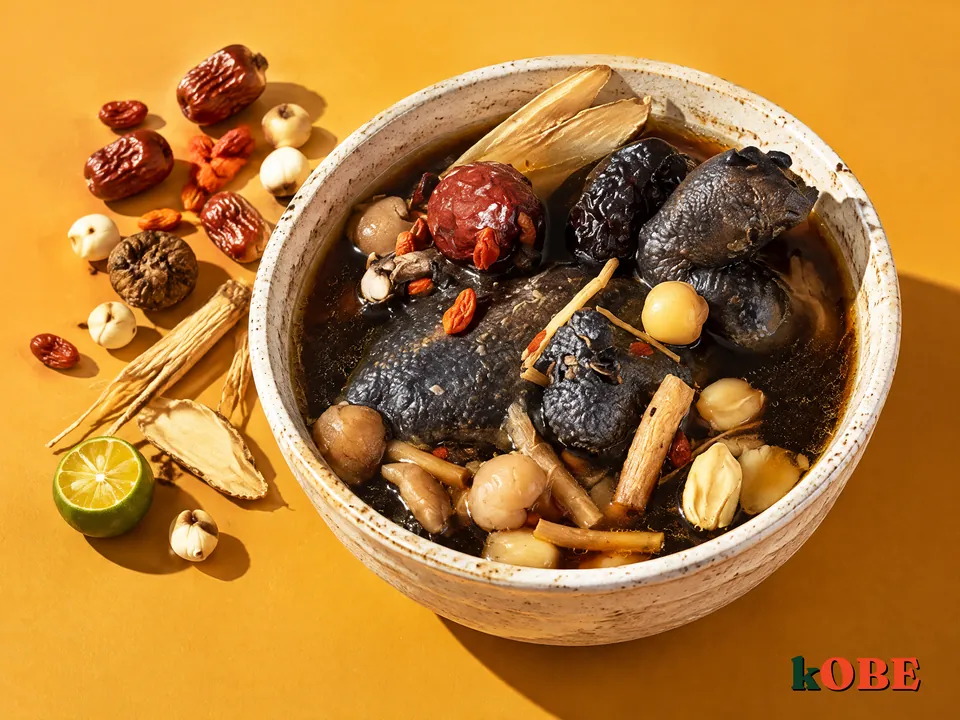
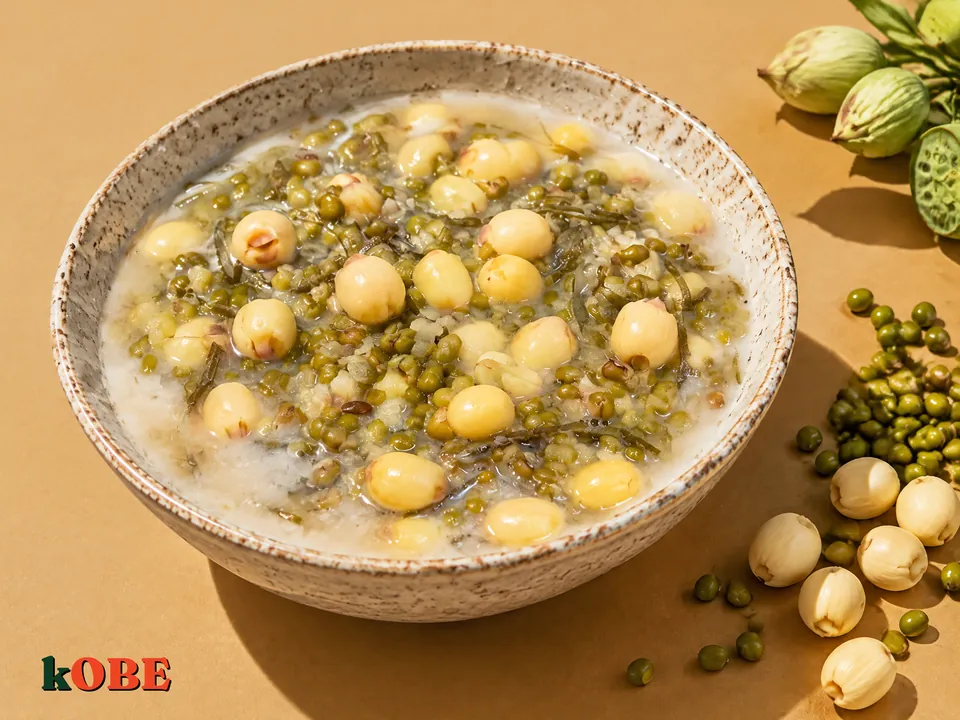
Soak dried lotus seeds in water for a few hours to plump them up, then simmer gently until soft. If the germ is still inside, push it out with a toothpick so the dish is not bitter. Lotus seeds suit both sweet and savoury dishes, such as chicken braised with lotus seeds, lotus seed soup or fried rice. They bring a lot of potassium; read more in Potassium in vegetables.