Data source: USDA FoodData Central, SR Legacy, FDC 169714 (Rice flour, white, unenriched).
Fun facts
- Glutinous rice flour is sticky rice ground fine. Its chewy, stretchy texture comes from amylopectin, the starch that makes up almost all of the starch in sticky rice.
- USDA has no separate entry for glutinous rice flour, so the table on this page uses white rice flour: about 366 kcal, 80.1g of carbs and 6g of protein per 100g dry. Since both flours are nearly pure starch, the numbers are close; the real difference is texture.
- Glutinous rice flour has no gluten. The word glutinous only means sticky.
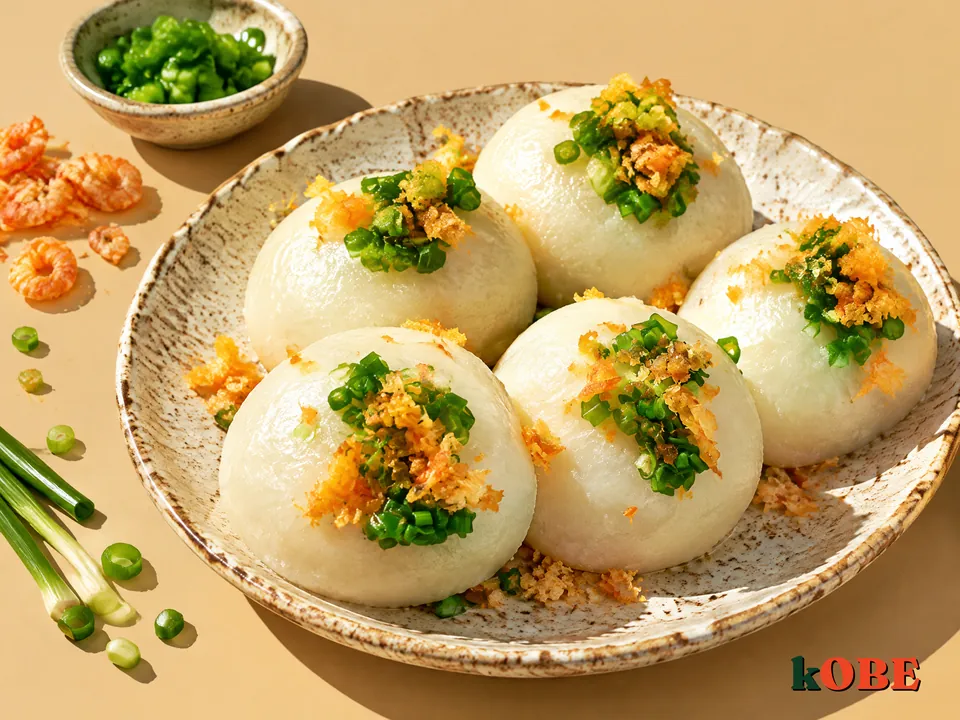
- Banh troi and banh chay for the Cold Food Festival, che troi nuoc, banh day, banh it and banh cam all need glutinous rice flour. Japanese mochi is a close cousin.
Choosing and storing
Choose white, fine, dry flour with no sour or musty smell, and check the label so you do not mix it up with regular rice flour. After opening, keep it in a sealed container somewhere cool and dry, away from moisture. Kneaded dough you do not use right away should be wrapped tightly, kept in the fridge and used soon.
Cooking it well
Knead the flour with warm water, adding a little at a time until the dough is smooth, does not stick to your hands and does not crack when shaped. If it cracks, add a few drops of water; if it is too soft, dust in more flour. Banh troi is done when it floats; lift it into cold water so the balls do not stick together. To see why sticky rice is sticky and regular rice is fluffy, read what is amylose.