Data source: USDA FoodData Central, SR Legacy, FDC 169441 (Beef, shank crosscuts, separable lean only, trimmed to 1/4" fat, choice, raw).
Fun facts
- According to the USDA, 100g of raw, trimmed beef shank has about 128 kcal, 21.8g of protein and only 3.9g of fat. That is even leaner than beef loin (6.3g).
- Shank is also rich in iron: about 2.3mg per 100g raw, along with 387mg of potassium.
- Shank is a leg muscle that works all day, so it is laced with sinew and connective tissue, mostly collagen. Cooked fast it is tough, but after a long simmer the collagen softens into gelatin, giving a uniquely springy, crunchy bite.
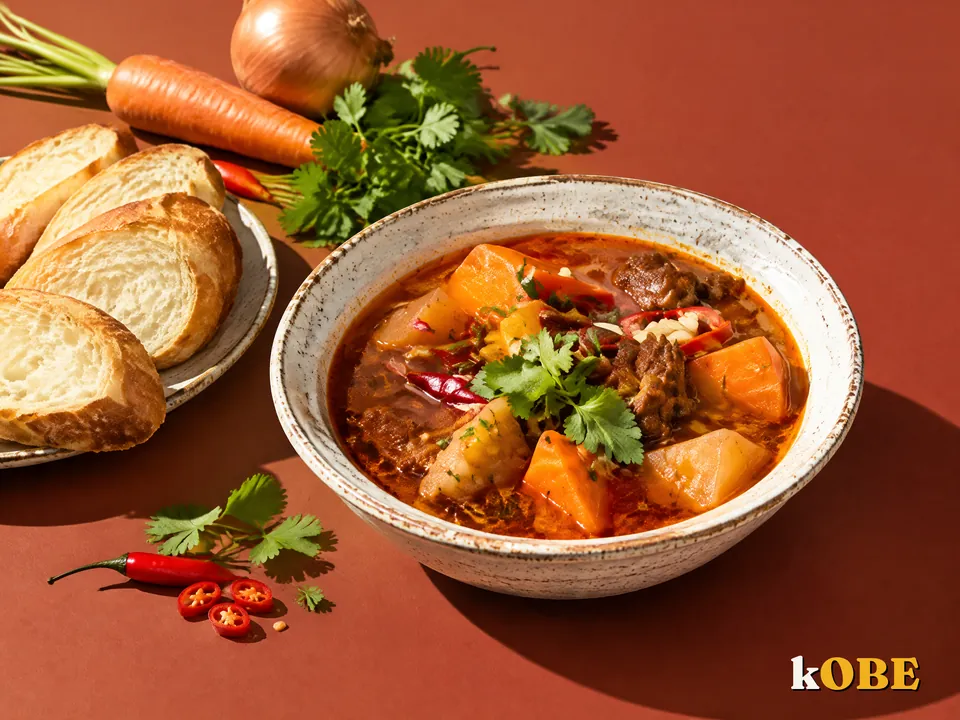
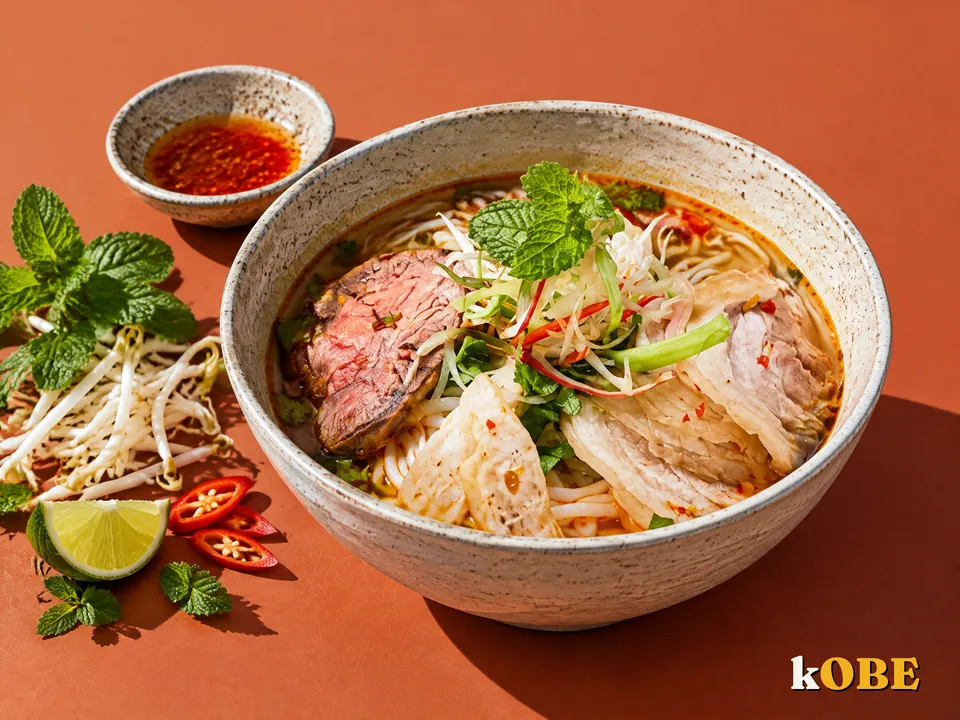
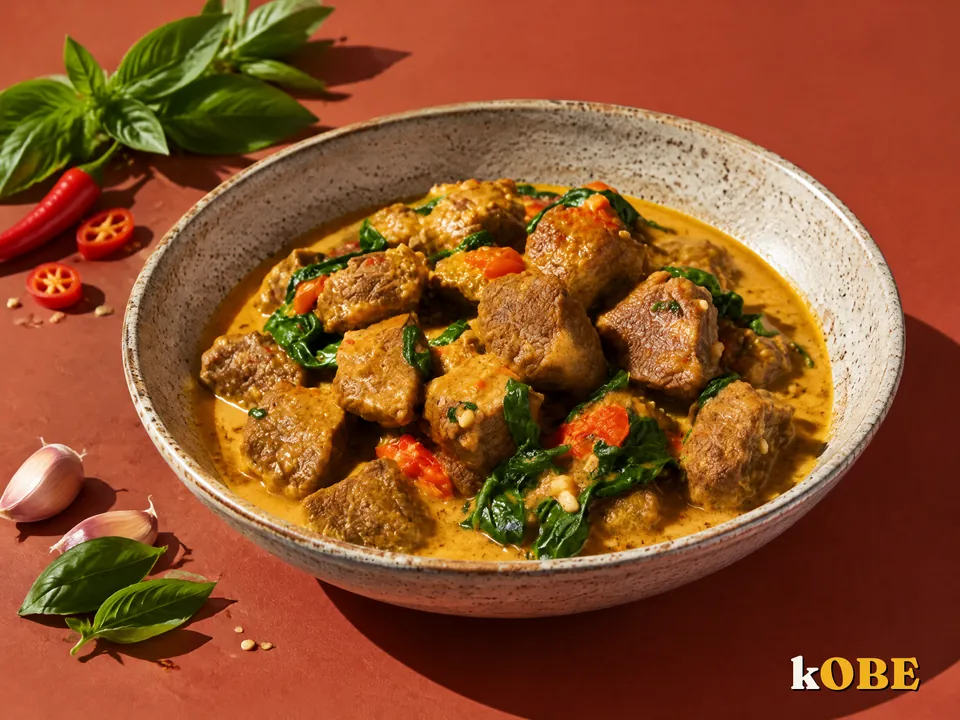
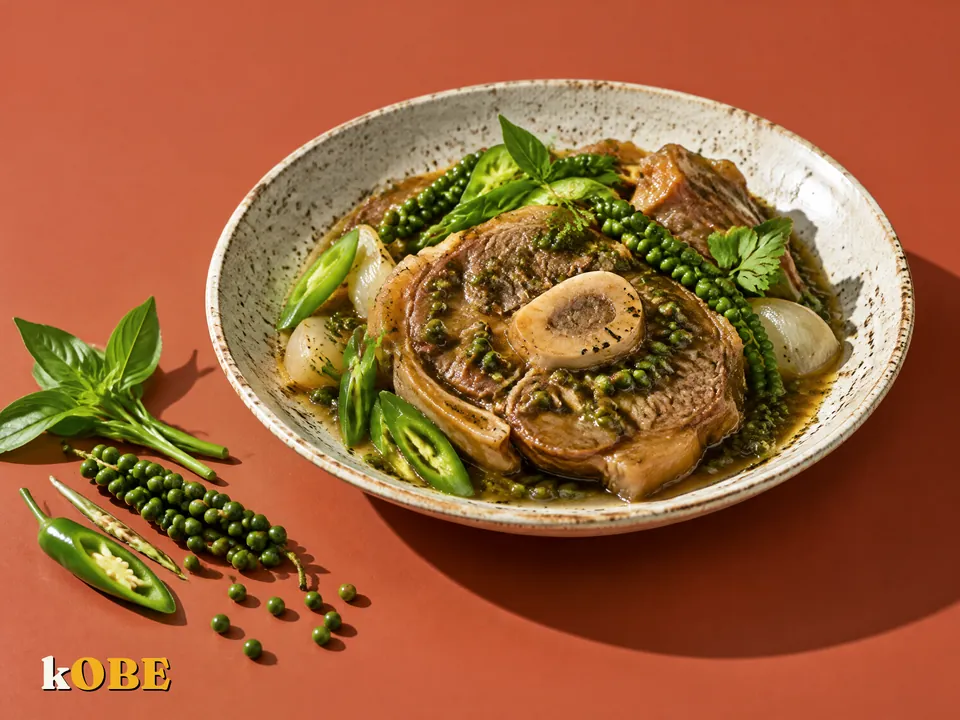
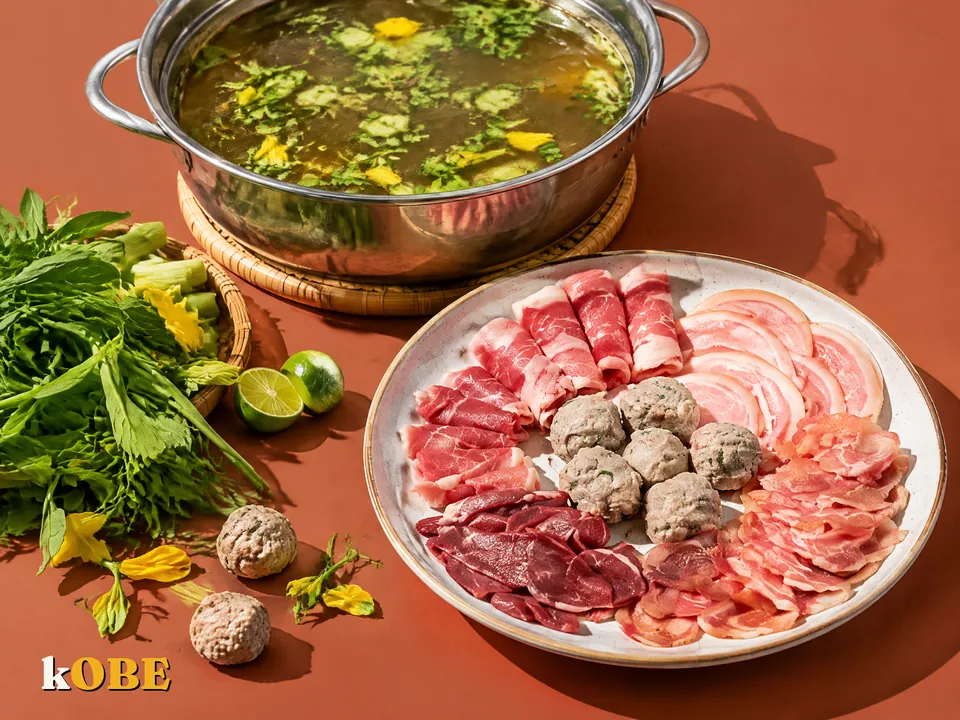
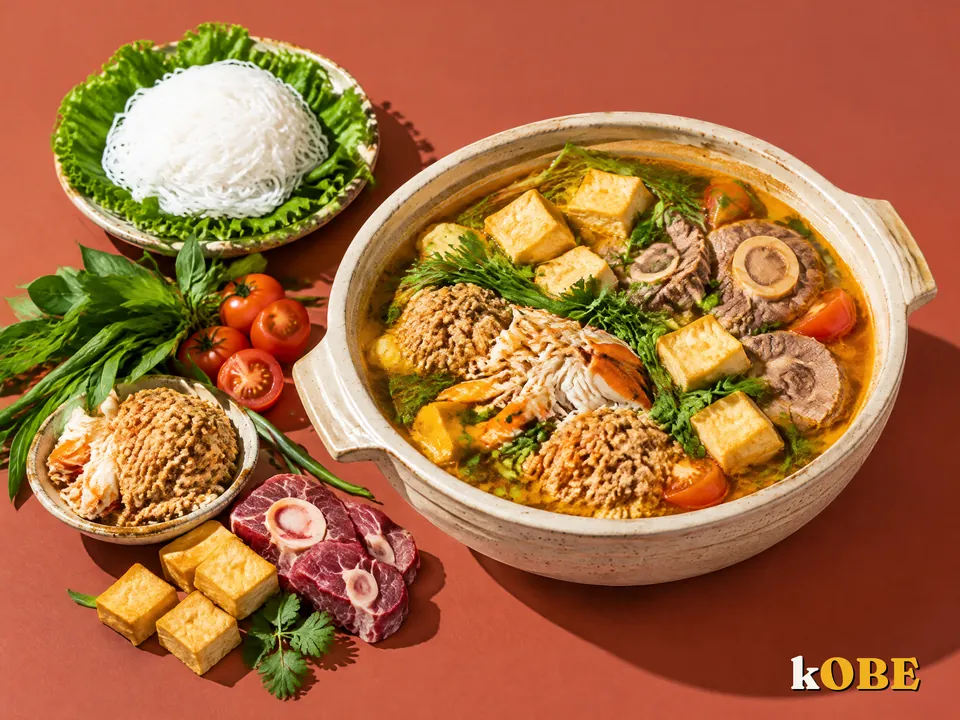
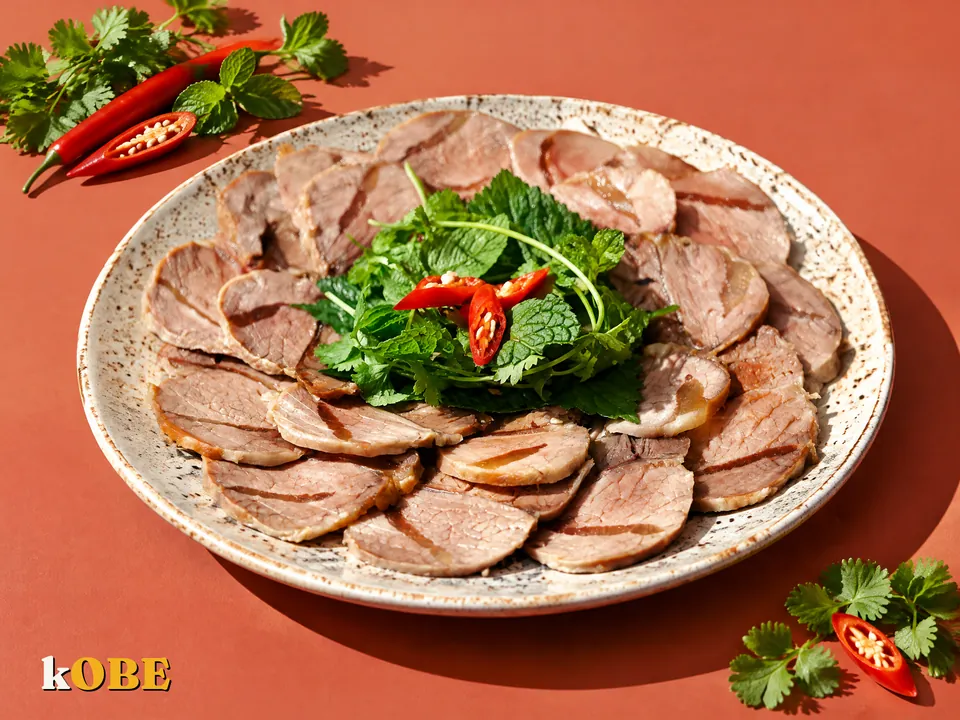
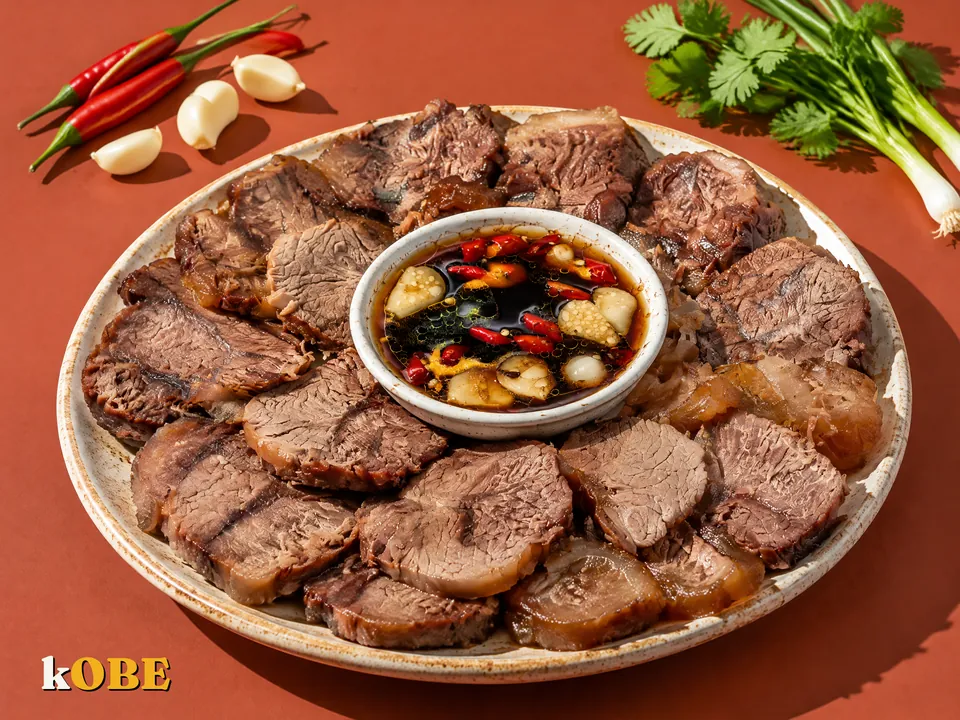
- Boiled shank with ginger fish sauce, shank pickled in fish sauce, phở with shank, bò kho beef stew: Vietnamese cooks mastered this cut long ago. In the kOBE recipe library, beef shank appears in 10 dishes.
Choosing and storing
The prized "flower shank" (bắp hoa) has translucent golden sinews running through it like a floral pattern, and it slices up the prettiest and crunchiest. Choose a firm, bright red piece with clear sinews, a dry surface and no odd smell. Use fresh shank within 3 to 5 days in the fridge; to keep it longer, freeze it whole, or boil it and portion it.
Cooking it well
Boil the shank whole over low heat, barely simmering, until a chopstick slides in easily, then plunge it into cold water so the meat firms up. Let it cool completely and slice very thin across the grain, so each piece is crunchy without crumbling. A pressure cooker cuts the simmering time for beef stew a lot. To see why the iron in red meat is so easy to absorb, read our piece on iron rich foods.