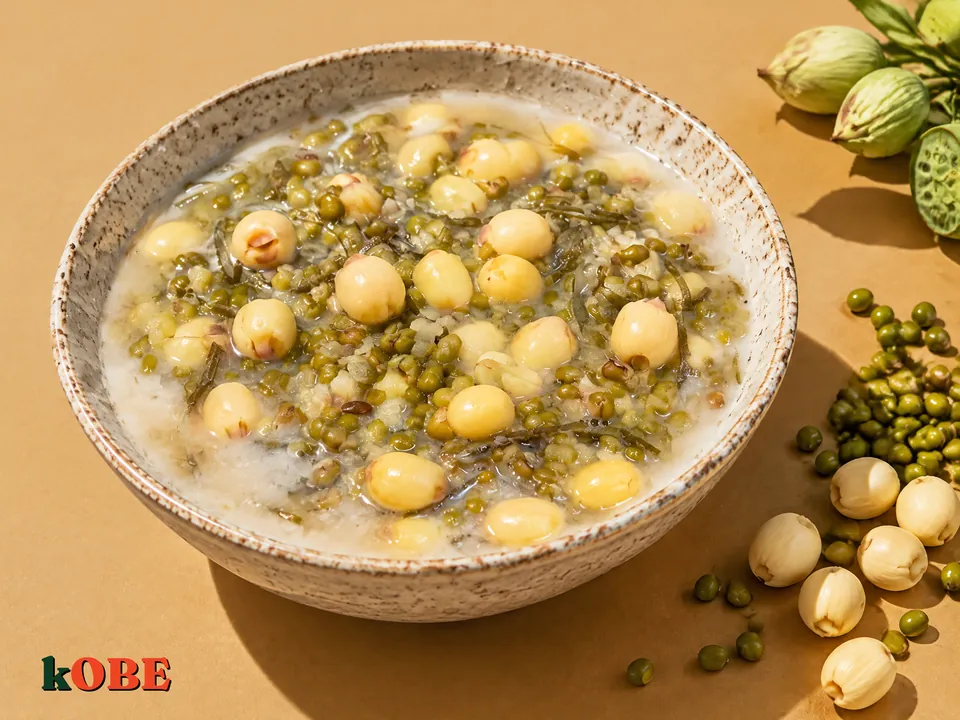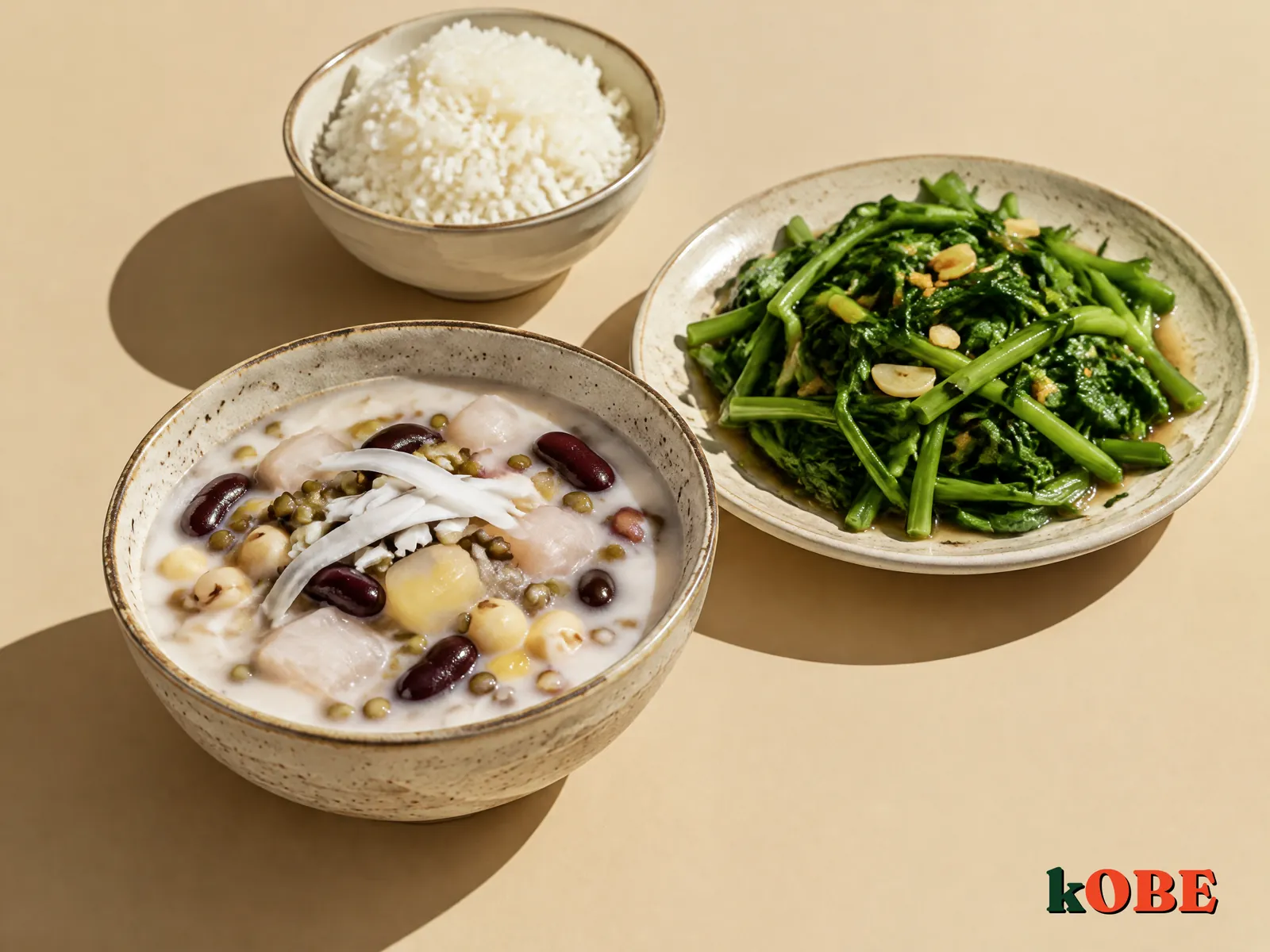
The family dinner has just wrapped up. Everyone says they're stuffed. Then mom brings out a plate of ripe mango, or the pot of chè đậu xanh (sweet mung bean soup) chilling in the fridge.
And somehow, everyone manages another bowl. Funny, isn't it: a full stomach, yet still room for something sweet.
This little scene leads to a great question: does it matter whether you eat sweets at the start of a meal, mid-afternoon, or at the end? Science has a few rather interesting answers.
In this article
Full, but there's always a "dessert stomach"
This is a real thing, and it has a name: sensory-specific satiety.
Since the 1980s, researchers have noticed that when we keep eating one food, we slowly get bored of that particular food. But something with a different taste, color and texture still looks as appealing as ever.
After a savory meal, your tongue is "tired" of salty flavors. Along comes something sweet and cold, and your brain perks right up again. The dessert stomach isn't in your stomach at all. It lives in your brain's appetite.
Once you know this, you'll see why buffets make it so easy to overeat. The more different flavors there are, the more "second and third stomachs" open up.
Food order: veg and protein first, carbs and sweets later
This is the part that's been studied most in recent years.
In 2015, a research team in the US had participants eat the same meal in two different orders:
- Round 1: bread and orange juice first, then chicken and vegetables 15 minutes later.
- Round 2: chicken and vegetables first, then bread and orange juice 15 minutes later.
Same foods, same amounts. But when participants ate vegetables and protein first, their blood sugar after the meal rose noticeably less than when they ate the carbs first.
Why? Vegetables have fiber, and meat and fish have protein and fat. They slow down digestion in the stomach. When starch and sugar arrive afterward, they have to "wait in line", so they enter the bloodstream more gradually.
The study was small, and the participants were a specific group. Later studies found a similar direction, but the size of the effect varies from person to person. So think of this as a small habit worth trying, not a magic secret.
Same bowl of chè: empty stomach vs. after a meal
Apply this to sweets and it all clicks:
| Situation | What happens |
|---|---|
| Milk tea on an empty stomach, 3 p.m. | sugar enters the blood fast, nothing "slows" it |
| A bowl of chè right after a meal with veg and meat | sugar moves more slowly because the stomach is busy digesting |
| Something sweet replacing a main meal | missing protein and veg, hungry again soon |
So if you want something sweet today, right after a main meal is usually the gentler time. In Vietnamese that's tráng miệng, literally "rinsing the mouth" at the end of a meal. Turns out our grandparents had it right all along.
There's one more bonus: after a meal you're already full, so you usually only eat a small bowl. On an empty stomach, a large cup slips down before you notice.
Sweet drinks are a special case
Soda, milk tea and juice differ from sweet foods in one way: you drink them, you don't chew them.
Liquid sugar enters your body very quickly. It also doesn't fill you up the way food with the same calories does. After a can of soda, you still eat dinner as usual.
So if you have to choose, a small slice of cake after a meal is usually "gentler" than a soda on an empty stomach. Even if the sugar looks similar on paper.
A few easy little habits
- Pick up vegetables first. Every meal, take a few bites of veg before digging into the rice.
- Eat protein with or before rice. Meat, fish, eggs, tofu.
- Save sweets for dessert. Rather than eating them alone when you're hungry.
- Choose small bowls. A small bowl of chè, a small slice of cake. Because the dessert stomach is very good at tricking you.
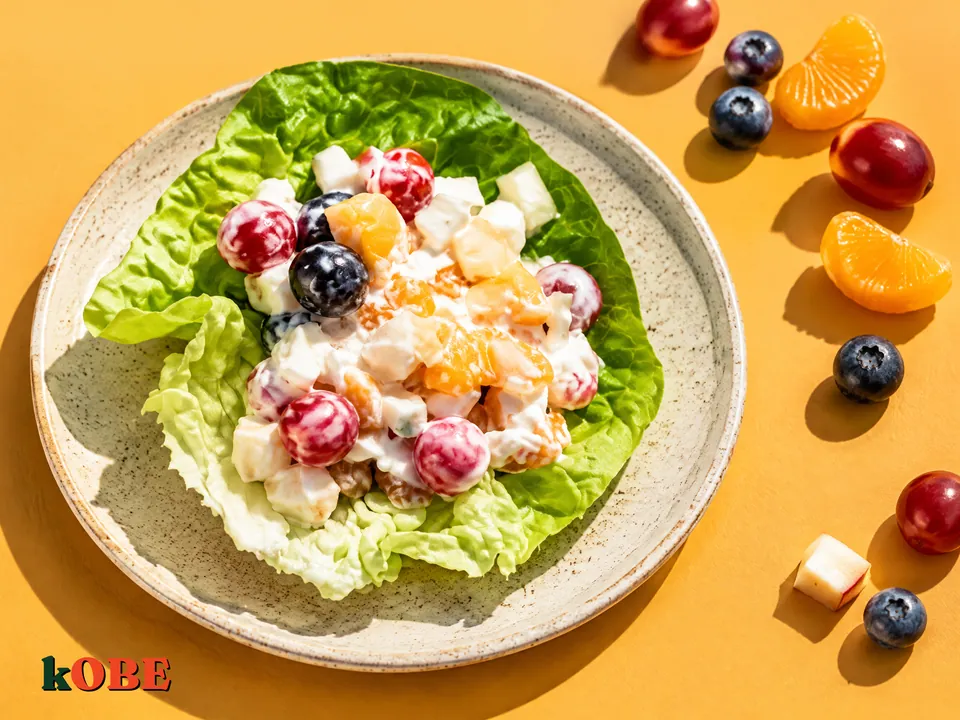
- Make whole fruit your go-to dessert. It has fiber, needs chewing, and it's refreshing.
Inside the kOBE kitchen
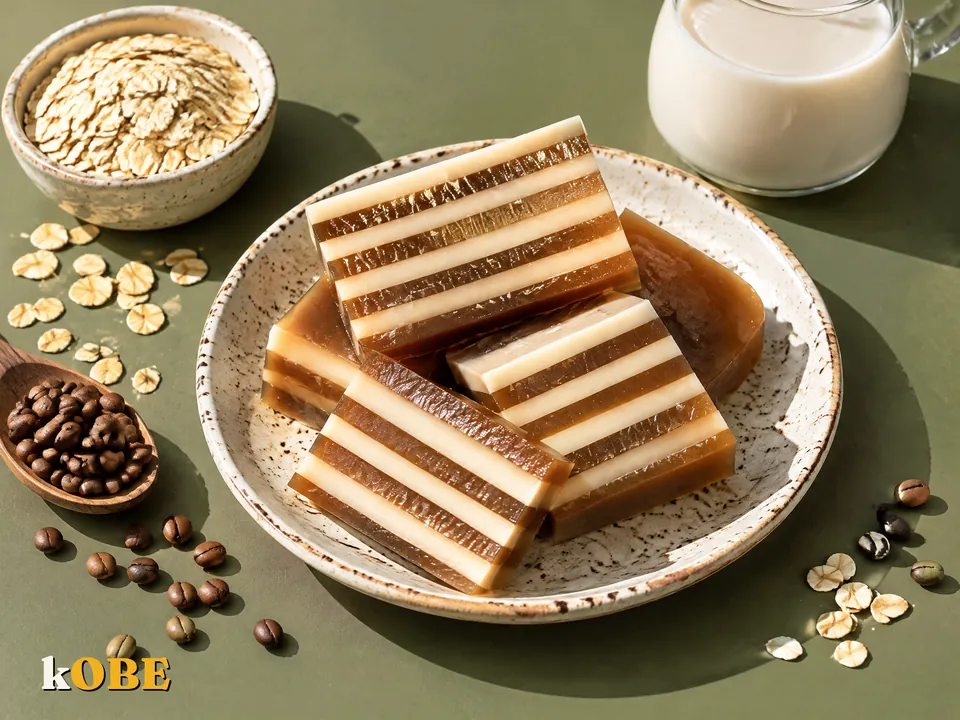
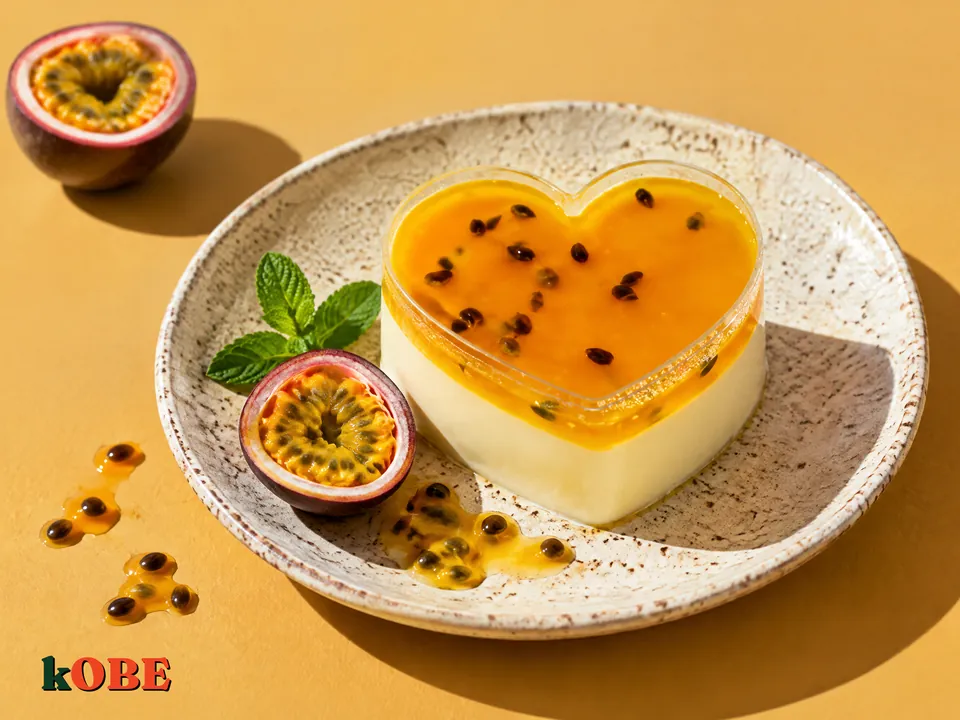
Dessert is something we love to make. kOBE's collection of 1,480 home recipes includes rau câu (Vietnamese agar jelly), panna cotta, chè and flan, all sweetened with kOBE Signature Monk Fruit Blend.
Every recipe lists calories, protein, fat and sugar per 100g. You can use those numbers to pick a dessert portion that suits that day's meal.
kOBE Signature Monk Fruit Blend swaps for sugar 1:1. So however many spoons of sugar mom's chè recipe calls for, you use the same number of spoons. If you like, cut back a little each time so your taste buds get used to a lighter sweetness.
Frequently asked questions
Is it OK to eat fruit before a meal?
How long should I wait after a meal before dessert?
Is food order more important than what you eat?
Keep reading
Sources
- Shukla A.P., Iliescu R.G., Thomas C.E., Aronne L.J. (2015). Food order has a significant impact on postprandial glucose and insulin levels. Diabetes Care 38(7):e98 to e99.
- Rolls B.J., Rolls E.T., Rowe E.A., Sweeney K. (1981). Sensory specific satiety in man. Physiology & Behavior 27(1):137 to 142.
- Harvard T.H. Chan School of Public Health, The Nutrition Source: Carbohydrates and Blood Sugar and Sugary Drinks.
- Further reading: Understanding Nutrition 16th ed., chapter 4 (section on blood glucose).