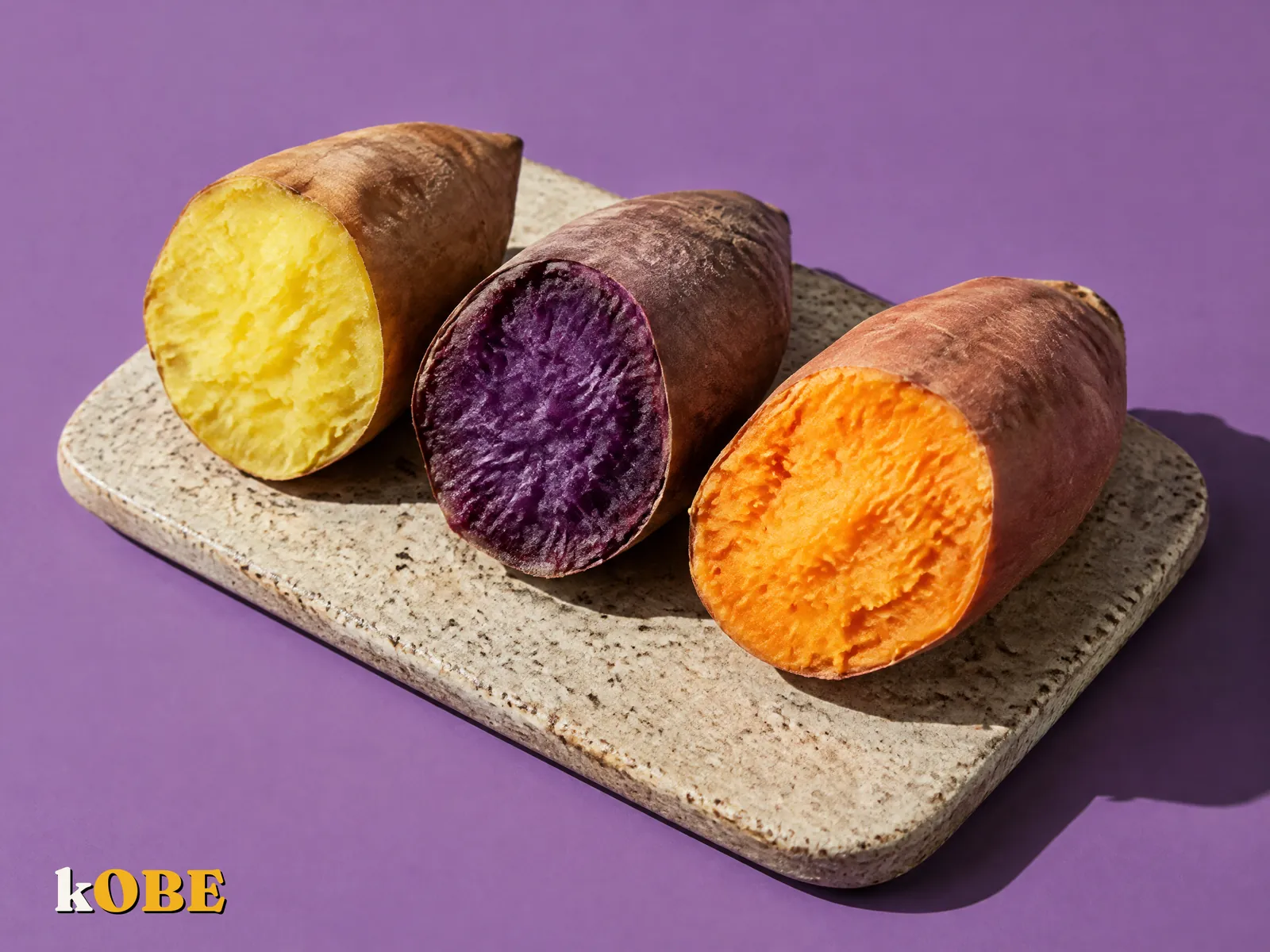
Buying sweet potatoes at a Vietnamese market isn't as simple as "a kilo of sweet potatoes, please" anymore. The vendor will ask right back: Japanese, purple or honey?
The three sit side by side, their skins looking much alike. Break them open and you find three different worlds: creamy yellow, deep purple, glowing orange.
And the flesh color isn't just for looks. Each color is a sign of a different group of compounds inside the sweet potato.
In this article
Three sweet potatoes, three personalities
Here's our quick summary:
| Japanese sweet potato | Purple sweet potato | Honey sweet potato | |
|---|---|---|---|
| Skin | reddish purple | dark purple | yellowish brown or pale pink |
| Flesh | creamy yellow | deep purple | yellow orange |
| Texture | crumbly, nutty | dense, slightly firm | moist, soft, oozes syrup when roasted |
| Sweetness | lightly sweet | mildly sweet | very sweet |
| Standout pigment | little | anthocyanins | beta-carotene |
Skin color can vary with variety and where it's grown. The surest way is still to look at the flesh, or ask the vendor to scrape off a bit of skin for you.
Purple flesh: the same pigment as black rice and red cabbage
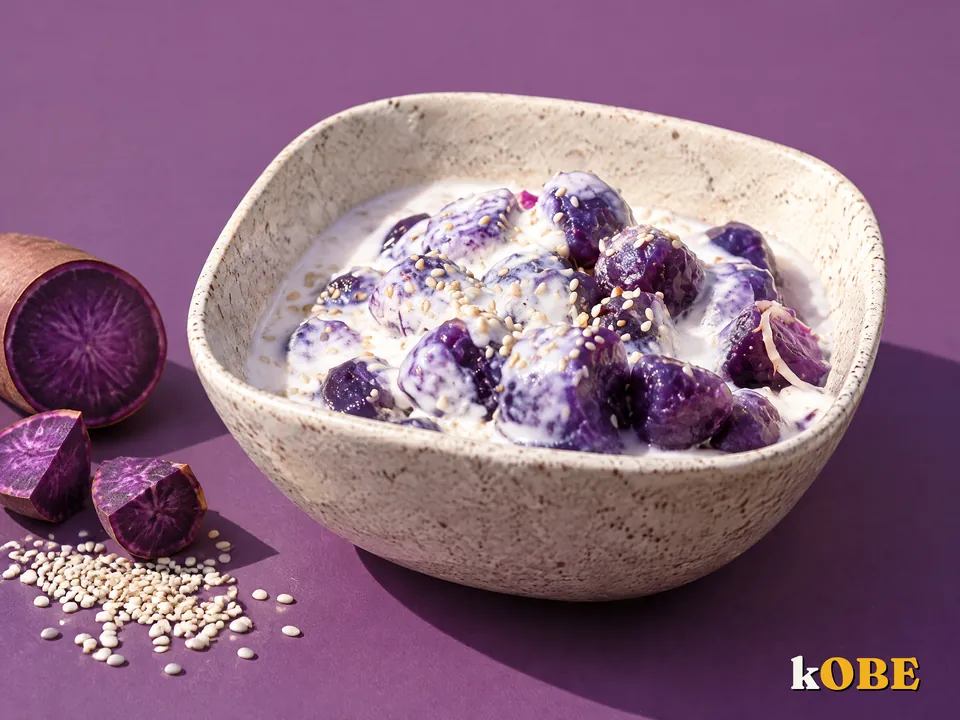
The purple in purple sweet potato comes from anthocyanins, a group of plant pigments. They also give color to black rice, red cabbage, blueberries and butterfly pea flowers.
Anthocyanins have a very fun party trick: they change color with acidity.
- Squeeze a little lime into mashed purple sweet potato and it shifts toward pinkish purple.
- Meet something alkaline like baking soda, and it turns greenish gray.
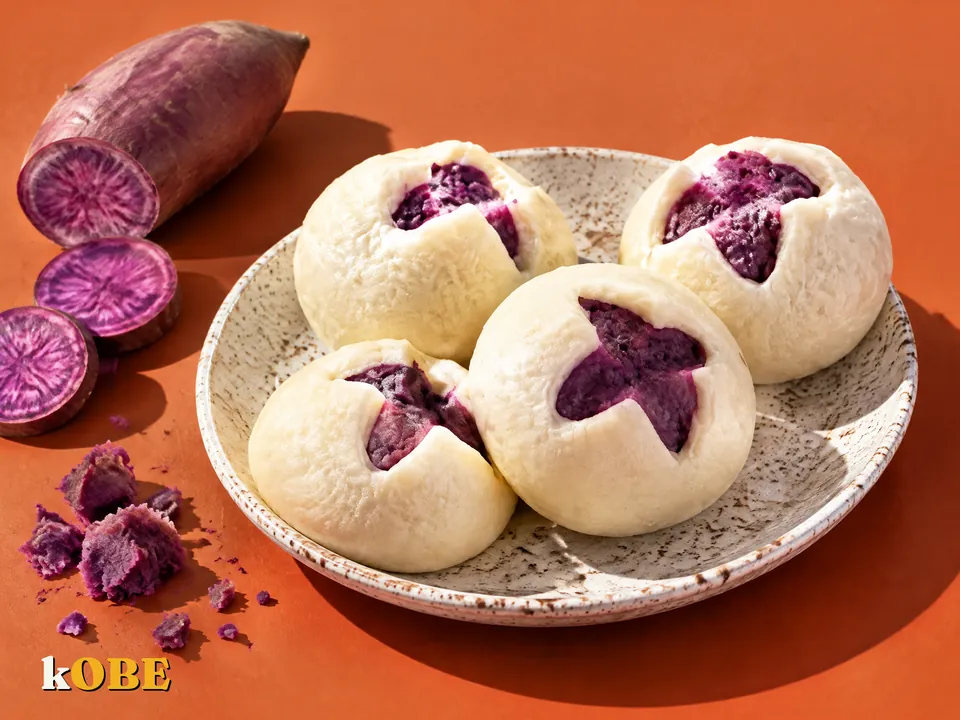
Ever made purple sweet potato bánh bao (steamed buns) and the dough came out a strange green? It was very likely the baking soda, not a spoiled sweet potato.
Anthocyanins are antioxidants. Many studies are exploring what role they play in the body. Most results come from labs or small studies, so we see this as an interesting bonus, not a reason to eat purple sweet potato in place of every other kind.
Orange flesh: one sweet potato, a whole day of vitamin A
The orange in honey sweet potato comes from beta-carotene, the same pigment in carrots and pumpkin.
Your body turns beta-carotene into vitamin A, which you need for seeing in the dark, for your skin and for your immune system. According to the US National Institutes of Health (NIH), one medium orange-fleshed sweet potato baked in its skin gives more than an adult's vitamin A needs for the whole day.
Two small tips to make the most of it:
- Pair it with a little fat: a few slices of avocado, a drizzle of sesame oil, a handful of peanuts. Beta-carotene dissolves in fat, so it's absorbed better with some oil alongside.
- The deeper the orange, the more beta-carotene there usually is.
Creamy yellow Japanese sweet potato has much less beta-carotene. In return, it's crumbly and nutty, perfect for eating plain.
Why does honey sweet potato ooze syrup?
Honey sweet potato has moister flesh and more natural sugar than Japanese sweet potato. When it's roasted slowly, the enzymes inside keep chopping starch into malt sugar (maltose). That sugar, together with the water in the flesh, forms a sticky, golden "honey".
So yes, honey sweet potato really is extra sweet, and its calories are a touch higher than the other two. It's better as a dessert than as an everyday rice replacement.
If you keep an eye on blood sugar, roasted honey sweet potato is the one to enjoy in moderation, with protein and veggies. More on boiling versus roasting in our article on boiled vs roasted sweet potato.
Which one for which dish?
There's no "better" sweet potato, only one that suits the dish better:
- Boiled or steamed for breakfast: Japanese. Crumbly, nutty, moderately sweet, and you won't tire of it.
- Chè (sweet soup), cakes, colorful dishes: purple. Beautiful color, dense texture, and mild sweetness that's easy to adjust.
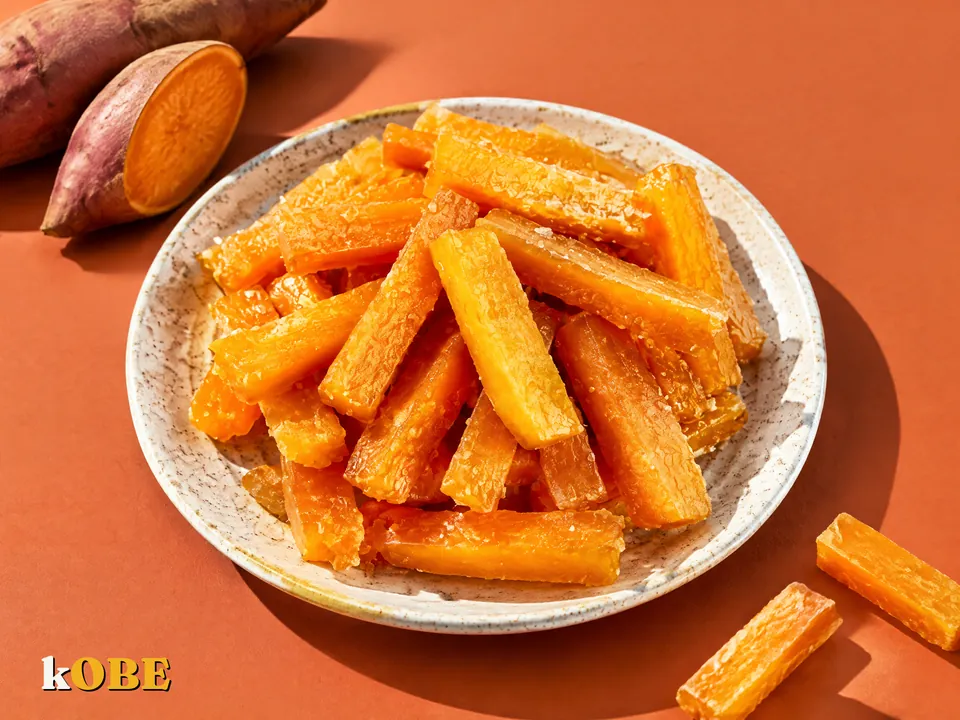
- Roasted snacks, dessert: honey. Sweet enough without any added sugar.
- Soup, mash, salad: honey or Japanese, depending on whether you like it sweet or nutty.
The best tip of all is to rotate all three. Each color brings a different group of compounds, and switching colors is the easiest way to add variety to your meals.
When it comes to fiber, the three are pretty similar. Eating the skin, if well washed, adds a little extra fiber.
Inside the kOBE kitchen
kOBE has all three: Japanese Sweet Potato, Purple Sweet Potato and Honey Sweet Potato. All three are roasted with a little olive oil, diced and then frozen.
Calories per 100g:
- Japanese Sweet Potato: 122 kcal.
- Purple Sweet Potato: 114 kcal.
- Honey Sweet Potato: 139 kcal.
For a little fat to go with the beta-carotene, try pairing it with a few slices of avocado or an egg. To reheat: thaw in the fridge overnight, or warm in the microwave on low. See our sweet potatoes on the Ingredients page.
Frequently asked questions
Is purple sweet potato sweeter than regular sweet potato?
Is honey sweet potato high in sugar?
My purple sweet potato turned green after cooking. Is it safe to eat?
Keep reading
Sources
- National Institutes of Health, Office of Dietary Supplements. Vitamin A and Carotenoids: Fact Sheet for Health Professionals.
- USDA FoodData Central, SR Legacy: Sweet potato, cooked, baked in skin.
- Khoo H.E., Azlan A., Tang S.T., Lim S.M. (2017). Anthocyanidins and anthocyanins: colored pigments as food, pharmaceutical ingredients, and the potential health benefits. Food & Nutrition Research 61:1361779.
- National Institute of Nutrition (Vietnam). Vietnamese Food Composition Table (sweet potato, orange-fleshed sweet potato).
- Further reading: Understanding Nutrition 16th ed., chapter 11 (fat-soluble vitamins); Culinary Nutrition.