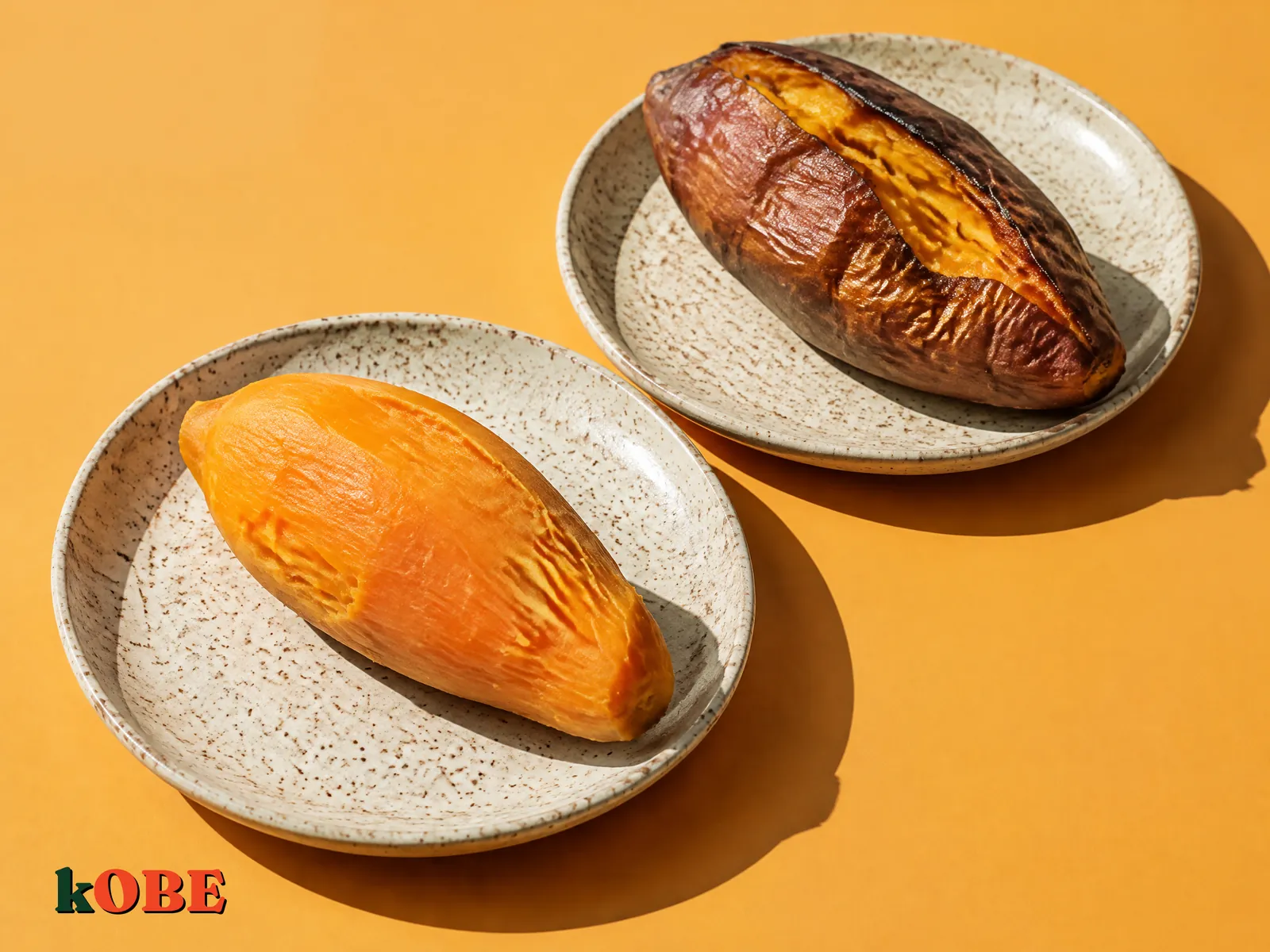
A rainy afternoon in Saigon, and the smell of charcoal-roasted sweet potato drifts out of a street cart at the mouth of the alley. Snap one in half and golden syrup oozes out, sweet as if someone had drizzled sugar on it.
Boil that same sweet potato and it's much gentler. Crumbly, fragrant, but nowhere near as "syrupy" as the roasted one.
Nobody sprinkles sugar into a charcoal grill. So where does the extra sweetness come from? And does it change how your body responds?
In this article
The sweet potato makes its own sugar in the oven
Raw sweet potato is mostly starch, with only a little sugar. But inside it lives a very hard-working enzyme called beta-amylase.
This enzyme works hardest when the sweet potato warms up to about 60 to 75°C. At that point the starch has just started to loosen, and the enzyme dives in, chopping it into a double sugar called maltose (malt sugar).
Roast it over charcoal or in an oven and the sweet potato heats up very slowly. The enzyme gets a whole hour or so to cut up starch. The result: roasted sweet potato has far more maltose, which makes it syrupy sweet and oozing.
Boiling or steaming gets heat in faster, and the sweet potato holds on to more water. The microwave is faster still. The enzyme barely gets going before the heat "switches it off", so the sweet potato stays more mildly sweet.
Fun fact: that's also why charcoal sweet potato vendors are never in a rush. Low heat, long time, and you get that oozing syrup.
Glycemic index: same sweet potato, almost double the number
The glycemic index (GI) tells you how fast a food raises your blood sugar compared with pure glucose. A GI under 55 is low, over 70 is high.
A 2011 study in Jamaica measured the GI of ten sweet potato varieties cooked four different ways. The results were pretty surprising:
| Cooking method | Approximate GI |
|---|---|
| Boiled | 40 to 50 (low) |
| Fried | 60 to 75 (medium to high) |
| Roasted or baked | 80 to 90 or more (high) |
Same sweet potato: boiled has a low GI. Roasted lands in the high group, sometimes on par with white rice.
These numbers come from Jamaican varieties. International GI tables average many varieties and boiling methods, and list boiled sweet potato at around 63. That's why you'll come across different figures, from about 45 to 65. What stays the same is this: boiled is always "gentler" than roasted.
The reason is what you just read above: roasting creates more maltose, and roasting dries the sweet potato out, leaving the starch dry and fluffy, which your gut digests more easily.
To be fair, let's be honest here. This study is small and used Jamaican varieties. Vietnamese sweet potatoes might give different numbers. But the "boiled lower than roasted" trend is quite clear and fits the mechanism.
So is roasted sweet potato "bad"?
No. Roasted sweet potato is still sweet potato: it has fiber, potassium and vitamins. It doesn't turn into candy just because you roasted it.
GI only measures a single food eaten on its own, on an empty stomach. In real life we rarely eat that way. And how much you eat matters just as much: half a roasted sweet potato is very different from three.
So think of this as a small dial you can turn, not a banned list.
Four tips for a "gentler" sweet potato
- Go for boiled or steamed for everyday meals. Save roasted for when you're craving it.
- Eat the skin if it's well washed. The skin holds some of the fiber, which slows the meal down a little.
- Let it cool before eating. Cooked sweet potato that cools down, especially in the fridge, forms a bit more resistant starch, the part of starch your small intestine doesn't break down into sugar. Exactly like the cold rice story.
- "Dress up" your sweet potato: eat it with eggs, chicken breast, unsweetened yogurt or a plate of veggies. Protein, fat and fiber slow down how fast your stomach empties.
An easy breakfast idea: one fist-sized boiled sweet potato, two boiled eggs, a few cucumber slices. It keeps you full and is easy to prep the night before.
Is sweet potato high in calories?
Less than many people think. Boiled sweet potato has about 75 to 90 kcal per 100g, lower than white rice (about 130 kcal). The simple reason: sweet potato holds more water than rice.
Roasted sweet potato loses some water, so per 100g it's a bit more calorie-dense, about 90 kcal or more. Add oil, butter or sugar while roasting and the number climbs further.
Inside the kOBE kitchen
kOBE Japanese, Purple and Honey Sweet Potatoes are roasted with a little olive oil, diced and then frozen. Per 100g they have 122, 114 and 139 kcal respectively. That's a little higher than boiled sweet potato, which makes sense because of the olive oil, and because roasted sweet potato usually loses some water.
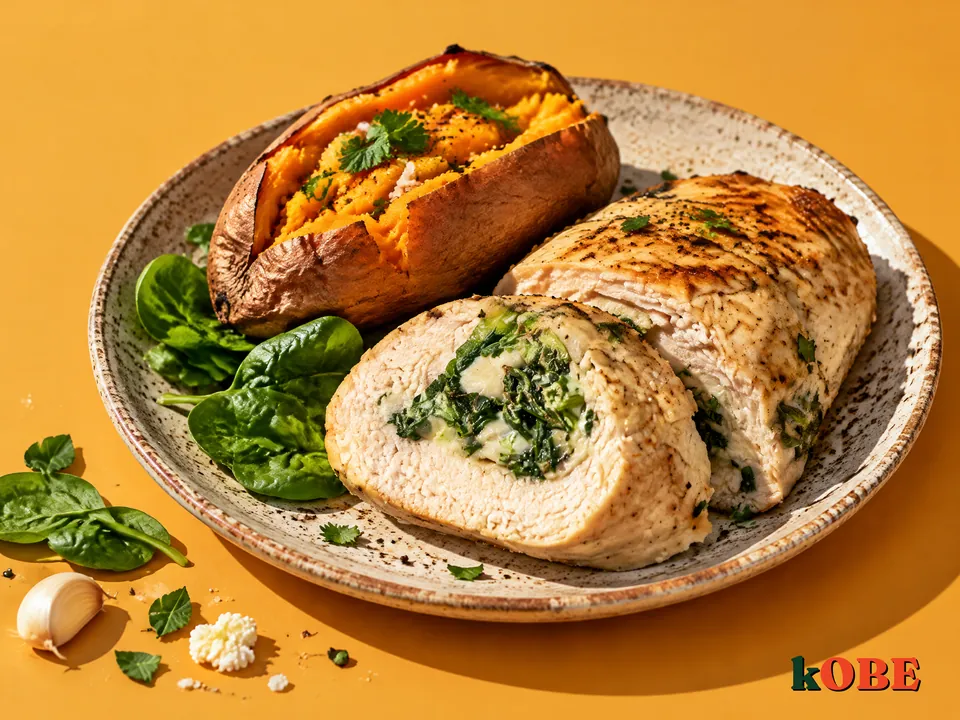
Since they're roasted, we suggest eating them "dressed up": toss them with chicken breast, kale or beans, or use them as the starch in a lunch box with plenty of veggies and protein. Diced sweet potato is also easier to portion than one big whole sweet potato.
To reheat: thaw in the fridge overnight, or warm in the microwave on low. See our sweet potatoes on the Ingredients page.
Frequently asked questions
Steamed or boiled sweet potato: which is better?
What about sweet potato in an air fryer?
Can I eat sweet potato instead of rice?
Keep reading
Sources
- Bahado-Singh P.S., Riley C.K., Wheatley A.O., Lowe H.I.C. (2011). Relationship between processing method and the glycemic indices of ten sweet potato (Ipomoea batatas) cultivars commonly consumed in Jamaica. Journal of Nutrition and Metabolism, 2011:584832.
- Atkinson F.S., Foster-Powell K., Brand-Miller J.C. (2008). International tables of glycemic index and glycemic load values: 2008. Diabetes Care 31(12):2281 to 2283.
- USDA FoodData Central, SR Legacy: Sweet potato, cooked, boiled, without skin; Sweet potato, cooked, baked in skin.
- National Institute of Nutrition (Vietnam). Vietnamese Food Composition Table (sweet potato).
- Further reading: Understanding Nutrition 16th ed., chapter 4; Culinary Nutrition.