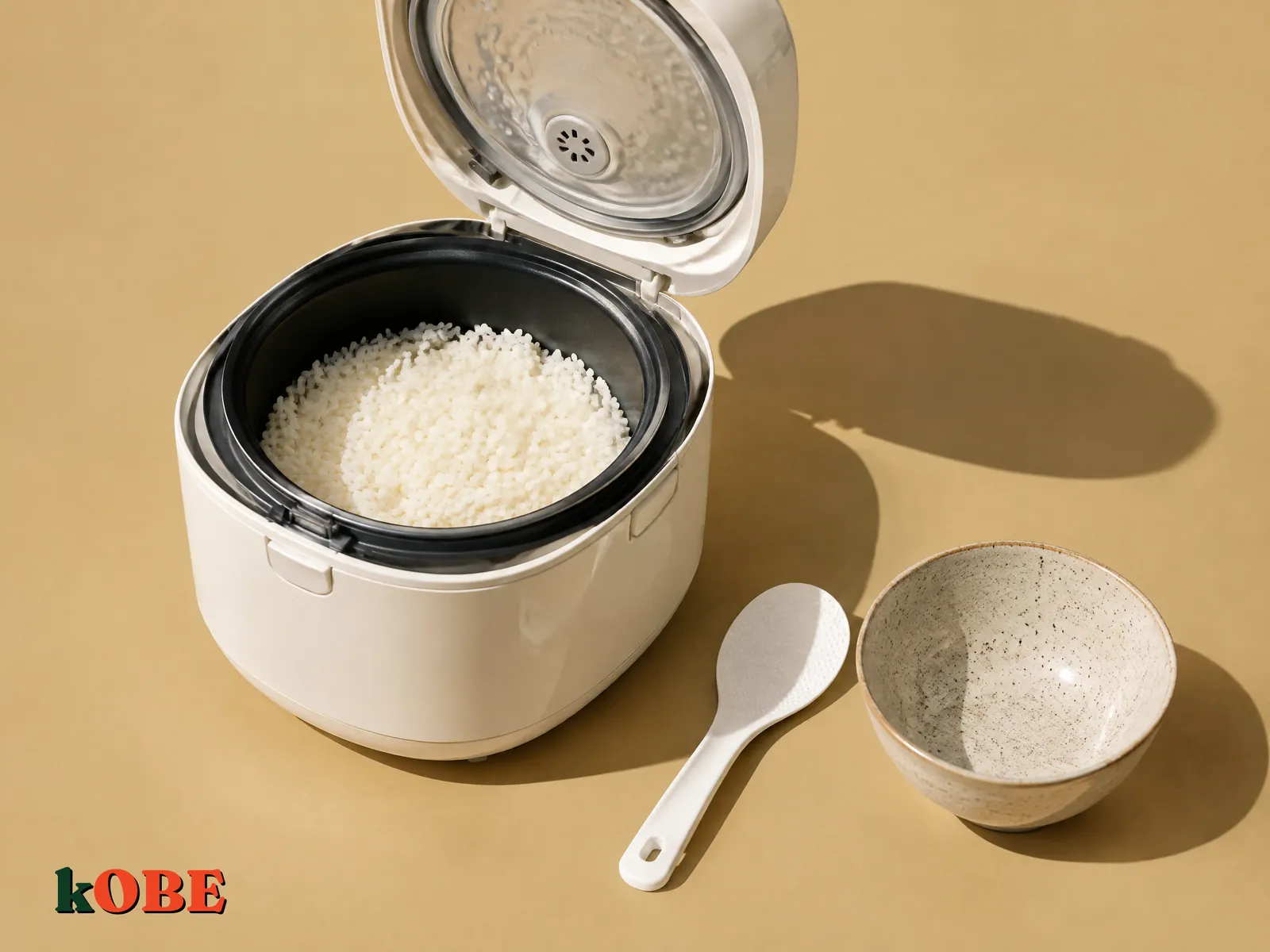
You cooked too much rice for dinner. You are tired, so you unplug the cooker, close the lid, and plan to deal with it tomorrow morning.
Sounds perfectly normal. But of all the ways to store rice, this is actually the riskiest.
The reason is an invisible clock. It starts ticking the moment the rice cooker clicks off, and it runs much faster in a hot city like Saigon.
In this article
The uninvited guest that survives a boiling pot
Cooking rice at 100°C kills most bacteria. But one is craftier than the rest: Bacillus cereus.
It lives in soil and dust, so it is already on raw rice. When it meets heat, it curls up into a spore, a tough shell that handles heat very well. After the pot has boiled, the spores are still there, quietly asleep.
The trouble starts as the rice cools. The spores wake up, multiply and release toxins. One of those toxins is heat-stable, which means reheating or frying the rice again will not destroy it.
People who eat it can get nausea, vomiting and stomach cramps a few hours later. It usually passes on its own, but it is miserable.
The danger zone: 5 to 60°C
Bacteria are not completely afraid of cold or heat. They just have a "comfort zone".
The US food safety agency (USDA FSIS) calls this range the danger zone: roughly 5 to 60°C. Inside it, bacteria can double in number in about 20 minutes.
Picture your pot of rice riding a temperature elevator:
- Above 60°C: the cooker is on warm. Bacteria cannot multiply.
- From 60 down to 5°C: the danger zone. The longer the rice sits here, the higher the risk.
- Below 5°C: the fridge. Bacteria slow down a lot, but they do not die.
- About -18°C: the freezer. Bacterial activity is almost "frozen".
An unplugged cooker with the lid on is the worst case. It cools very slowly and sits in the danger zone all night.
Time limits worth remembering
We pulled together the advice from the USDA and the UK's health service (NHS) into one easy table:
| Where the rice is | Safe limit | Notes |
|---|---|---|
| On the counter, room temperature | 2 hours max | Above 32°C: only 1 hour. Saigon usually falls into this case |
| Rice cooker on warm | Safe from bacteria | But the rice slowly turns yellow and dry, so eat it the same day |
| Fridge (below 5°C) | NHS advises eating within 1 day | The USDA's general rule for leftovers is 3 to 4 days. For rice, we go with the more cautious limit |
| Freezer (about -18°C) | Safe long term | For best taste, use within a few weeks to one or two months |
The short version for busy people: if you are not eating it, the rice goes into the fridge within 1 hour of cooking.
Cool rice fast: a small trick, a big difference
The goal is to move the rice through the danger zone as quickly as possible. A few easy ways:
- Spread rice in a shallow container. A layer about 3 to 5cm deep cools much faster than a whole block of rice in the pot.
- Split it into small portions. One or two bowls per box. Small boxes cool faster and are handy to grab later.
- You do not need to wait until it is fully cool before refrigerating. This is a very common mistake. The USDA says warm food can go straight into the fridge. Waiting for it to "cool completely" on the counter is exactly when bacteria multiply.
- Leave the lid ajar for the first few minutes, then seal it when it goes into the fridge.
The warm setting: safe, but with a "best before" on taste
A rice cooker on warm holds the rice around 70°C, above the danger zone. As far as bacteria go, rice on warm is fairly safe.
But leave it too long and the rice changes:
- It turns yellow and smells odd. Leftover fat and protein on the surface of the grains slowly change under heat.
- The bottom dries and hardens, while the top turns mushy from condensation.
A neat tip from Japanese research: rice that was rinsed three times yellowed less and changed smell less after 24 hours on warm than rice rinsed only once. Rinsing well removes some of the fat and protein clinging to the grains.
Many rice cooker manuals advise not keeping rice on warm for more than about 12 hours. Cook in the morning, eat until evening, and you are fine. For overnight, move it to the fridge.
Smelling fine does not mean it is safe
Obviously spoiled rice is easy to spot: a sour smell, slimy strands, grains stuck in a paste. If you see that, throw it out.
The tricky part is that Bacillus cereus toxins do not always change how rice smells. So do not use your nose as the test. Trust the clock: if the rice has been out too long, bin it, even if it still looks good.
A few common situations:
- Packed lunch rice: keep it in the fridge from the night before, carry it in a cooler bag in the morning, and put it in the office fridge when you arrive.
- Leftover rice from a restaurant: bring it home within 1 hour and refrigerate it right away.
- Fried rice, mixed rice dishes: follow the same timing as plain rice. With egg or meat added, be even more careful.
To learn how fridge rice changes in texture and resistant starch, read How cold rice differs from hot rice.
Inside the kOBE kitchen
Our Red Brown Rice, Black Brown Rice and White Rice are cooked and then frozen. In other words, the invisible clock gets "paused" right after cooking.
At home, keep the packs in the freezer. When you want to eat, thaw in the fridge overnight, or reheat in the microwave on low. Do not thaw a pack by leaving it on the counter for hours, because that sends the rice straight back into the danger zone.
How to reheat rice so it is as soft as freshly cooked gets its own article: Reheating frozen rice.
Frequently asked questions
Does reheating rice until very hot destroy the toxins?
Can I reheat rice more than once?
Can thawed frozen rice be frozen again?
Keep reading
Sources
- USDA FSIS. Leftovers and Food Safety and "Danger Zone" (40°F to 140°F).
- NHS (UK). Can reheating rice cause food poisoning?
- EFSA Panel on Biological Hazards (2005). Opinion on Bacillus cereus and other Bacillus spp. in foodstuffs. EFSA Journal.
- Tian J. et al. (2023). Science of Rice: Chemistry and Nutrition. Springer. Chapter 8 (rinsing rice and keeping it warm) and chapter 9 (microorganisms in cooked rice).
- Further reading: Understanding Nutrition 16th ed., food safety chapter (Consumer Concerns about Foods and Water).