Per 100g
74kcalCalories
2.6gProtein
0.1gFat
17.2gCarbs
4.9gFiber
0gSugars
40mgSodium
556mgPotassium
45mgCalcium
1.2mgIron
44mgVitamin C
0µgVitamin A
Data source: USDA FoodData Central, SR Legacy, FDC 169250 (Lotus root, raw).
Fun facts
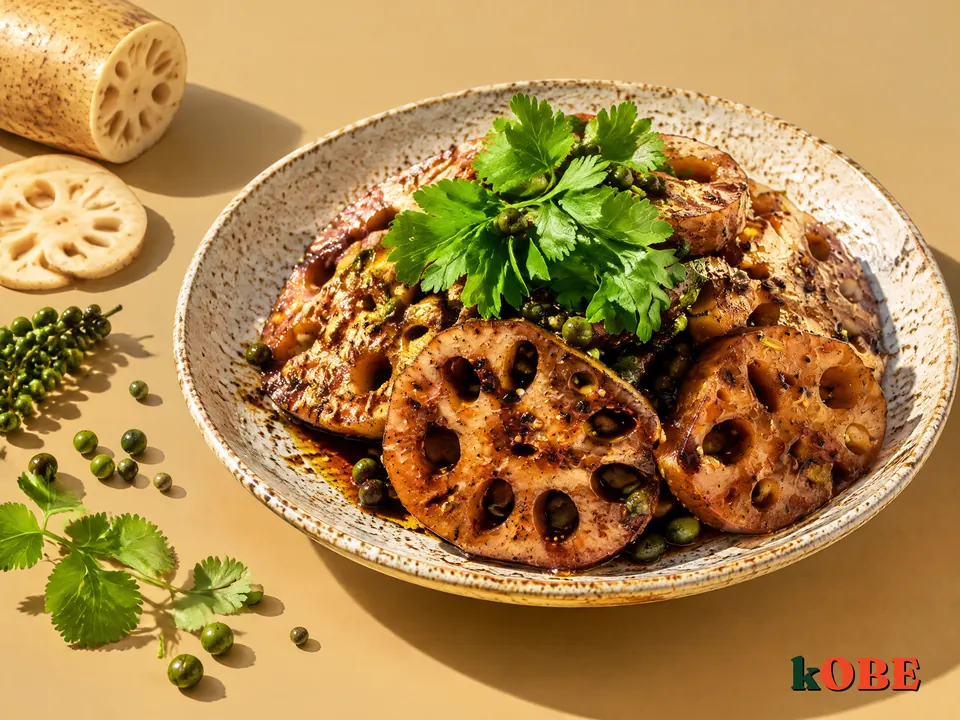
- Lotus root is actually a rhizome, a stem that creeps sideways through the mud. The round holes inside are air channels that let the buried stem "breathe".
- Hardly any part of the lotus goes to waste: seeds, the green seed germ, leaves, young stems and roots all end up in Vietnamese kitchens.
- 100g of lotus root has about 44mg of vitamin C, 4.9g of fiber and 556mg of potassium, more potassium than a banana.
- It has about 74 kcal per 100g, more than leafy greens because it holds starch, so it tastes nutty and filling.
Choosing and storing
Choose firm, heavy roots with even light brown skin; sealed ends mean the inside has less mud. Skip roots with black spots, soft patches or cracks. Keep whole roots somewhere cool or wrapped in paper in the crisper drawer for about a week. Cut pieces should sit in water in a sealed box and be cooked within 1 to 2 days.
Cooking it well
Peeled lotus root browns fast, so drop it straight into water with a splash of vinegar or lime to keep it white. Thin slices stir fried quickly stay crunchy, while long simmering with pork ribs turns them soft and nutty. A few minutes of blanching gets it ready for salads. Lotus root is rich in potassium, as we cover in potassium in vegetables.
Frequently asked questions
Can you eat lotus root raw?
It is better not to. It grows in mud and picks up dirt easily, so blanch or cook it first.
What is the difference between lotus root and lotus stem?
Lotus stems are the thin young sections between roots, crunchy and often used in salads. The root is the swollen part, starchier and better for braising and stir fries.