Data source: USDA FoodData Central, SR Legacy, FDC 175159 (Fish, tuna, fresh, yellowfin, raw).
Fun facts
- Tuna can keep their muscles warmer than the surrounding sea, which is rare among fish. That helps them swim very fast and migrate thousands of kilometers.
- Tuna meat is red because it is rich in myoglobin, just like beef. 100g of raw yellowfin tuna has about 109 kcal, 24.4g of protein and only 0.5g of fat.
- It has about 441mg of potassium per 100g, more than salmon or mackerel, and only about 45mg of sodium.
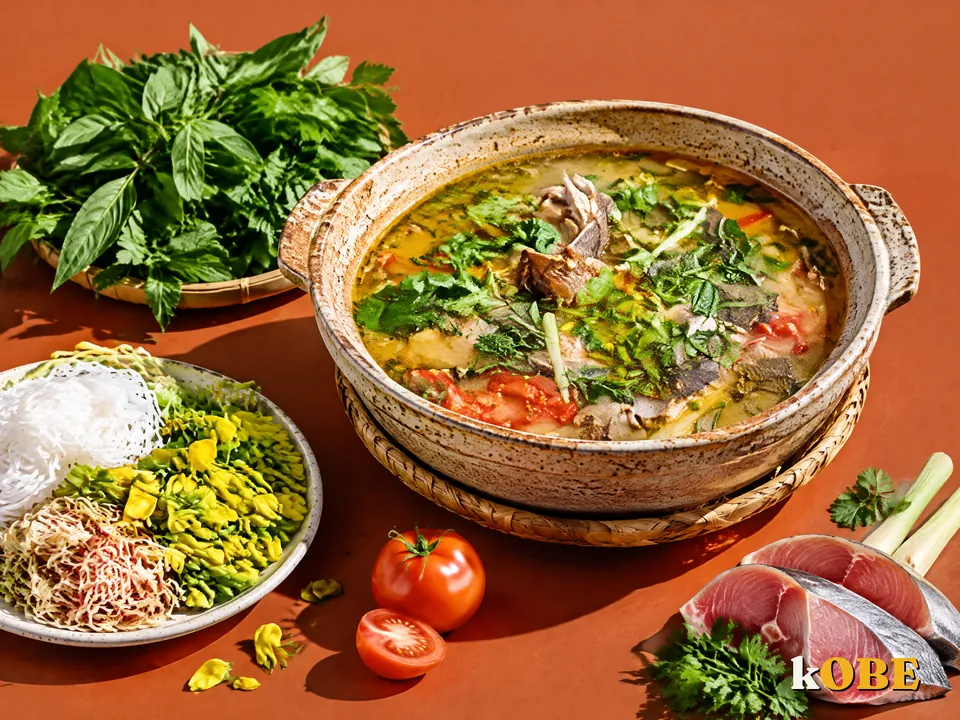
- Phu Yen province is famous for ocean tuna and its tuna eye dish. Braised tuna and tuna in tomato sauce are also common at family meals. Tuna appears in 8 recipes in the kOBE recipe bank.
Choosing and storing
Fresh tuna is bright red or rosy, glossy and firm. Meat that has turned greyish brown has been sitting a while or exposed to too much air. Buying a whole block instead of pre sliced pieces helps keep the color and freshness. Keep it in the fridge and use within 1 to 2 days, or freeze; if you want to eat it rare or raw, choose tuna clearly labeled for raw eating.
Cooking it well
Tuna is so lean that cooking it all the way through can leave it dry and crumbly. Searing over high heat for about 1 minute per side, cooked outside and pink inside, keeps it tender; if you prefer it fully cooked, braising or a tomato sauce stops it drying out. As a large fish at the top of the food chain, tuna builds up more mercury than small fish, so rotating different kinds of fish is a good habit, especially during pregnancy. See how tuna compares with other proteins in the protein chart for fish, shrimp, beef, pork and tofu.