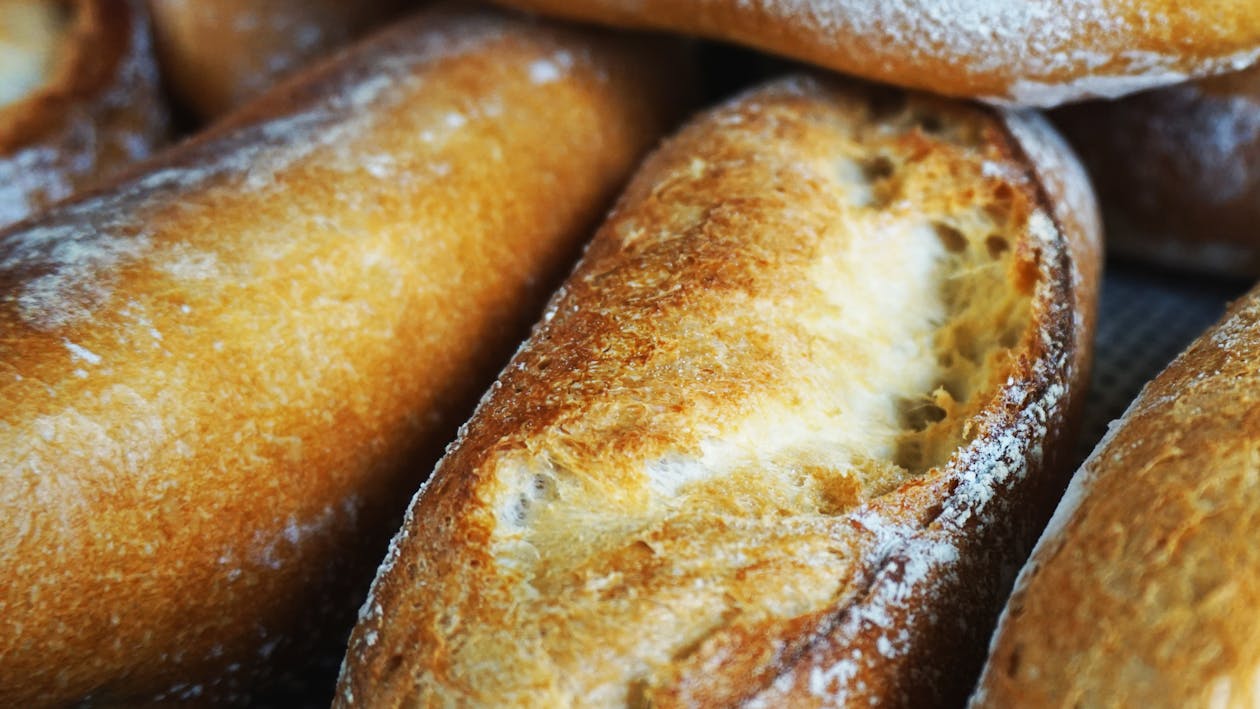
Bánh mì is a staple Vietnamese breakfast. Fast, convenient, no preparation needed. But its nutritional profile rarely gets tracked, because there’s no label to read. This post puts together real numbers by type.
The Base: Plain Bánh Mì
Vietnamese bánh mì — a small, crisp-crusted baguette with a light interior — is the foundation for every variation sold at local bakeries. A standard plain loaf weighs around 150–200g.
Macros for the bread only, no filling:
| Weight | Kcal | Total Carb | Net Carb | Protein | Fat |
|---|---|---|---|---|---|
| Small (~150g) | ~390 | ~75g | ~73g | ~12g | ~3g |
| Regular (~200g) | ~520 | ~100g | ~98g | ~16g | ~4g |
Estimated based on standard baguette composition (white flour, water, yeast, salt). Fibre content is low (~2g per loaf) due to refined white flour.
One detail worth noting: Vietnamese bánh mì has significantly lower fibre than wholegrain or dark bread. Total carb and net carb are nearly identical.
When Fillings Are Added: How the Numbers Shift
The filling is the biggest variable. Below are estimates for the most common types sold at Vietnamese street bakeries:
| Type | Kcal | Carb | Net Carb | Protein | Fat |
|---|---|---|---|---|---|
| Plain (no filling) | ~390 | ~75g | ~73g | ~12g | ~3g |
| Butter and sugar | ~470 | ~80g | ~78g | ~12g | ~9g |
| Pâté | ~530 | ~76g | ~74g | ~18g | ~18g |
| Full cold cuts | ~580 | ~77g | ~75g | ~24g | ~20g |
| Fried egg | ~560 | ~76g | ~74g | ~22g | ~19g |
| Sweet roll (cream or bean filling) | ~320–380 | ~55g | ~53g | ~7g | ~10g |
Base weight: ~150g loaf. Estimates based on standard fillings at typical Vietnamese street bakeries. Variance is within ±10% depending on actual filling volume.
Fat rises considerably once pâté, butter, or mayonnaise enters the picture. This is where most of the hidden calories come from.
Why Bánh Mì Rarely Shows Up in Food Logs
Three patterns explain most of it:
No nutrition label. Street bakeries don’t print macro panels. No number on the packaging means most people don’t look for one.
No standard size. One bakery’s loaf weighs 140g; another’s weighs 210g. Filling quantities vary the same way. There’s no reference point to estimate from.
It’s classified as breakfast, not a meal. Bánh mì is often eaten standing, bought quickly before work. Meals consumed on the go tend to get mentally filed as “not a real meal” — and therefore not logged.
When the Numbers Actually Matter
Not everyone needs to track bánh mì macros. But a few contexts make it more relevant:
Reducing carb intake. A plain loaf already delivers ~73g net carb. For anyone following a strict low-carb or keto approach, that single loaf may exceed the entire day’s carb target before any other food is eaten.
Tracking total calories. A full bánh mì with cold cuts sits around 580 kcal. Add a cà phê sữa đá (~180 kcal) and breakfast reaches 760 kcal before 8am — often without being logged at all.
Meeting protein targets. Bánh mì has a relatively low protein-to-weight ratio. A 200g loaf provides around 16g protein. For people targeting 100g or more of protein per day, this is a modest contribution relative to the calorie and carb load.
Estimating Without a Scale
For anyone who doesn’t want to weigh food daily, a practical approach:
Use loaf size as the reference. A small Vietnamese bánh mì (roughly palm-length) weighs around 130–160g; a larger one 180–220g. A full meat filling adds roughly 150–200 kcal on top of the plain bread.
For lower carb intake: choose a smaller loaf, prioritise protein-heavy fillings (egg, lean meat), skip or reduce the sauces, and avoid sweet rolls.
Frequently Asked Questions
Does wholegrain bánh mì have different macros?
Yes. Wholegrain bread contains more fibre (roughly 5–8g per 100g), which lowers net carb and the glycaemic index. However, many loaves sold at local Vietnamese bakeries labelled as “wholegrain” use caramel colouring rather than actual whole-wheat flour — the brown colour is not always a reliable indicator.
Which has more calories — sweet bread or bánh mì with meat?
A full meat-filled bánh mì (~580 kcal) is generally higher in total calories than a sweet roll (~320–380 kcal). But sweet fillings tend to carry significantly more sugar, depending on the type.
Can macros be estimated by eye?
The bread portion is relatively easy to estimate by size. The filling is harder — the amount of sauce, butter, and pâté isn’t visible from the outside. A margin of ±15% is reasonable without weighing.
Does the time of day change the macros?
The macros in the food itself don’t change with meal timing. Any differences in how the body processes carbohydrates relate to circadian biology, not the food composition.