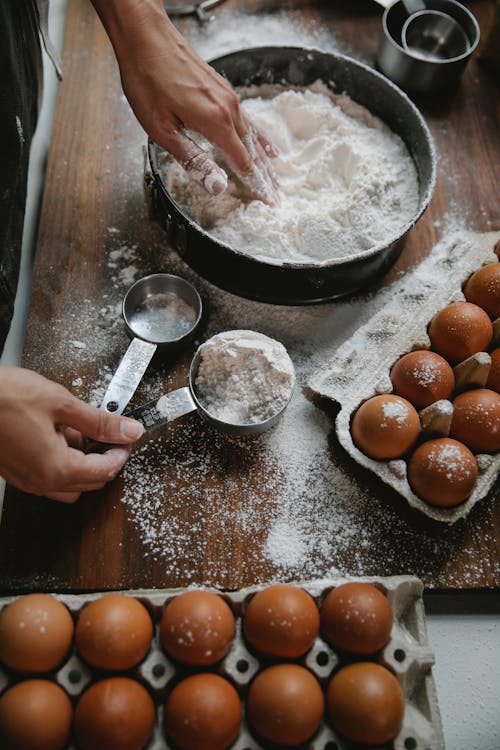
A protein pastry formula doesn’t come together in a single afternoon. From the first idea to a product that meets all specifications, the process involves dozens to hundreds of adjustments, depending on ingredient complexity. This lab note documents how KOBE approaches that process, from the first step to the final approved batch.
Start with Nutritional Targets, Not a Recipe
The starting point isn’t “what will this look like.” It’s a set of specific, measurable nutritional objectives. For example: at least 15g protein per 70g serving, net carb no more than 6g, no refined sugar. These numbers become technical constraints. Every ingredient decision must satisfy all three simultaneously.
Next comes protein source selection: egg white, whey protein, chickpea protein, or a combination? Each choice triggers a different cascade of effects on texture and product stability. There’s no pre-correct answer. Testing reveals what actually works.
Why Protein Is Technically Difficult in Baked Goods
Protein doesn’t behave like flour in the oven. When whey protein concentration in a formula exceeds 30%, texture begins to suffer: surfaces crack, interiors become dry and dense. The reason is that whey absorbs water aggressively, competing with all other ingredients for available moisture.
Adding water to compensate creates the opposite problem: the mixture becomes too slack, difficult to shape, and unable to hold structure during baking. There is no universal formula for this balance. Each test batch requires simultaneous adjustment of water ratio, fat type, and baking temperature.
With powdered egg whites: no single ingredient can replicate all 20 technical functions of whole eggs in baking, from binding and aeration to crust browning. Substituting even a portion with egg white powder requires recalibrating most other formula parameters.
What One Test Round Looks Like
Each test round follows a fixed sequence: weigh ingredients to the new ratio, mix according to the standard protocol, bake, cool completely before evaluation. Evaluation covers texture (slicing, moisture measurement), crust color, and actual macro reading from that batch.
Results go into the lab note: ingredient ratios, temperature, time, and specific technical observations. “Crust too hard after cooling” and “interior collapses after 30 minutes” are two different failure modes requiring two different corrections.
Each lab note is a data point. The more test rounds, the clearer the picture of how ingredients interact.
From Small Lab to Larger Production
A formula that performs in a small lab batch doesn’t automatically scale up. Larger batch sizes mean longer mixing times, which generates heat. Oven temperature distribution shifts when more product is present. Final texture changes even when the formula stays identical.
This stage requires at least several additional batches to reestablish equilibrium at the new volume. Once the formula stabilizes, each production batch is verified against the macro label with a maximum variance of ±5%.
What the Process Teaches
Test count isn’t a measure of failure. Every batch that doesn’t meet spec is a new data point: one more ratio ruled out, one more variable that needs tighter control. A development timeline of 6 to 18 months for a complete new product is standard in the food industry, not an exception.
For protein pastry specifically, the challenge is that everything has to work simultaneously: macros meet the target, texture remains stable through shelf life, and the nutrition label accurately reflects the actual product.
Frequently Asked Questions
How many test iterations does a protein pastry formula require?
There’s no fixed number. Products built on an existing base formula typically take 6 to 12 months and dozens of adjustments. Entirely new products with untested ingredient combinations can take 18 months or longer.
Why is protein pastry often drier than regular pastry?
Because protein, especially whey, absorbs more water than conventional flour. When protein content is high, free moisture in the mixture decreases, resulting in a drier, more crumbly texture after baking. Adjusting fat ratios and protein type is the standard approach.
What protein sources does KOBE use?
Egg white is the primary protein source in many formulas, combined with plant-based protein ingredients depending on the product line. Specific formulation details appear on each product’s ingredient label.
Do the macros on the label accurately reflect the actual product?
Yes. Each production batch is verified, with a maximum variance of ±5% against the label figures.
How long does it take to go from idea to market?
In the food industry, 6 to 12 months is typical for an improved product, and 18 to 36 months for products with an entirely new production process.
If you’re exploring the specific ingredients in KOBE formulas, the article on erythritol, allulose and monk fruit explains the three dietary sweeteners we use. And if you want to understand how to read macros on a label, the article on what is net carb is a good place to start.