Per 100g
284kcalCalories
9.2gProtein
0.7gFat
73gCarbs
70.1gFiber
0gSugars
35mgSodium
754mgPotassium
159mgCalcium
5.9mgIron
0mgVitamin C
0µgVitamin A
Data source: USDA FoodData Central, SR Legacy, FDC 168581 (Fungi, Cloud ears, dried).
Fun facts
- In the south of Vietnam it is called "cat ear mushroom" because the thin, curved caps look like a cat's ear. Northerners call it "moc nhi", and in English it is wood ear.
- According to USDA, 100g of dried wood ear has about 284 kcal and a whopping 70.1g of fiber. That sounds like a lot, but a 10g handful of dried mushroom is only about 28 kcal and 7g of fiber.
- Wood ear swells to several times its size when soaked. A small handful becomes a full bowl, so soaked wood ear has far fewer calories per spoonful.
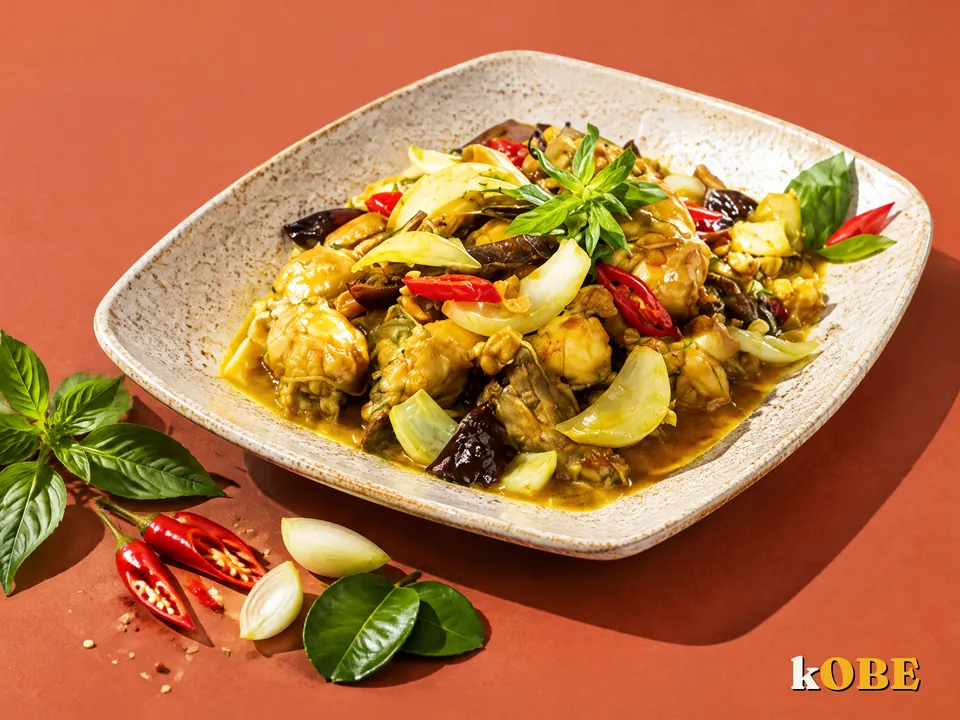
- Wood ear is the heart of Vietnamese spring rolls, glass noodle stir fries, salads, steamed buns and pork rolls. The kOBE recipe library has 39 dishes that use it.
Choosing and storing
Pick dried wood ear with a black or dark brown top, pale grey underside, and crisp pieces that are not crumbled or musty. Store it in a sealed bag or jar somewhere dry and cool. Soaked wood ear is best used the same day; leftovers go into a sealed container in the fridge and should be cooked soon.
Cooking it well
Soak in warm water for 15 to 20 minutes until soft. Soak only until it has swelled, and do not leave it soaking overnight at room temperature, to limit bacterial growth in the water. Rinse a few times, trim the hard base, then slice or mince. Wood ear needs very little cooking: a quick stir fry or blanch keeps its signature crunch.
Frequently asked questions
Are "nam meo" and "moc nhi" the same thing?
Yes, they are regional names for the same mushroom. "Moc nhi" is the name used more in the north.
With so much fiber, can wood ear replace vegetables?
It is a fun way to add fiber to a dish, but you only use a little each time. Your meal still needs leafy greens as usual.